All the fresh, bright parts of a spring roll land in one bowl here: cool rice noodles, crunchy cabbage, crisp cucumber, sweet carrots, herbs that wake everything up, and a spicy ginger dressing that pulls it all together. You still get that contrast of tender noodles, snappy vegetables, and peanut crunch, but without the work of rolling a single thing.
What makes this version worth keeping around is the balance. The dressing has enough rice vinegar and lime to taste sharp and clean, but the honey and sesame oil round it out so it clings to the noodles instead of pooling at the bottom of the bowl. Rinsing the vermicelli under cold water matters, too — it stops the cooking fast and keeps the texture springy instead of gummy.
Below, I’ve included the little details that keep the herbs fresh, the noodles from clumping, and the dressing from tasting flat. There’s also a simple way to turn it into a more filling meal without losing the fresh spring roll feel.
The dressing had the perfect tangy kick and coated everything without making the noodles soggy. I added the peanuts at the end like you said and they stayed crunchy all through lunch.
Fresh spring roll salad with spicy ginger dressing for the nights when you want big crunch, bright herbs, and a fork-friendly dinner.
The Trick to Keeping Spring Roll Salad Crisp Instead of Watery
The biggest mistake with this kind of salad is treating it like a soft noodle bowl. The vegetables need to stay crisp, the herbs need to stay in big, tender leaves, and the noodles need to be cooled all the way down before they meet the dressing. If the noodles are still warm, they soften the herbs and make the whole bowl feel heavy instead of bright.
The other trap is overdressing too early. Rice vermicelli drinks up liquid fast, so this salad tastes best when the dressing coats everything evenly but doesn’t drown it. Toss the vegetables and noodles first, then add the herbs near the end so they stay aromatic and don’t bruise into the bowl.
What Each Ingredient Is Actually Doing in This Bowl
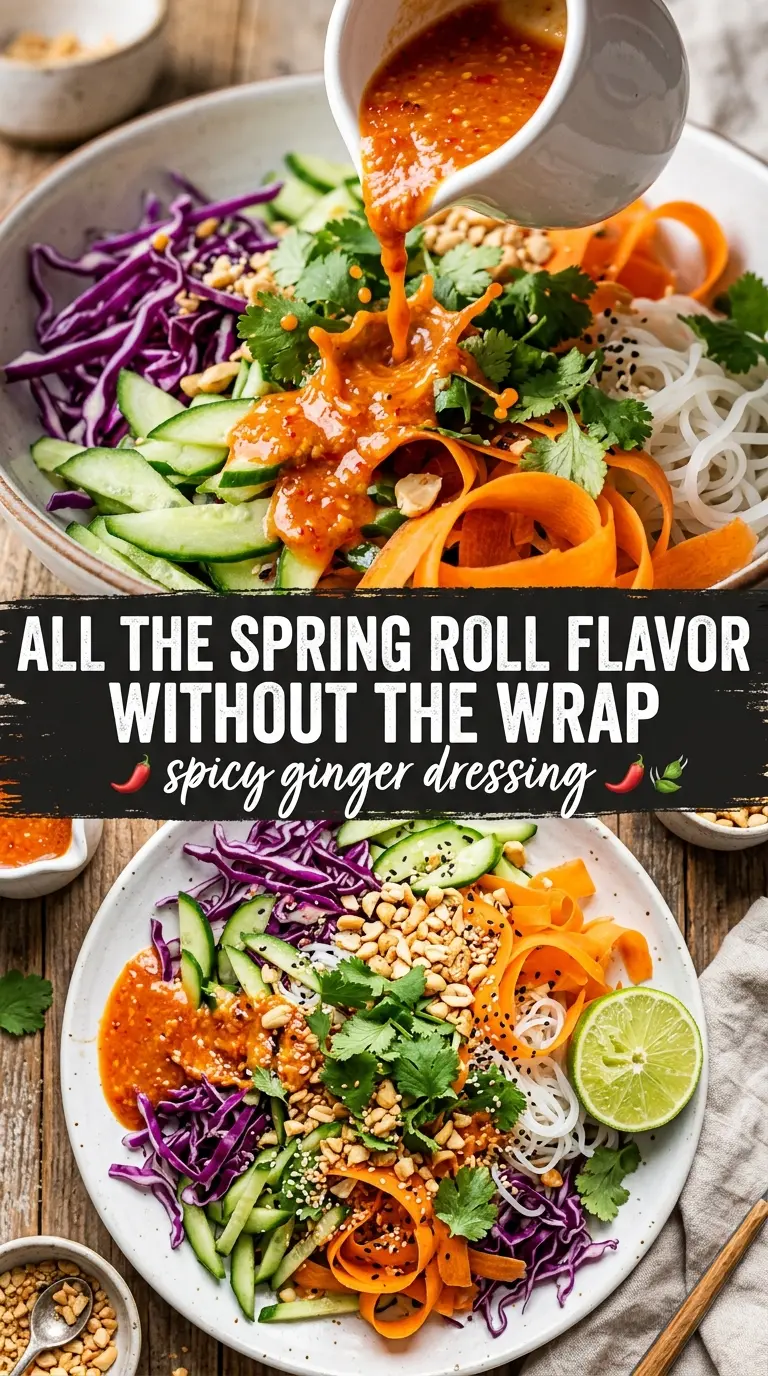
- Rice vermicelli — These noodles give the salad its spring roll feel. Cook them just until tender, then rinse thoroughly and drain well so they stay light and separate instead of sticking into a dense tangle.
- Purple cabbage and carrots — These are the crunch backbone. They hold up after dressing, so the salad still tastes fresh even if it sits for a little while.
- English cucumber — This adds cold, clean bite. If you use a standard cucumber, peel and seed it first or the extra water will thin out the dressing flavor.
- Edamame — It gives the bowl substance and a little protein without taking over. If you don’t have it, shelled peas can stand in, but the flavor will be softer and a bit sweeter.
- Mint, cilantro, and basil — Don’t treat these like garnish. They’re part of the main flavor, and that mix is what makes the salad taste like a spring roll instead of just a noodle salad.
- Peanuts — These bring the final crunch and a salty roasted note. Add them at the very end so they stay crisp; if they sit in the dressing too long, they lose the contrast that makes them worth using.
- Rice vinegar, lime juice, ginger, and chili garlic sauce — This is the sharp, spicy center of the dressing. Ginger gives warmth, lime lifts the finish, and chili garlic sauce adds heat plus a little body, so you get more than just straight acidity.
- Soy sauce and sesame oil — Soy sauce adds depth and salt, while sesame oil gives the dressing that familiar nutty note that ties everything back to spring rolls. Tamari works cleanly if you need this gluten-free.
- Honey — This doesn’t make the dressing sweet in a dessert sense; it rounds out the vinegar and helps the dressing cling to the noodles. Maple syrup can work in a pinch, but honey gives a cleaner balance here.
How to Build the Bowl So Nothing Gets Soggy
Cooking the noodles the right way
Cook the rice vermicelli just until tender, then rinse it under cold water until it’s no longer warm. That stops the carryover cooking and washes off surface starch, which is what keeps the noodles from turning sticky. Drain them well before they go into the bowl; extra water is the quickest way to dilute the dressing.
Whisking the dressing until it tastes balanced
Stir the dressing ingredients together until the honey disappears and the ginger and garlic are evenly distributed. Taste it before it hits the salad. If it tastes flat, it usually needs more lime or vinegar, not more salt. If it feels sharp and unfinished, a touch more honey smooths the edges without making it sweet.
Assembling without bruising the herbs
Toss the cabbage, carrots, bell pepper, cucumber, edamame, and noodles first so the dressing can coat the sturdy ingredients evenly. Add the herbs and green onions last, then fold them through gently with your hands or a large spoon. If you stir hard at this stage, the herbs wilt and the salad loses the fresh, lifted flavor that makes it work.
Finishing with crunch
Top the salad with chopped peanuts right before serving. If you add them too early, they soften and stop giving you that good snap against the noodles. Serve it immediately for the best texture, or chill it briefly if you want it colder; just wait to add the peanuts until the end.
Three Ways to Make This Salad Fit Your Night
Make it gluten-free without losing the punch
Use tamari in place of soy sauce and check that your chili garlic sauce is gluten-free. The flavor stays bold and salty, and the dressing still has the same savory backbone.
Turn it into a full meal with protein
Add grilled shrimp or sliced baked tofu on top. Shrimp keeps the bowl light and briny, while tofu soaks up the dressing and makes the salad more filling without changing the fresh, crunchy feel.
Swap the peanuts if you need a nut-free version
Use toasted sunflower seeds or crispy fried shallots instead. You’ll lose the peanut-sesame echo, but you still get the crunch that keeps the salad from feeling soft.
Make it ahead without sacrificing texture
Store the dressing separately and keep the peanuts out until serving. If you want to prep the vegetables earlier in the day, layer them in the bowl first and add the herbs and noodles just before tossing so everything stays crisp.
Storage and Reheating
- Refrigerator: Store the dressed salad for up to 1 day. The noodles soften a bit and the herbs lose some brightness, but it still tastes good if you keep the peanuts separate.
- Freezer: Don’t freeze this salad. The vegetables and herbs turn limp and watery once thawed, and the noodles lose their texture completely.
- Reheating: This salad is meant to be served cold or cool. If it’s been refrigerated, let it sit out for 10 to 15 minutes before eating so the dressing loosens up and the flavors come back to life.
Answers to the Questions Worth Asking
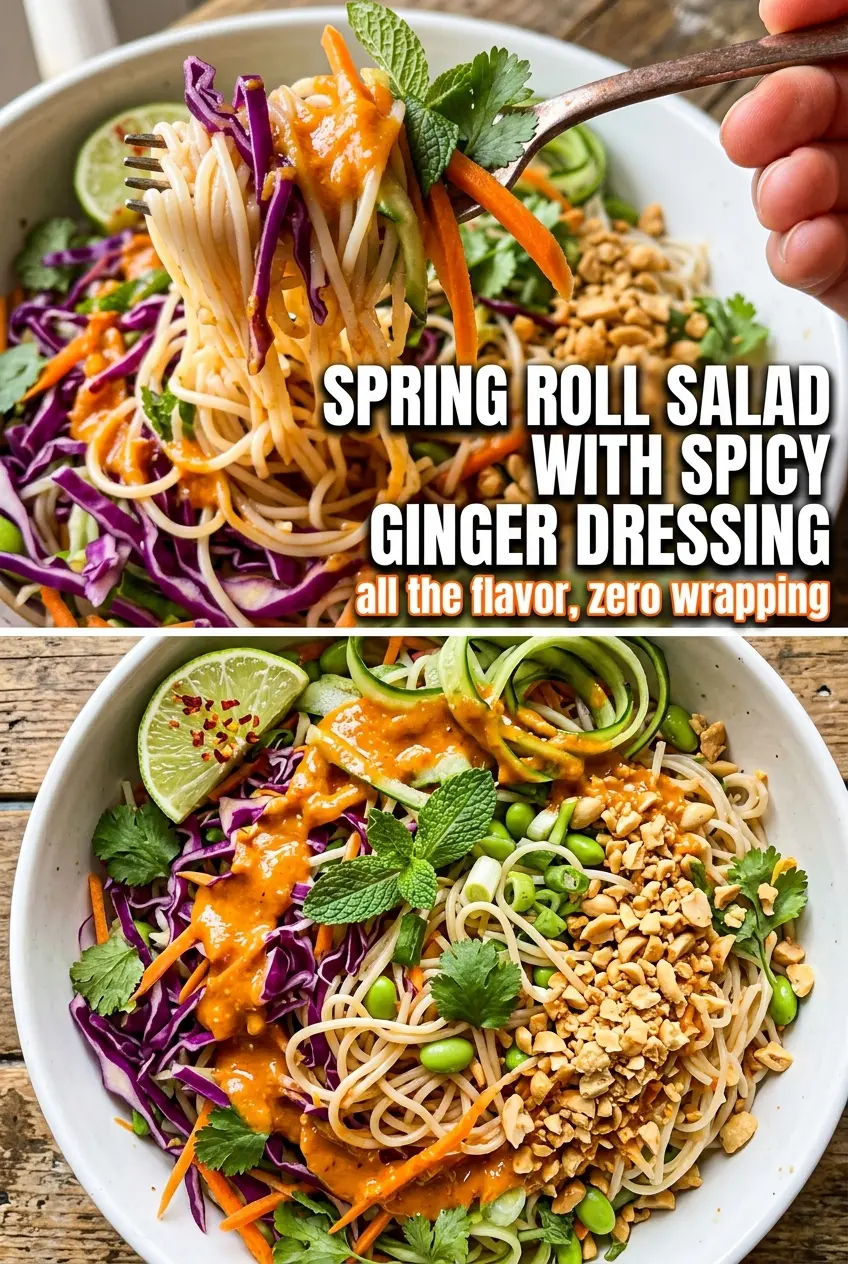
Spring Roll Salad with Spicy Ginger Dressing
Ingredients
Method
- Cook the rice vermicelli noodles according to package directions, then rinse under cold water, drain well, and toss with a drizzle of sesame oil to prevent sticking.
- Whisk together rice vinegar, soy sauce, sesame oil, honey, grated fresh ginger, minced garlic, chili garlic sauce, and lime juice until smooth and well combined.
- Taste the dressing and adjust by adding more chili garlic sauce for heat, honey for sweetness, or lime juice for brightness.
- Combine shredded purple cabbage, shredded carrots, thinly sliced red bell pepper, julienned English cucumber, and cooked shelled edamame in a large bowl.
- Add the cooled noodles and toss the salad until the ingredients are evenly distributed.
- Pour the spicy ginger dressing over the salad and toss until everything is evenly coated.
- Add fresh mint leaves, fresh cilantro, fresh basil leaves, and sliced green onions, then toss gently so the herbs don’t get overworked.
- Divide into bowls and top with roughly chopped roasted salted peanuts for the best crunch; serve immediately or refrigerate the dressed salad for up to 1 day, adding peanuts and herbs just before serving.