Smoky brisket piled into soft slider rolls is the kind of food that disappears fast because it hits every note at once: tender meat, sticky sauce, a little crunch from coleslaw, and that buttery toasted top that holds everything together. These BBQ brisket sliders earn their spot on the table because they taste like they took all day — and, with the brisket done ahead, the final assembly takes only minutes.
The part that makes this version work is the balance. The brisket gets a dry seasoning rub before it ever sees heat, which builds a deeper crust and keeps the meat from tasting flat under all that sauce. Braising it with beef broth and only part of the BBQ sauce keeps the meat juicy without turning it muddy or overly sweet, then the rest of the sauce gets added after shredding so every strand stays coated.
Below, I’ll walk you through the sear, the oven time that matters most, and the small finishing touches that keep the buns from getting soggy. There’s also a make-ahead strategy and a few swaps if you want to stretch the batch or change the flavor a little.
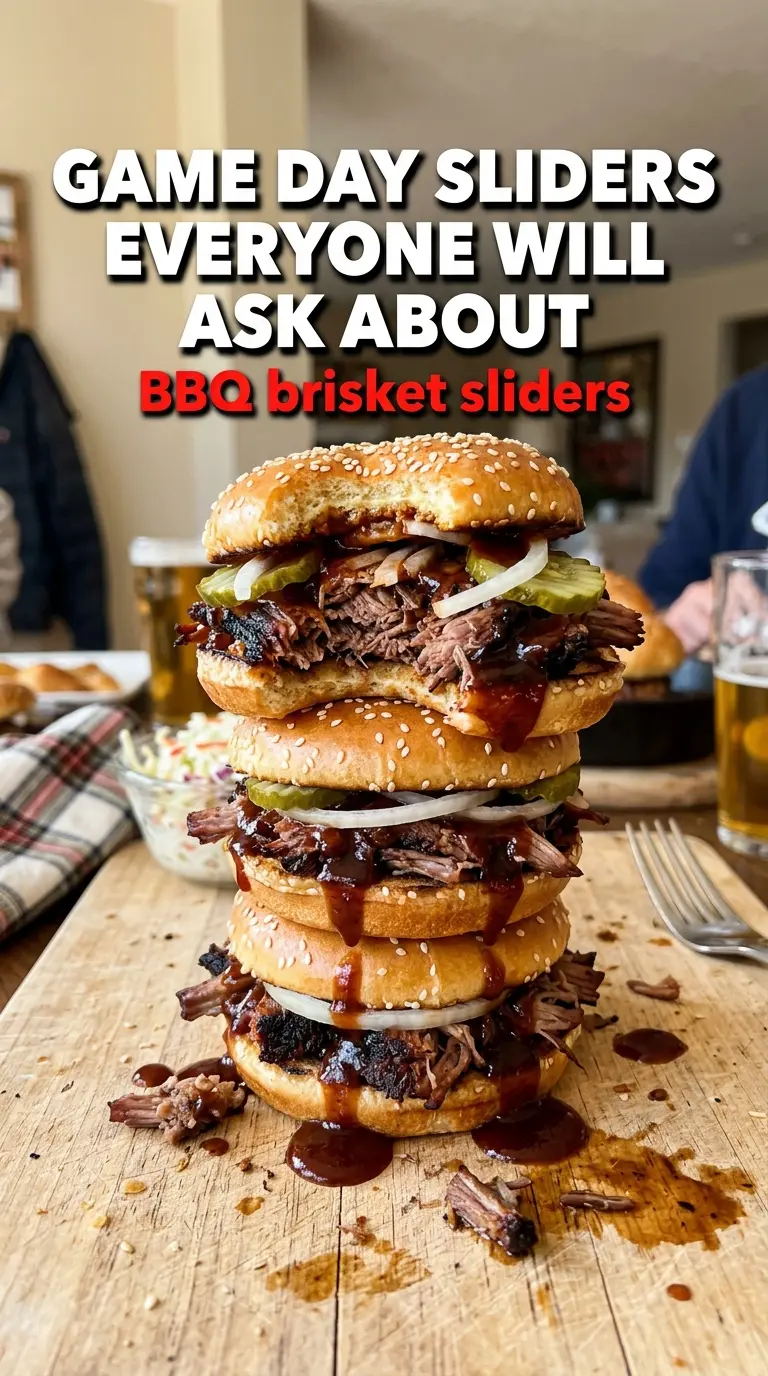
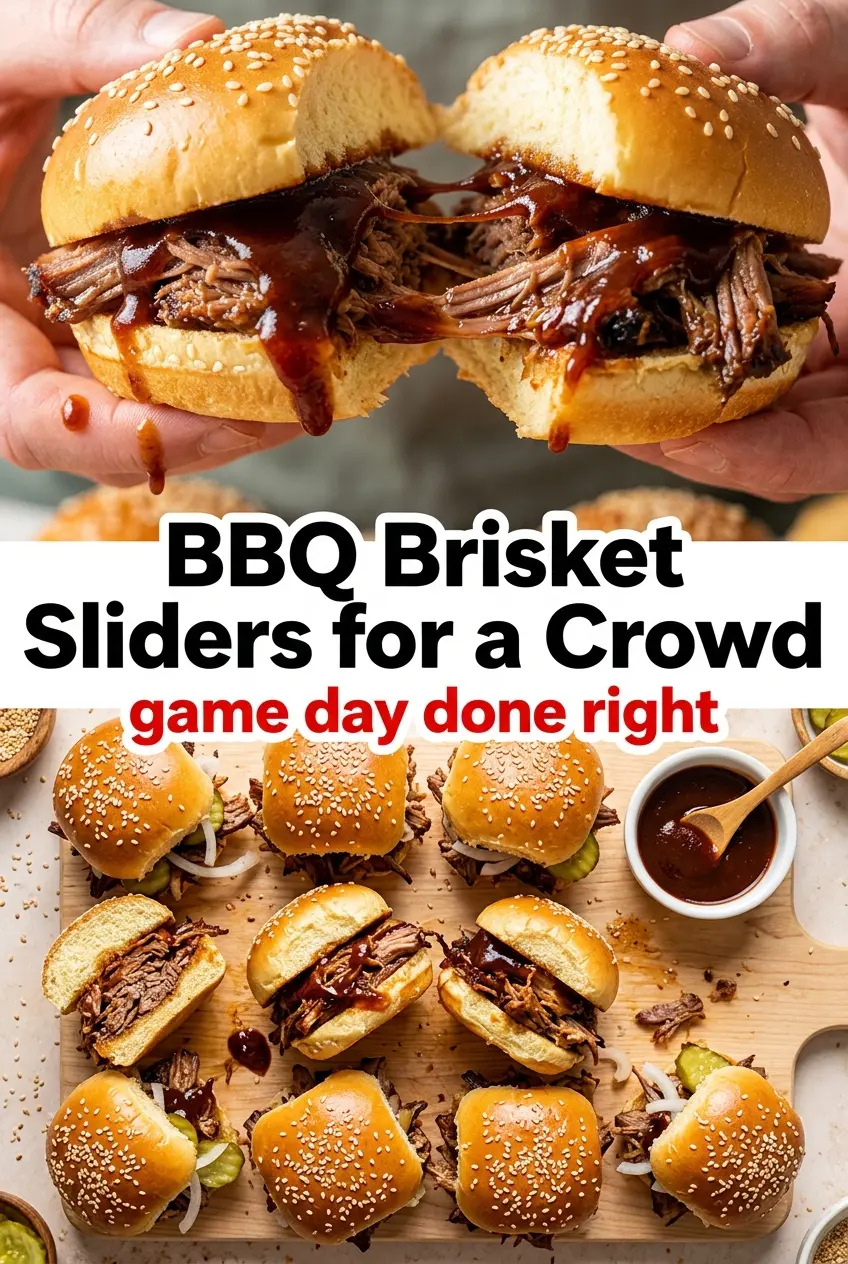
The brisket shredded into these long, juicy pieces and the sauce clung to it instead of pooling at the bottom. I made them for game day and the tray was empty before halftime.
These BBQ brisket sliders stay juicy under the coleslaw and the toasted Hawaiian rolls hold up without falling apart.
The Secret to BBQ Brisket Sliders That Don’t Turn Soggy
The fastest way to ruin a good brisket slider is to drown the bread before it hits the table. Soft rolls can handle a lot, but they can’t survive a flood of hot sauce and braising liquid. That’s why the brisket gets sauced after shredding, not before, and why only enough braising liquid goes back in to keep it moist and glossy.
The other thing people miss is texture. Coleslaw isn’t just garnish here; it’s the cold crunch that cuts through the richness of the meat and sauce. If your slaw is wet, drain it first. Excess dressing or liquid runs straight into the buns and steals the structure you need.
What Each Ingredient Is Actually Doing in These Sliders
- Beef brisket flat — The flat cut shreds into tidy, even pieces and soaks up sauce without turning greasy. If you can only find a larger packer cut, trim it well and use the flatter section; it braises more evenly for sliders.
- BBQ sauce — Use a sauce you actually like on its own, because the flavor concentrates as it cooks. A thinner, tangier sauce works especially well here since the brisket brings enough richness already.
- Beef broth — This keeps the braising environment moist and adds savory depth that water can’t give you. Low-sodium broth is the safest choice if your BBQ sauce runs salty.
- Hawaiian slider rolls — Their slight sweetness plays nicely with smoky meat, and their soft texture makes the sliders feel complete instead of dry. Any soft pull-apart roll works in a pinch, but avoid crusty buns; they fight the filling instead of supporting it.
- Coleslaw — Store-bought slaw works fine if it’s not overly wet. Homemade slaw gives you more control, especially if you want a sharper vinegar style that cuts through the sauce.
- Butter and garlic powder — This is what gives the tops that bakery-style finish. The garlic powder doesn’t need much; it just nudges the rolls toward savory instead of sweet.
How to Braise the Brisket So It Shreds Cleanly
Seasoning Before the Sear
Rub the brisket with olive oil, then coat it evenly with the salt, pepper, garlic powder, and smoked paprika. If you have time, let it sit uncovered in the fridge overnight so the surface dries out a little; that helps the sear build a better crust. A damp brisket steams in the pot, and steamed meat never tastes as deep or as satisfying.
Building the Brown Crust
Sear the brisket in a hot Dutch oven until both sides are deeply browned, not pale tan. Three to four minutes per side is enough if the pot is properly heated. If the meat sticks hard, give it another minute; it releases when the crust is ready, and forcing it early tears that crust right off.
Low Oven, Slow Tenderness
Add the broth and part of the BBQ sauce, cover the pot, and slide it into a 300°F oven. The brisket is ready when a fork slides in with little resistance and the meat pulls apart in long strands. If it still feels tight or rubbery, it needs more time; brisket gets tender by waiting, not by turning the heat up.
The Sauce Finish
Let the brisket rest in the braising liquid for 20 minutes, then shred it with two forks and toss it with the remaining sauce. Add a little braising liquid at a time until the meat looks glossy and saucy but not wet enough to soak the buns. That final adjustment is what keeps the sliders rich instead of messy.
Three Ways to Make These BBQ Brisket Sliders Work for Different Tables
Dairy-Free Version Without Losing the Finish
Swap the butter on top for melted dairy-free butter or a neutral oil, then brush it over the rolls the same way. You’ll still get a glossy, toasted top, though the flavor will be a touch less rich and a little less bakery-like.
Make It Spicier Without Changing the Structure
Stir a spoonful of hot sauce or a pinch of cayenne into the BBQ sauce before tossing it with the brisket. That gives you heat right in the meat without thinning the filling or making the slaw do all the work.
Stretch the Batch for a Bigger Crowd
Add an extra package of rolls and pile the brisket a little thinner on each one, then serve the remaining meat in a warm bowl beside the tray. The brisket itself scales up cleanly, but overcrowding the buns makes the sliders hard to handle.
Storage and Reheating
- Refrigerator: Store the brisket filling separately from the rolls and slaw for up to 4 days. The meat gets even more flavorful overnight.
- Freezer: The brisket freezes well for up to 3 months if you cool it first and pack it with a little sauce to keep it moist. Freeze the rolls and slaw separately; they don’t thaw with the same quality.
- Reheating: Warm the brisket covered in a saucepan or baking dish with a splash of broth until hot. The common mistake is microwaving it dry, which makes the edges tough and the sauce split.
Answers to the Questions Worth Asking
BBQ Brisket Sliders
Ingredients
Equipment
Method
- Rub brisket with olive oil, then season all over with kosher salt, black pepper, garlic powder, and smoked paprika.
- Refrigerate uncovered (preferably overnight) to help the seasoning set.
- Sear brisket in a Dutch oven over medium-high heat for 3–4 minutes per side, until browned.
- Add beef broth and 3/4 cup BBQ sauce to the pot.
- Cover and braise in a 300°F oven for 3–3.5 hours, until fork-tender and easily shredded.
- Rest brisket in the braising liquid for 20 minutes.
- Shred brisket with two forks, discarding excess fat.
- Toss shredded brisket with remaining 3/4 cup BBQ sauce and enough braising liquid to keep it saucy but not soupy.
- Preheat oven to 350°F and slice slider rolls in half horizontally, keeping them connected.
- Place bottom halves in a 9x13 baking dish and pile brisket onto the rolls.
- Top brisket with coleslaw, then place top halves on.
- Brush tops with melted unsalted butter mixed with garlic powder.
- Cover with foil and bake 10 minutes until warmed through.
- Uncover and bake 5 more minutes until golden.
- Serve hot with pickles on the side.