Smoked baby back ribs with dry rub come off the smoker with the kind of bark that crackles under your knife and meat that pulls back from the bones without turning mushy. The seasoning stays front and center here. You get smoke, brown sugar, paprika, garlic, and just enough heat to keep every bite interesting, which is exactly why these ribs earn repeat status instead of becoming a one-time project.
The method matters as much as the rub. Removing the membrane gives the smoke a path into the meat, and the mustard binder helps the spices cling without leaving any mustard flavor behind. The three-stage smoke, wrap, and finish keeps the ribs tender while still building a bark that holds up when you slice them.
Below, I’ll walk through the part most people get wrong with ribs: when to wrap, when to unwrap, and how to know they’re done without drying them out. I’ve also included a few useful variations and what to do with leftovers so you can get the most out of both racks.
The rub formed a perfect bark and the meat was tender without falling apart when I sliced it. I wrapped mine right at the 3-hour mark and the ribs were spot on after the last hour uncovered.
Save these smoked baby back ribs with dry rub for the next time you want a smoky bark and tender meat without reaching for bottled sauce.
The Membrane Is What Keeps Your Smoke From Getting In
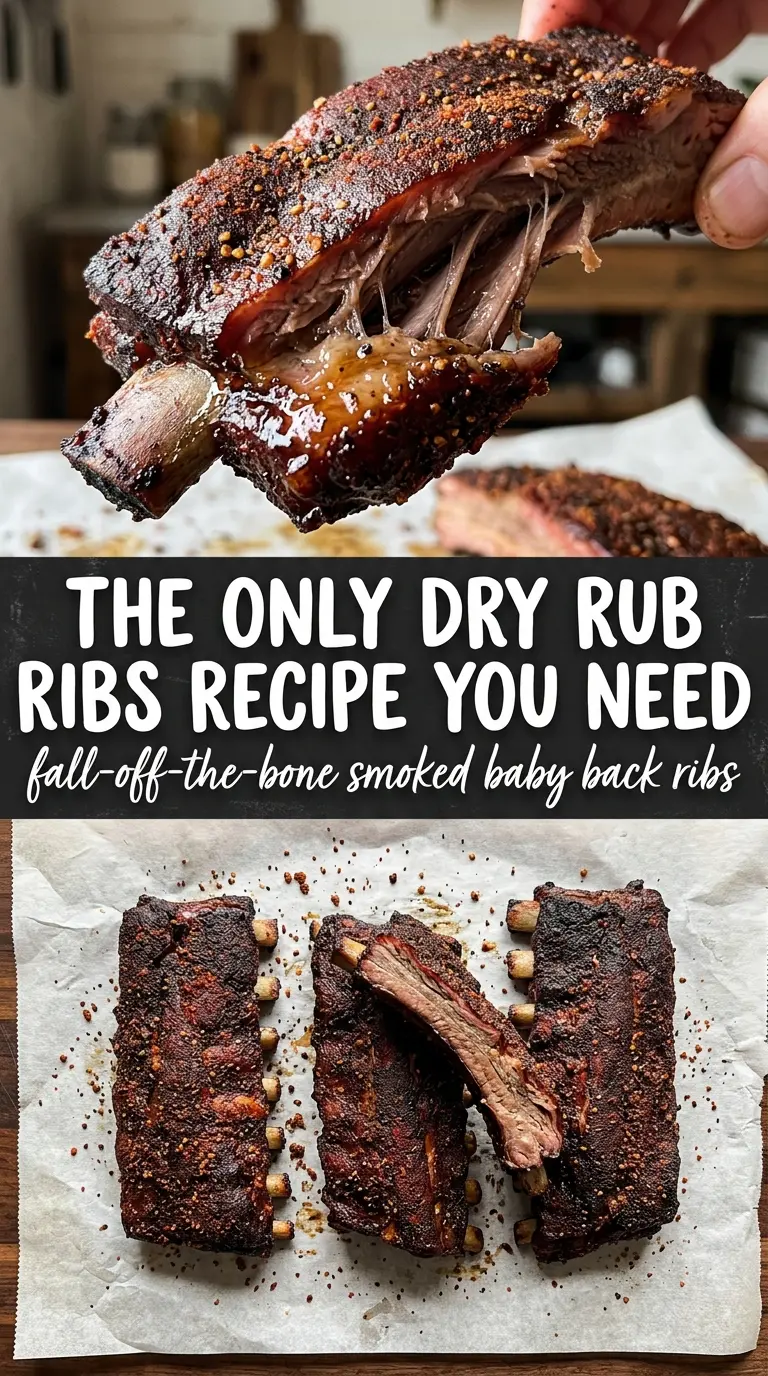
If you’ve ever had ribs that tasted seasoned on the surface but flat underneath, the membrane was probably still on. That thin silver skin on the back of the rack doesn’t just block smoke; it also tightens as the ribs cook, which can leave the texture tuggy instead of tender. Pulling it off gives the rub direct contact with the meat and helps the finished ribs slice cleaner.
The other mistake is rushing the bark. If you wrap too early, the ribs turn tender but soft, with seasoning that seems steamed instead of set. The wrap stage is for tenderness; the final uncovered hour is what dries the surface just enough to turn that rub into a proper crust.
- Yellow mustard — This is just a binder. It helps the rub stick in an even coat, and once the ribs smoke for hours, the mustard flavor disappears.
- Brown sugar — It deepens the bark and balances the smoke. Light brown sugar works fine, and dark brown sugar will give you a slightly richer molasses note.
- Smoked paprika — This carries a lot of the smoky impression in the rub itself, especially if your smoker runs clean and mild. Don’t swap in sweet paprika if you want the same depth.
- Kosher salt — Salt has to be in the rub, not sprinkled on at the end. It seasons the meat all the way through while the ribs cook low and slow.
- Cayenne — This is the quiet heat in the background. If you want the ribs milder, cut it in half instead of removing it completely, because the small amount keeps the rub from tasting one-note.
Smoke, Wrap, Then Finish the Bark
Prepping the Rack
Slide a butter knife under the membrane at one end of the rack, grab it with a paper towel, and pull it off in one piece if you can. If it tears, start again from a different edge and get as much as possible off before seasoning. A thin coat of mustard on both sides gives the rub something to cling to, so don’t leave any dry patches behind. Press the rub in firmly until the surface looks evenly coated and a little crusty.
The First Three Hours of Smoke
Set the ribs bone-side down and leave the lid closed. That first stretch is where smoke flavor builds and the surface starts drying into bark. If you keep peeking, you lose heat and extend the cook for no reason. Hickory gives a stronger edge, while apple wood keeps the smoke sweeter and gentler.
Wrapping for Tenderness
After 3 hours, wrap each rack tightly in two layers of foil and return them to the smoker. This traps steam and rendered fat, which is what softens the connective tissue and gets you that tender bite. If the foil isn’t sealed well, the ribs dry out instead of braising, so crimp the edges tightly and keep them snug.
The Final Uncovered Hour
Unwrap the ribs and put them back on the smoker for the last hour. The surface should feel tacky and the bark should darken without turning black. If the ribs look wet when you unwrap them, give them the full final hour; that drying time is what locks the rub in place. They’re ready when the meat has pulled back from the bones by about 1/2 inch and the rack bends easily when lifted in the middle.
Competition-Style Glaze Finish
Brush on your favorite barbecue sauce during the last 30 minutes of the unwrapped phase. That gives you a sticky gloss without burying the dry rub, and the sugars have enough time to set without burning. This is the move if you want a saucier rack while still keeping the smoky bark underneath.
Spice-It-Up Version
Add an extra 1/4 to 1/2 teaspoon cayenne or a pinch of chipotle powder to the rub. The heat lands late and smoky instead of sharp, which works well with hickory and keeps the ribs from tasting sweet-only.
Gluten-Free and Dairy-Free by Default
These ribs already fit both needs as written, as long as your mustard and barbecue sauce, if using one, are certified gluten-free. The cooking method doesn’t rely on butter, cream, or flour, so you don’t lose any texture by keeping it simple.
Using St. Louis Ribs Instead
You can use St. Louis-style ribs, but plan on a slightly longer cook because the racks are meatier and wider. Keep the same smoke, wrap, and finish structure, then judge doneness by bend and pullback instead of the clock alone.
Storage and Reheating
- Refrigerator: Store sliced ribs in an airtight container for up to 4 days. The bark softens a little in the fridge, but the flavor holds up well.
- Freezer: Wrap tightly and freeze for up to 2 months. Freeze in portions so you can thaw only what you need, and keep a little of the pan juices or foil drippings with the meat if you can.
- Reheating: Reheat covered in a 300°F oven until warmed through, about 15 to 20 minutes for sliced ribs. The common mistake is blasting them uncovered, which dries the edges before the center is hot.
Answers to the Questions Worth Asking
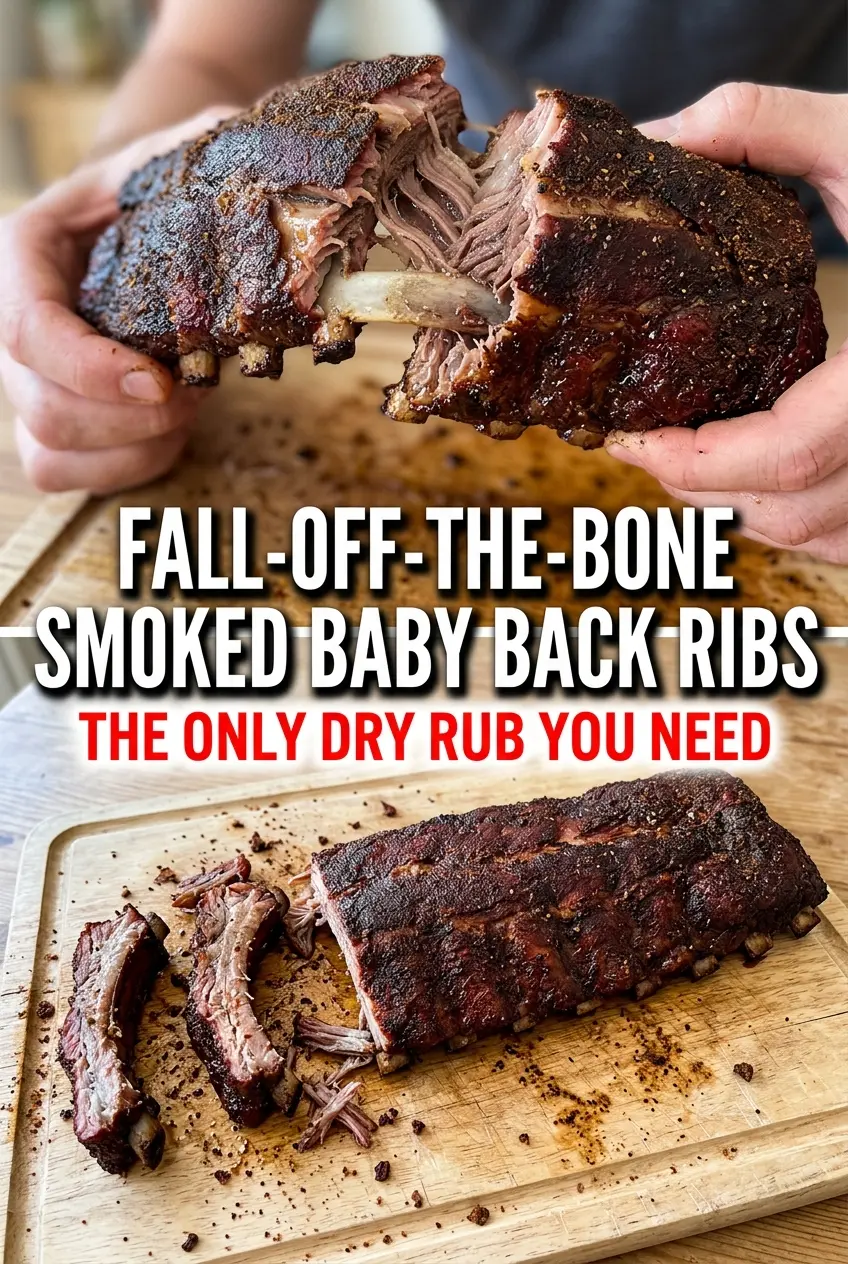
Smoked Baby Back Ribs with Dry Rub
Ingredients
Equipment
Method
- Slide a butter knife under the edge of the membrane on the back of each rack and pull it off in one piece.
- Coat both sides of the ribs with a thin layer of yellow mustard as a binder.
- Combine brown sugar, smoked paprika, garlic powder, onion powder, kosher salt, black pepper, chili powder, cumin, dried oregano, and cayenne in a bowl, then apply the dry rub generously to all sides and press it in firmly.
- Let the ribs sit at room temperature for 30 minutes to set the rub, or refrigerate uncovered overnight for deeper flavor.
- Preheat your smoker to 225°F using hickory or apple wood.
- Place ribs bone-side down in the smoker and smoke for 3 hours without opening the lid.
- Wrap each rack tightly in two layers of aluminum foil and return to the smoker at 225°F for 2 more hours.
- Unwrap the ribs and return them to the smoker for 1 final hour to firm up the bark.
- If doing the competition-style glaze variation, brush with BBQ sauce during the final 30 minutes of the unwrapped phase.
- Check doneness: ribs are done when they bend easily and the meat has pulled back from the bones by about 1/2 inch.
- Rest the ribs for 15 minutes before slicing between the bones.