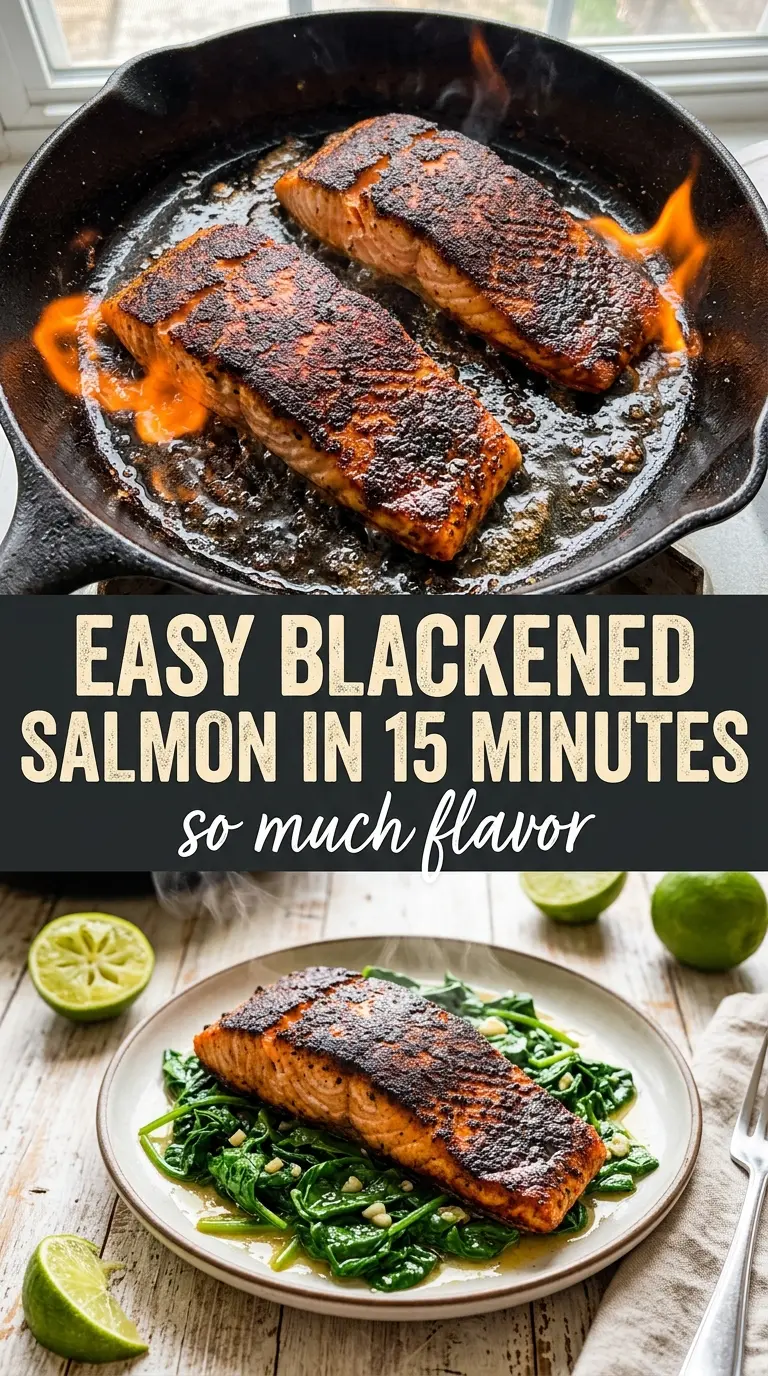
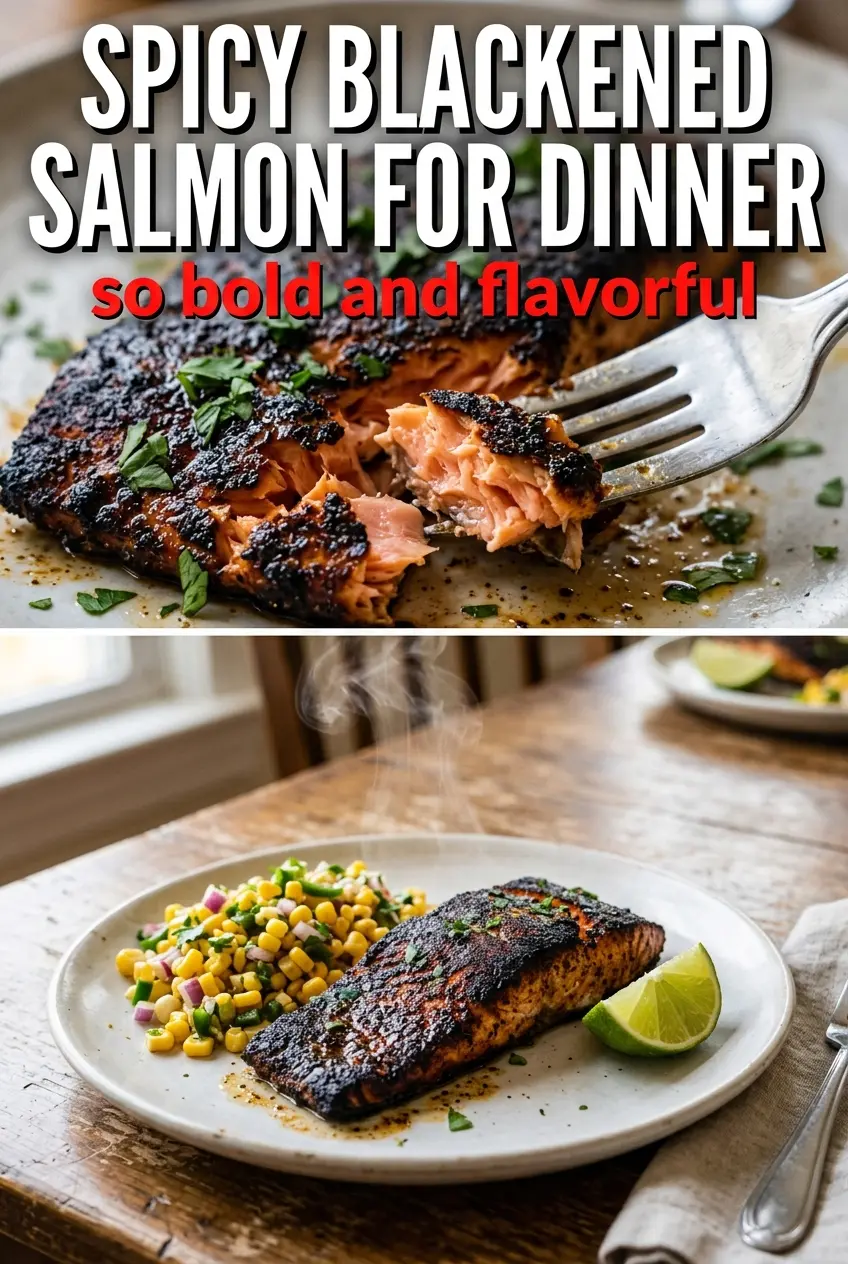
Blackened salmon brings a hard-seared crust, tender flakes, and a smoky heat that wakes up the whole fillet. The spice mix clings to the fish and turns deeply aromatic in the pan, giving you that dark, savory edge without drying out the center. It’s the kind of dinner that tastes like you put in far more effort than you actually did.
What makes this version work is the balance between a dry surface, a bold spice rub, and a hot skillet with just enough fat to carry the crust. Smoked paprika does most of the heavy lifting for color and depth, while the butter rounds off the cayenne so the heat lands cleanly instead of harshly. The salmon only needs a few minutes per side, which is enough time to build that blackened exterior before the flesh turns chalky.
Below, I’ve included the small details that matter most: how dry the salmon needs to be, why the pan has to be properly heated, and what to change if you want a milder or stricter gluten-free version. The technique is straightforward, but the timing is what keeps it juicy.
The crust got dark and smoky without burning, and the salmon stayed flaky and moist in the middle. I served it with rice and lemon, and it tasted like something from a restaurant.
Save this blackened salmon for the nights when you want a smoky crust and flaky fish in under 15 minutes.
The Crust Depends on a Dry Surface and a Hot Pan
Blackened salmon fails for two predictable reasons: too much moisture on the fish, or a pan that hasn’t fully heated before the salmon hits it. If the surface is damp, the spice rub turns paste-like and slides around instead of forming that dark, aromatic crust. If the heat is too low, the salmon steams in its own juices and the seasoning never really blooms.
Patting the fillets dry is the first real step, not a throwaway one. The spices need contact with the fish, and the fish needs immediate heat to set the crust before the natural sugars and paprika can scorch. You’re looking for a skillet that shimmers as soon as the oil and butter go in, then a steady sizzle the moment the salmon lands.
- Smoked paprika — This gives the crust its color and smoky backbone. Regular paprika works in a pinch, but it loses some of the deep, woodsy note that makes blackened salmon taste right.
- Cayenne — This is where the heat comes from. If you want a gentler burn, cut it back by half; the crust will still be bold because the paprika and thyme carry their own weight.
- Butter and olive oil — The oil helps the salmon sear without burning immediately, while the butter adds flavor and helps the spice rub toast. You need both. Butter alone can scorch too fast, and oil alone tastes flatter.
- Salmon fillets — Look for fillets that are similar in thickness so they finish at the same time. Thicker center-cut pieces are more forgiving, but any fillet works if you watch the color change up the sides.
Getting the Spice Rub to Toast, Not Burn
Dry the Salmon First
Lay the fillets on paper towels and press the top lightly until the surface feels dry, not slippery. That small step helps the spices grip and keeps the crust from turning muddy in the pan. If the salmon looks glossy with moisture, give it another minute with the towels before seasoning.
Coat Evenly and Press the Rub In
Mix the spices in a small bowl, then rub them over both sides of the salmon in an even layer. Press the seasoning on with your fingertips so it adheres before it ever reaches the skillet. If the coating looks patchy, the pan will expose bare spots and the crust won’t form evenly.
Heat the Pan Until It Hums
Warm the olive oil and butter over medium-high heat until the butter foams and the fat shimmers across the pan. That’s the moment to add the fish. If the butter turns brown before the salmon goes in, the heat’s too high and the spices can go bitter before the fish cooks through.
Sear Without Moving It Around
Set the salmon in the pan and leave it alone for 3 to 4 minutes. You should hear a steady sizzle, not a furious crackle. When the edges turn opaque and the crust releases more easily from the pan, flip it once and finish the second side until the fish flakes with a fork but still looks moist in the center.
Make It Milder Without Losing the Blackened Character
Cut the cayenne back to 1/2 teaspoon if you want a gentler heat. The smoked paprika still gives you that deep color and savory crust, so the salmon won’t taste flat — it’ll just land more balanced.
Dairy-Free Blackened Salmon
Swap the butter for another tablespoon of olive oil or a neutral oil with a high smoke point. You’ll lose a little richness, but the crust still develops properly as long as the pan is hot enough.
Serving It Over Rice, Greens, or a Salad
The salmon is bold enough to carry simple sides. Spoon any pan juices over rice or greens, and add the lemon at the table so the acidity stays bright instead of cooking away.
Storage and Reheating
- Refrigerator: Store leftovers in an airtight container for up to 2 days. The crust softens a little, but the fish stays good for lunch the next day.
- Freezer: Salmon can be frozen after cooking, but the texture won’t be as nice once thawed. If you freeze it, wrap it tightly and use it within 1 month.
- Reheating: Warm it gently in a skillet over low heat with a lid, or use short bursts in the microwave at reduced power. High heat dries the salmon out fast and makes the crust bitter.
Answers to the Questions Worth Asking
Blackened Salmon
Ingredients
Equipment
Method
- Pat the salmon fillets dry with paper towels.
- Combine the smoked paprika, cayenne pepper, garlic powder, onion powder, dried thyme, and kosher salt in a small bowl, then rub evenly over both sides of the salmon.
- Heat the olive oil and butter in a skillet over medium-high heat until shimmering.
- Sear the salmon for 3–4 minutes per side, until a dark blackened crust forms and the fish flakes easily with a fork.
- Remove from the heat and let rest for 2 minutes.
- Serve immediately with fresh lemon wedges.