Grilled salmon turns out best when the heat stays steady and the fish gets just enough time to pick up smoke without drying out. The skin crisps lightly, the flesh stays tender and flaky, and the lemon-herb finish keeps every bite bright instead of heavy. It’s the kind of dinner that feels special with almost no fuss, which is exactly why it ends up on repeat.
The trick is in the short marinade and the clean grill marks. Olive oil helps protect the salmon from sticking, while lemon juice, garlic, and dill season the surface without overpowering the fish. Ten to fifteen minutes at room temperature is enough for flavor to cling without starting to “cook” the outside the way a longer citrus marinade would.
Below, I’ll walk through the part that matters most: how to keep the salmon from tearing when you flip it, how to know when it’s done, and what to change if you want to cook it on a grill pan instead.
The salmon came off the grill with perfect marks and stayed moist all the way through. I loved that the lemon and dill were light but still came through after grilling, and the skin released cleanly without sticking to the grates.
Save this grilled salmon for a fast dinner with smoky edges, flaky centers, and a lemon-herb finish that keeps it light.
The Difference Between Grilled Salmon and Dry, Overcooked Salmon
Salmon dries out fast on a grill because the line between done and overdone is narrow. The goal isn’t to cook it until it looks completely firm all the way through. It should release easily from the grates, flake at the thickest part, and still look a little glossy in the center when you pull it off.
Two things keep this version on track: a hot, clean grill and salmon that starts out dry on the surface. Moisture is the enemy of browning, and wet fish sticks. A light coating of oil on both the fish and the grates gives you a better chance at intact fillets and those short, clean grill marks instead of shredded pieces stuck behind on the metal.
- Skin-on salmon fillets hold together better on the grill and give you a buffer against direct heat. If you only have skinless fillets, use a grill basket or a well-oiled fish grate.
- Olive oil helps the marinade cling and keeps the fish from sticking. Use a standard extra-virgin bottle here; save the expensive finishing oil for the table.
- Lemon juice brightens the fish, but the short marination matters. Leave the salmon in citrus too long and the surface can turn mealy before it even hits the grill.
- Dill and garlic give you the classic salmon pairing without burying the fish. Fresh dill works too, but dried dill is dependable and holds up well to the heat.
How to Get the Grill Marks Without Tearing the Fillets
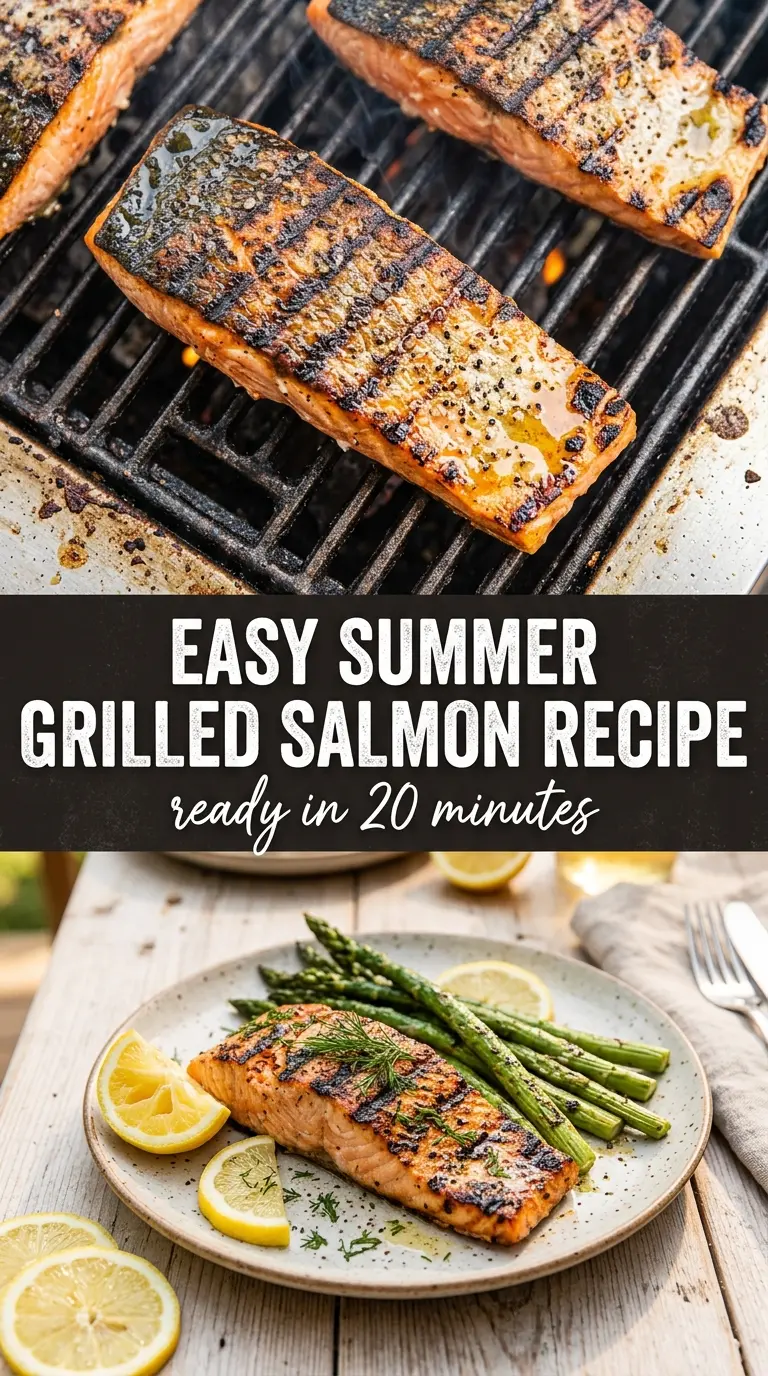
Preheating the grill properly
Heat the grill to medium-high and let it fully preheat before the salmon goes on. A hot grate sears the surface fast enough that the fish releases instead of clinging. If the grill isn’t hot enough, the skin tears and the flesh sticks before it has a chance to set.
Brushing on the marinade
Whisk the oil, lemon juice, garlic, dill, salt, and pepper together, then brush it over the fillets instead of soaking them in a bowl. That gives you even coverage without making the surface slippery. The fish should look lightly coated, not pooled in liquid.
Grilling skin-side down first
Lay the salmon on the grates skin-side down and don’t move it for the first 4 to 5 minutes. You’ll hear a steady sizzle right away; that’s what you want. If you try to flip too soon, the skin will stick and tear, but once the flesh firms up near the bottom, it lifts much more cleanly.
Finishing the cook
Flip the salmon carefully and cook just 3 to 4 minutes more, depending on thickness. The center should flake with a fork but still look moist, not chalky. Pull it from the grill a minute before you think it’s done, because carryover heat keeps cooking the inside after it comes off.
Dairy-Free Herb Finish
This recipe is already dairy-free, which makes it easy to serve as written. If you want a little more richness, add a drizzle of good olive oil at the end or scatter a few capers over the top for a salty finish that wakes up the lemon.
No Grill, Same Flavor
A grill pan on the stove works well if you heat it until it’s smoking hot and oil it lightly right before the fish goes on. You won’t get the same smoky edge, but you’ll still get crisp skin and a clean sear if you leave the fillets alone until they release.
Gluten-Free Summer Dinner Plate
The recipe is naturally gluten-free, so the main thing is what you serve beside it. Keep the sides simple — grilled vegetables, potatoes, rice, or a crisp salad — and the salmon stays the clear center of the plate.
Storage and Reheating
- Refrigerator: Store leftover salmon in an airtight container for up to 3 days. The texture firms up a bit after chilling, but it still works well for salads or grain bowls.
- Freezer: You can freeze cooked salmon for up to 2 months, wrapped tightly and sealed well. The texture softens after thawing, so it’s better for flaking into other dishes than serving as a whole fillet.
- Reheating: Warm it gently in a low oven at 275°F until just heated through, or use short bursts in the microwave at reduced power. High heat dries salmon out fast, which is the mistake that turns leftovers chalky.
Questions I Get Asked About This Recipe
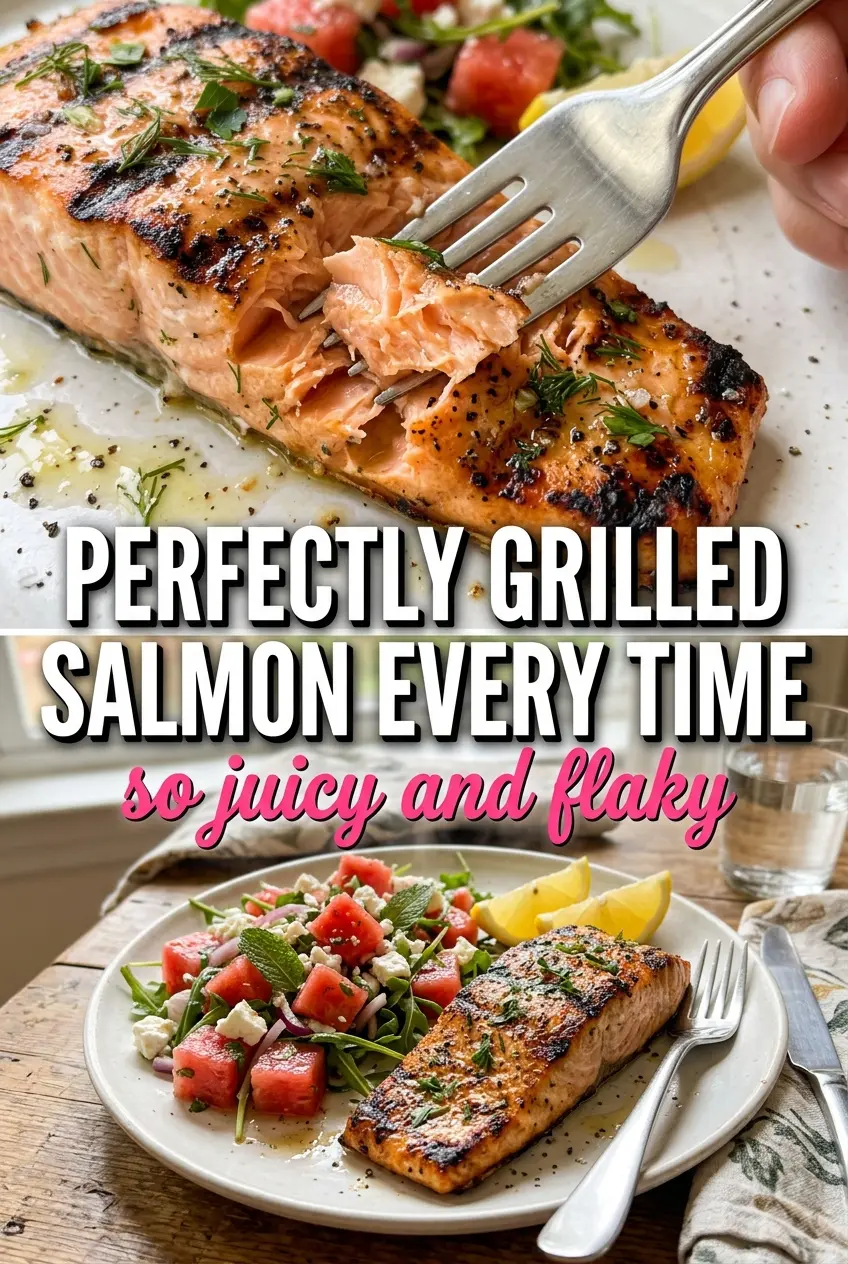
Grilled Salmon
Ingredients
Equipment
Method
- Preheat the grill to medium-high heat and lightly oil the grates so the salmon releases easily.
- Whisk together the olive oil, lemon juice, garlic, dill, salt, and pepper, then brush evenly over the salmon fillets.
- Let the salmon marinate for 10–15 minutes at room temperature so the flavor starts to soak in.
- Place the salmon skin-side down on the grill and cook for 4–5 minutes, until grill marks form and the surface looks opaque.
- Flip carefully and grill for 3–4 minutes more, until the salmon flakes easily with a fork and looks moist throughout.
- Top with fresh lemon slices and parsley before serving for a bright finish.