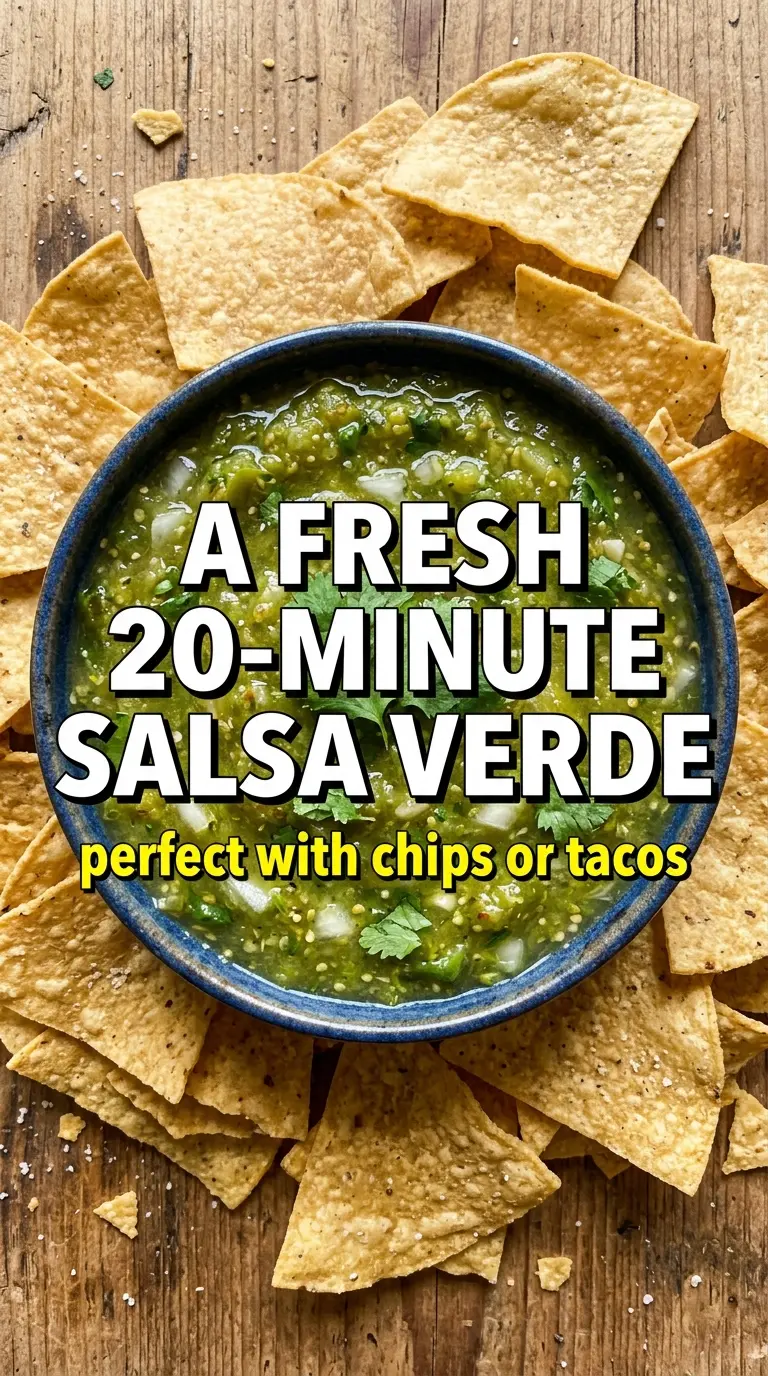
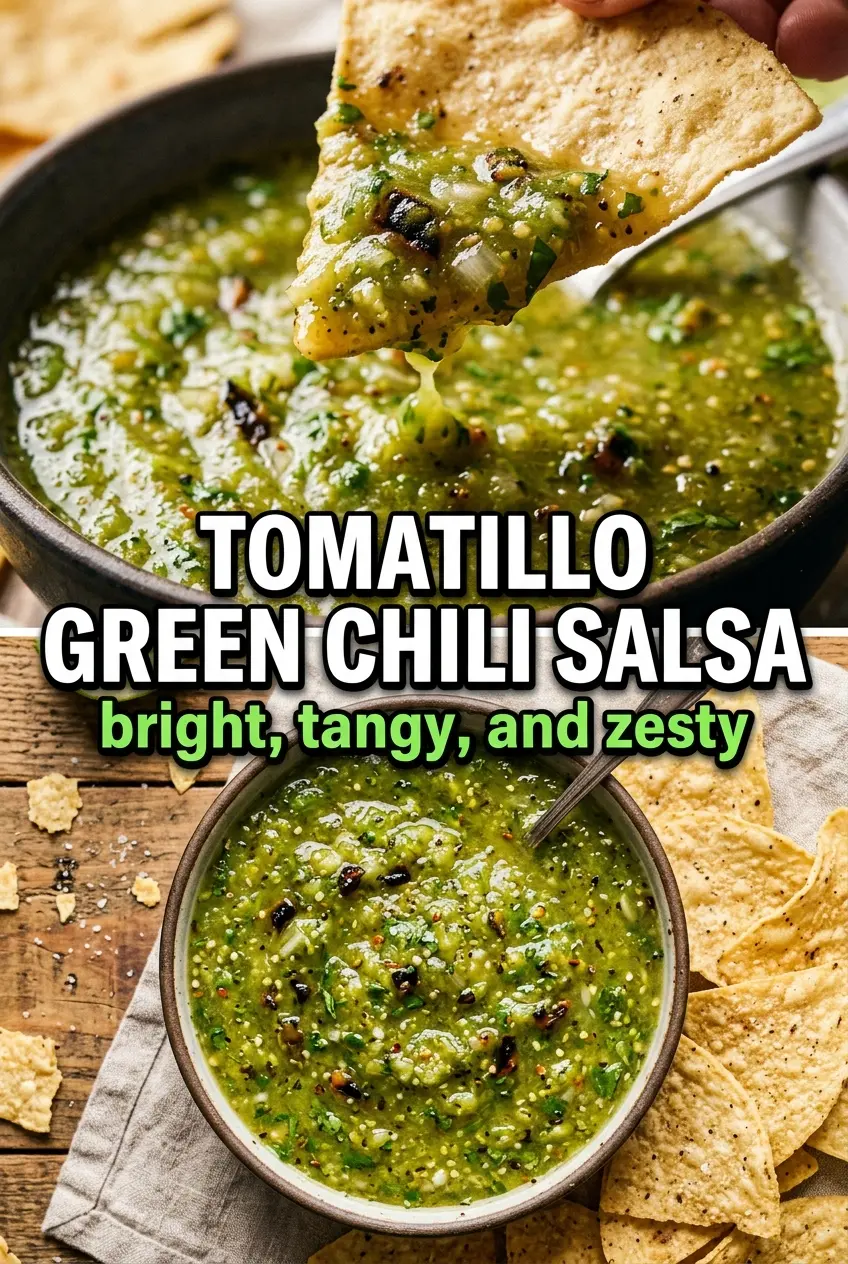
Charred tomatillos, roasted green chiles, and fresh cilantro turn into a salsa verde that tastes bright, smoky, and alive in a way the jarred stuff never quite matches. The broiler does the heavy lifting here, softening the tomatillos until they slump and blister while the peppers pick up enough char to give the salsa depth without dulling that clean, tangy edge.
The key is balance. Tomatillos bring sharpness, but they need the roasted onion, garlic, and lime juice to round them out. Blend everything only until mostly smooth so the salsa still has a little body; if you puree it completely, it turns flat and thin instead of spoonable. A quick taste at the end tells you what it needs: a pinch more salt to wake it up, or a touch more lime if the roast pushed it too mellow.
Below, I’ve included the one roasting detail that keeps the flavor bright instead of bitter, plus the best way to tame the heat if you want a milder green chili salsa for chips, tacos, or enchiladas.
The tomatillos blistered up perfectly under the broiler and the salsa had that bright, tangy bite I was hoping for. I left the jalapeño seeds in and it had just enough heat for tacos without overpowering the cilantro.
Save this roasted tomatillo green chili salsa for chip nights, taco bowls, and anything that needs a bright salsa verde with a little char.
The Broiler Is Doing More Than Just Softening the Tomatillos
Roasting under high heat changes this salsa in two important ways. First, it knocks the raw edge off the tomatillos and onion so the finished salsa tastes rounded instead of sharp and grassy. Second, the char on the poblano and jalapeño gives you that deep roasted flavor that makes salsa verde taste like it came from an actual kitchen, not a blender full of raw vegetables.
The mistake most people make is pulling the vegetables too soon. Pale tomatillos and limp peppers will blend into a thin, sour salsa with no backbone. You want visible blistering, softened skins, and a little collapse at the edges. If the garlic looks deeply browned before the rest is ready, it was left too long on the pan; that’s the one ingredient that can go bitter, so peel it once it’s cool and use the softened cloves inside.
What Each Ingredient Is Actually Doing in This Salsa Verde
- Tomatillos — These are the backbone of the salsa, bringing the tart, juicy flavor that makes salsa verde taste fresh and bright. Rinse off the sticky husks well before roasting, because that natural coating can make the finished salsa taste oddly dull if it’s left on.
- Poblano peppers — Poblanos add a mild green pepper flavor and a little body without pushing the heat too far. If yours are small, use an extra poblano or let one char a little deeper for more roasted depth.
- Jalapeño — This is where the heat lives. Leaving the seeds in gives you a sharper salsa; removing them after roasting keeps the pepper flavor without the burn.
- Unpeeled garlic — Roasting the cloves in their skins protects them from scorching and turns them soft and sweet. If you use pre-peeled garlic, it can dry out and pick up a harsh edge under the broiler.
- White onion — A little onion sharpens the salsa and keeps the flavor from tasting too one-note. Broiling it with the vegetables tames its bite, so don’t skip the roast unless you want a much rawer finish.
- Cilantro, lime juice, and salt — These finish the salsa and make the roasted vegetables taste alive again. The lime wakes up the tomatillos, and the salt needs to be adjusted after blending because the texture changes how you perceive seasoning.
Building the Blend Without Losing the Fresh, Tangy Finish
Roasting Until the Vegetables Collapse at the Edges
Spread everything in a single layer so the broiler can hit the surfaces evenly. Turn the tray halfway through so one side doesn’t char while the other stays pale. The tomatillos should look blistered and softened, and the peppers should have obvious blackened spots. If the vegetables are still firm, the salsa will taste raw even after blending.
Peeling, Seeding, and Deciding on Heat
Let the vegetables cool just enough to handle, then peel the garlic and strip the skins from the peppers. At this point you decide how hot the salsa will be: remove the seeds and stems for a milder version, or leave some in for more bite. If you want predictable heat, seed the jalapeño but keep a little of the white membrane, since that’s where most of the fire lives.
Blending for Texture Instead of Soup
Add the cilantro, lime juice, and salt, then blend only until the salsa is mostly smooth with a little texture left behind. If you run the blender too long, the salsa can turn foamy and thin, which hides the roasted flavor. Taste after blending and adjust in small moves. A little more lime sharpens it, while a pinch more salt makes the tomatillos and chiles taste fuller.
How to Adapt This for Different Heat Levels and Serving Plans
Mild Salsa Verde for Chips and Kids
Remove all the jalapeño seeds and most of the membrane, then use the poblano peppers as the main source of green pepper flavor. You’ll still get a tangy, roasted salsa, but the heat drops enough that it reads bright instead of fiery.
Extra-Spicy Version
Leave the jalapeño seeds in and add another small jalapeño if you want a sharper salsa for tacos or grilled meats. The roasted tomatillos can handle the extra heat, but taste after blending so the chile doesn’t take over the lime.
Cilantro-Free Swap
If cilantro tastes soapy to you, use a small handful of flat-leaf parsley instead. The salsa loses that classic cilantro note, but the roasted tomatillo and lime still carry the bright, fresh finish.
Storage and Reheating
- Refrigerator: Store in an airtight container for up to 5 days. The flavor deepens overnight, though the salsa may loosen a little as it sits.
- Freezer: It freezes well for up to 2 months, though the texture softens after thawing. Freeze in small portions so you can thaw only what you’ll use.
- Reheating: Serve it cold or let it come to room temperature; there’s no need to warm it. If it separates after chilling, stir it well or give it a quick pulse in the blender, since aggressive reheating can flatten the fresh lime and cilantro.
The Questions Worth Asking Before You Blend
Tomatillo Green Chili Salsa
Ingredients
Equipment
Method
- Preheat the broiler and arrange the tomatillos, poblano peppers, jalapeño, garlic, and onion on a sheet pan.
- Broil for 8–10 minutes, turning the vegetables halfway, until they are charred and softened.
- Let the roasted vegetables cool slightly, then peel the garlic and remove the stems and seeds from the peppers for a milder salsa (leave seeds in for extra heat).
- Blend the roasted vegetables with the fresh cilantro, lime juice, and kosher salt until mostly smooth, with a little texture remaining.
- Taste and adjust salt or lime juice as needed.
- Serve immediately, or store in an airtight container in the refrigerator for up to 5 days.