Tender pasta coated in a garlic butter cream sauce gets its lift from chopped sun-dried tomatoes and parmesan, and that combination lands somewhere between comforting and restaurant-style without asking much of the cook. The sauce clings to every strand or ridge instead of pooling at the bottom of the bowl, and the tomatoes bring a tangy bite that keeps the whole dish from tasting heavy.
What makes this version work is the order: the garlic blooms in butter just long enough to smell sweet, the tomatoes heat in the fat so their flavor spreads through the pan, and the cream simmers gently before the parmesan goes in. That last part matters. Cheese added to a boiling sauce can turn grainy fast, but a low simmer gives it time to melt into something smooth and glossy.
Below, you’ll find the small details that keep the sauce silky, the best pasta shapes for grabbing all that garlic butter, and a few smart swaps if you need to stretch what’s already in the pantry.
The sauce turned out silky and coated the penne perfectly, and the sun-dried tomatoes gave it enough tang that nobody missed extra seasoning. I added a splash of pasta water at the end and it came together like a real restaurant dish.
Save this creamy garlic butter sun-dried tomato pasta for the nights when you want a one-pan sauce that tastes like you spent much longer at the stove.
The Sauce Stays Silky When You Add the Cheese Off the Heat
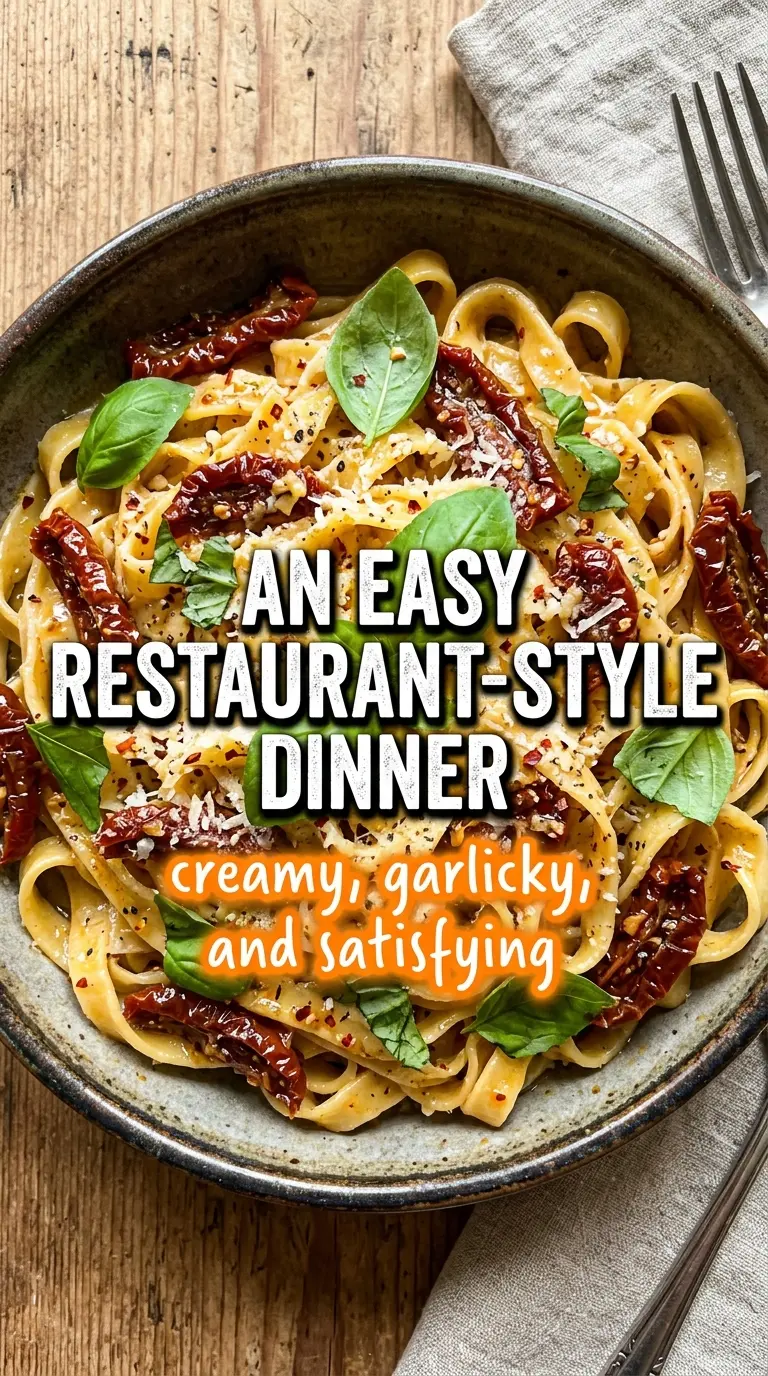
Parmesan is the ingredient that can make this pasta feel luxurious or make it grainy in a single minute. The difference comes down to heat. If the sauce is boiling when the cheese goes in, the proteins tighten too fast and the fat separates. That’s when you get a sandy texture instead of a smooth one.
Pull the pan back to a gentle simmer before you stir in the parmesan. The sauce should still be hot enough to melt the cheese, but calm enough that it thickens gradually. If it looks a little loose at first, keep stirring; parmesan continues to thicken as it sits for a minute or two.
- Sun-dried tomatoes — These do more than add color. They bring concentrated tomato flavor and a little tangy chew that gives the sauce some backbone. If yours are packed in oil, drain them lightly; a little oil is fine, but too much can make the finished sauce greasy.
- Heavy cream — This is what gives the sauce its body and helps it cling to the pasta. Half-and-half can work in a pinch, but the sauce will be thinner and a bit more fragile. If you use it, keep the heat lower and add the cheese slowly.
- Parmesan — Use finely grated parmesan, not the hard shreds that never fully melt. The finer texture disappears into the cream more easily and gives you a smoother finish. Pre-grated can work if that’s what you have, but freshly grated is worth it here.
- Butter — Butter carries the garlic and tomato flavor through the whole pan, and it gives the sauce a rounder taste than oil alone. Salted or unsalted both work; just taste before adding extra salt at the end because parmesan already brings plenty.
- Pasta shape — Fettuccine gives you broad ribbons for the sauce to coat, while penne traps bits of tomato in the ridges. Either one works. Use what you have, but cook it to just shy of done because it will finish in the skillet.
Building the Garlic Butter Base Without Burning the Garlic
Start with the Butter and Garlic
Melt the butter over medium heat, then add the garlic and let it cook for about a minute. You want the garlic fragrant and pale gold at the edges, not browned. If it turns dark before the tomatoes go in, the sauce will taste sharp instead of mellow, and there’s no fixing that later.
Wake Up the Sun-Dried Tomatoes
Stir in the chopped sun-dried tomatoes and let them cook in the butter for a couple of minutes. This step softens their chew and helps the flavor spread through the pan instead of sitting in little pockets. If the pan looks dry, the tomatoes may be very dry-packed; add the smallest splash of oil or pasta water rather than turning up the heat.
Finish the Sauce in a Gentle Simmer
Pour in the cream and bring it to a quiet simmer, not a hard boil. Once it starts to thicken slightly around the edges, add the parmesan in handfuls and stir until smooth. The sauce should coat the spoon and fall in a slow ribbon; if it looks too thick, loosen it with reserved pasta water a tablespoon at a time.
Toss the Pasta While the Sauce Is Still Glossy
Add the cooked pasta straight into the skillet and toss until every piece is coated. A little reserved pasta water helps the sauce turn glossy and clingy, especially if the pasta sat for a minute or two after draining. Season at the end so you can judge the salt after the parmesan has done its part.
How to Adapt This for a Lighter Bowl or a Different Pantry
Dairy-Free Version That Still Feels Creamy
Use a full-fat unsweetened plant cream and swap the butter for olive oil or a plant-based butter. The sauce won’t taste exactly the same, but the sun-dried tomatoes and garlic still carry a lot of flavor. Add the dairy-free parmesan at the very end and keep the heat low so it doesn’t separate.
Gluten-Free Pasta Without the Mushy Finish
Gluten-free pasta works well here, but it overcooks fast, so pull it from the water when it still has a firm center. Toss it with the sauce right away because it softens again as it sits in the skillet. Rice-based shapes hold up better than some legume pastas, which can break if you stir too aggressively.
Adding Protein Without Diluting the Sauce
Grilled chicken, shrimp, or sliced Italian sausage all fit here, but cook them separately and fold them in at the end. If you add raw protein to the sauce, you’ll either overcook the pasta waiting for it to finish or water down the sauce. Leftover rotisserie chicken works especially well because it picks up the garlic butter without asking for extra time.
Making It a Bit Richer for a Dinner Party
Add a handful of baby spinach right after the cream and let it wilt into the sauce before the cheese goes in. You get a little freshness and color without changing the texture much. A few red pepper flakes also work nicely if you want a sharper finish against the sweetness of the tomatoes.
Storage and Reheating
- Refrigerator: Store leftovers in an airtight container for up to 4 days. The sauce will thicken as it chills.
- Freezer: It’s not the best freezer pasta because cream sauces can separate after thawing, but you can freeze it if needed. Reheat slowly and expect a looser, less silky texture.
- Reheating: Warm it in a skillet over low heat with a splash of milk, cream, or water, stirring often. High heat is the mistake that turns the sauce oily or grainy.
Questions I Get Asked About This Recipe
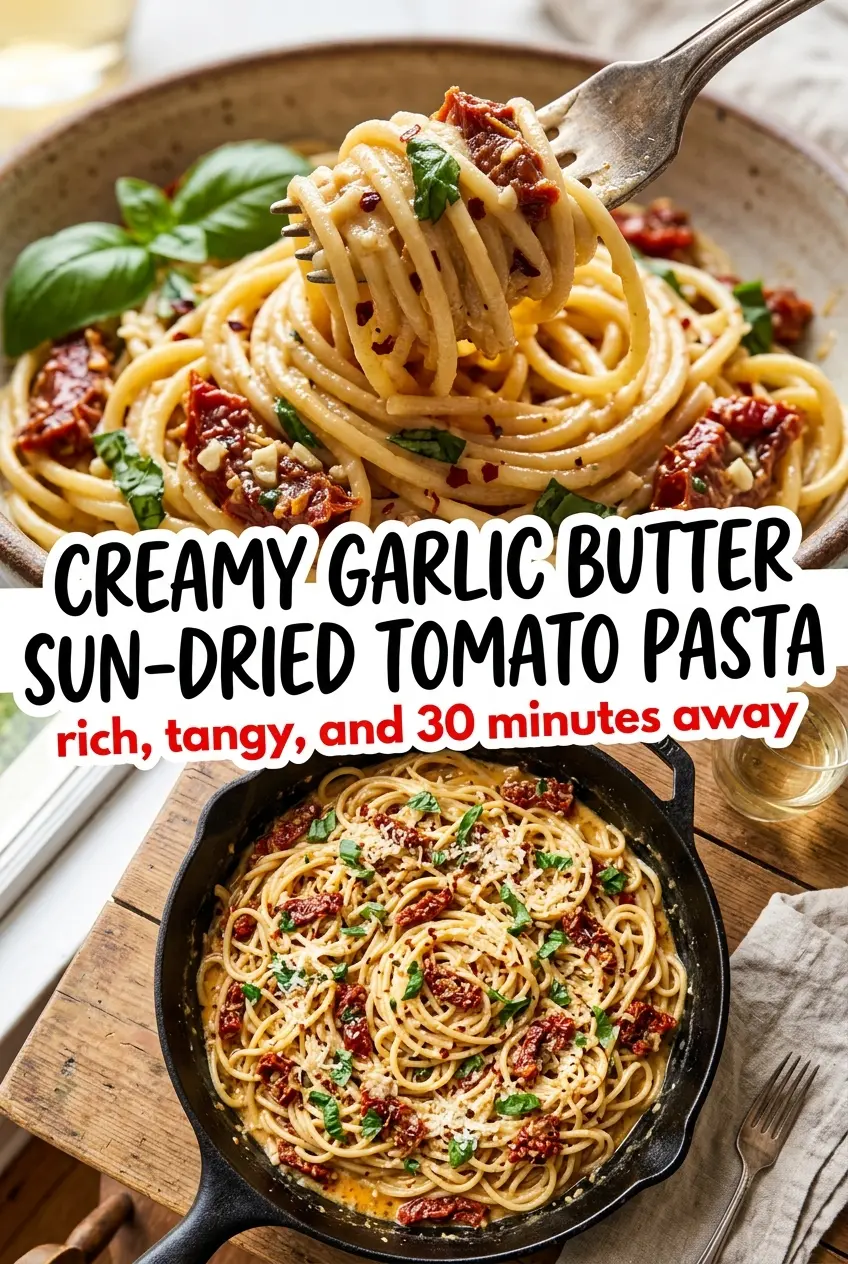
Creamy Garlic Butter Sun-Dried Tomato Pasta
Ingredients
Equipment
Method
- Bring a large pot of salted water to a boil, then cook the pasta according to package directions until tender. Before draining, reserve 1/2 cup pasta water.
- Melt the butter in a large skillet over medium heat. Add the minced garlic and cook for 1 minute until fragrant.
- Add the chopped sun-dried tomatoes to the skillet and cook for 2 minutes.
- Pour in the heavy cream and bring it to a gentle simmer, keeping it at a steady simmer rather than a hard boil.
- Stir in the grated parmesan cheese until melted and smooth.
- Add the cooked pasta to the skillet and toss to coat thoroughly. Add reserved pasta water as needed to loosen the sauce to a silky consistency.
- Season with salt and pepper to taste, garnish with fresh basil, and serve warm with the sauce clinging to the pasta.