Gyoza soup lands in that perfect middle place between comforting and light: a clear, savory broth with tender dumplings, wilted bok choy, and mushrooms that soak up every bit of ginger and soy. It eats like a full meal, but it doesn’t sit heavy, and the dumplings stay distinct instead of turning the pot into a cloudy, overcooked mess.
The trick is building the broth first and letting the aromatics simmer long enough to perfume it before the dumplings go in. Frozen or fresh gyoza both work here, but they need enough room to cook gently so the wrappers stay intact. Sesame oil goes in at the end for a clean finish, not early where the aroma can cook off.
Below, I’ve included the one timing detail that keeps the dumplings from bursting, plus a few easy swaps if you want to work with what you already have in the fridge.
The broth turned out clear and light, and the gyoza stayed tender instead of falling apart. I added a little extra chili oil at the table and my husband asked if we could make it again the next night.
Save this gyoza soup for the nights when you want dumpling comfort in a quick dashi-ginger broth.
The Broth Should Stay Clear, Not Turn Into Dumpling Porridge
The biggest mistake in gyoza soup is boiling the dumplings hard from the start. That agitation breaks the wrappers and clouds the broth, which is how you end up with a pot that tastes fine but looks tired. A gentle simmer keeps the dumplings intact and gives the filling time to heat through without tearing the skins.
The other place people go wrong is adding the greens too early. Bok choy only needs a couple of minutes, and if it cooks too long it goes dull and soft instead of staying bright and silky. Build the broth first, then layer in the dumplings and vegetables in the order they need.
What Each Ingredient Is Actually Doing in This Bowl
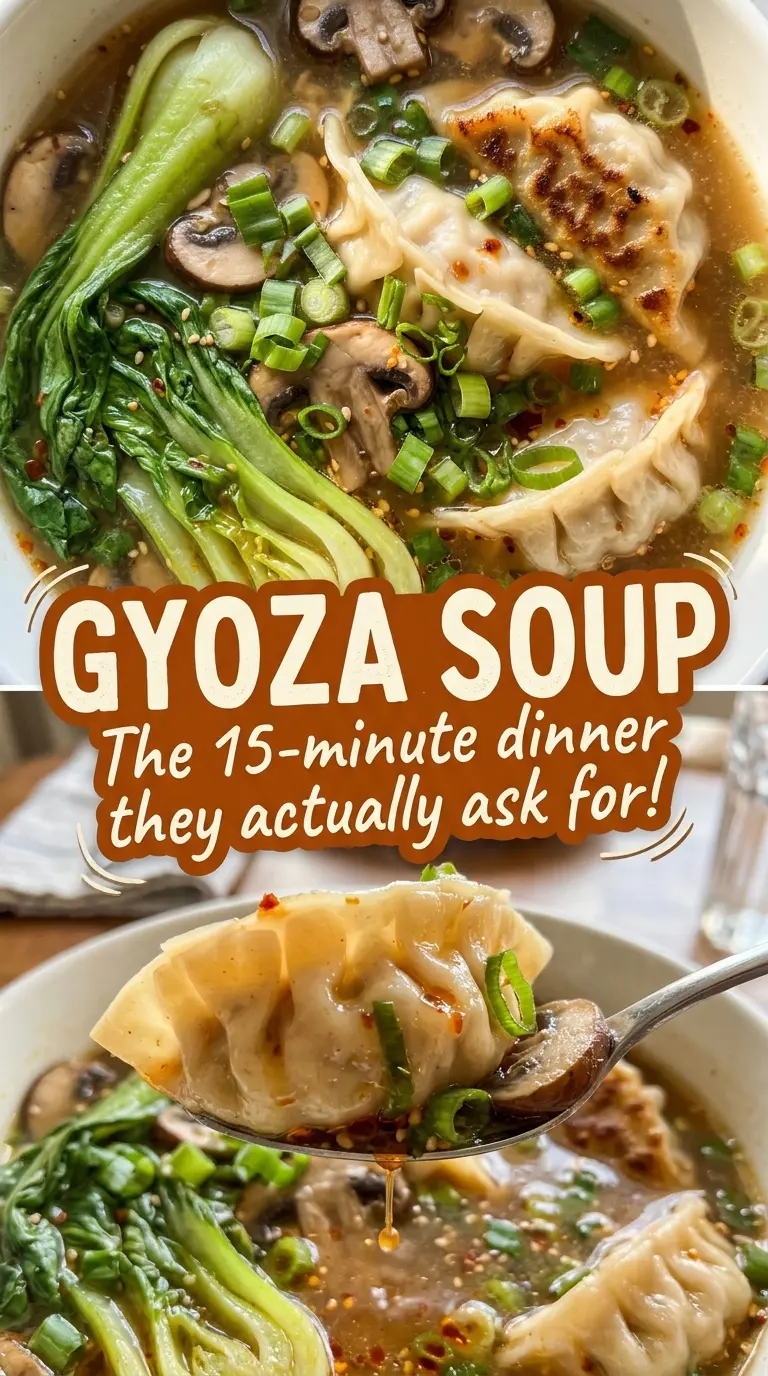
- Gyoza or potsticker dumplings — These are the meal in the bowl, so quality matters more than almost anything else. Fresh or frozen both work, but frozen dumplings should go straight from the freezer into the simmering broth; thawing first makes them sticky and more likely to split.
- Chicken broth — Use a broth you’d actually sip on its own, because it sets the whole tone. If yours is bland, the soup will taste thin no matter how much soy sauce you add.
- Ginger and garlic — These give the broth its edge and keep it from tasting one-note. Fresh grated ginger is worth using here because dried ginger won’t give the same bright heat.
- Mirin and rice vinegar — Mirin rounds out the broth with a gentle sweetness, while rice vinegar keeps it from feeling flat. If you skip both, the soup loses the sweet-sour balance that makes it taste complete.
- Bok choy and shiitakes — The bok choy brings freshness and a little crunch in the stems, while the mushrooms deepen the broth as they simmer. Shiitakes are best here, but cremini mushrooms work in a pinch if that’s what you have.
- Sesame oil — Add it at the end so the aroma stays fragrant instead of cooking off. A little goes a long way, and too much will make the broth taste greasy rather than nutty.
Building the Bowl in the Right Order
Starting With the Aromatic Broth
Bring the broth to a steady simmer with the garlic, ginger, soy sauce, mirin, and rice vinegar already in the pot. You want the liquid hot and fragrant before anything else goes in, because that gives the soup its backbone before the dumplings arrive. If the broth is only barely warm, the dumplings sit too long and the wrappers soften before the filling is hot.
Cooking the Mushrooms and Gyoza Gently
Add the mushrooms first and let them cook until they lose their raw look and turn silky, about 3 to 4 minutes. Then add the dumplings straight into the simmering broth and keep the heat gentle enough that the surface trembles instead of boils hard. If the dumplings are frozen, expect them to need the full package timing; if they start to float and the wrappers look slightly translucent, they’re close.
Finishing With the Greens and Sesame Oil
Stir in the bok choy near the end and cook just until the stems soften and the leaves wilt, usually 2 to 3 minutes. Pull the pot off the heat, then stir in the sesame oil so the fragrance stays sharp and nutty. Taste the broth after that and add salt only if it still needs it, because the soy sauce often carries enough seasoning on its own.
How to Adapt This for What’s in Your Kitchen
Make It Vegetarian Without Losing Depth
Use vegetable broth and swap in vegetable gyoza. The broth will still be flavorful if you keep the ginger, garlic, soy sauce, and mushrooms, but it helps to choose a broth with some body so the soup doesn’t taste watery.
Gluten-Free Changes That Actually Hold Up
Use gluten-free dumplings and swap the soy sauce for tamari or a certified gluten-free soy sauce. Check the dumpling package closely, because many wrappers contain wheat even when the filling itself is fine.
Add More Heat Without Overpowering the Broth
Keep the soup mild while it cooks and let chili oil do the heavy lifting at the table. That keeps the broth balanced for everyone, and people who want more heat can build it bowl by bowl instead of locking the whole pot into one level of spice.
Storage and Reheating
- Refrigerator: Store leftovers for up to 3 days. The dumplings soften a bit as they sit, but the broth stays flavorful.
- Freezer: This soup doesn’t freeze well once the dumplings are cooked, since the wrappers turn mushy after thawing. If you want to plan ahead, freeze the broth base without the gyoza and greens.
- Reheating: Warm it gently on the stove over low heat until just hot. A hard boil will split the dumplings and make the bok choy collapse, so keep the heat low and stop as soon as the broth is steaming.
Questions I Get Asked About This Recipe
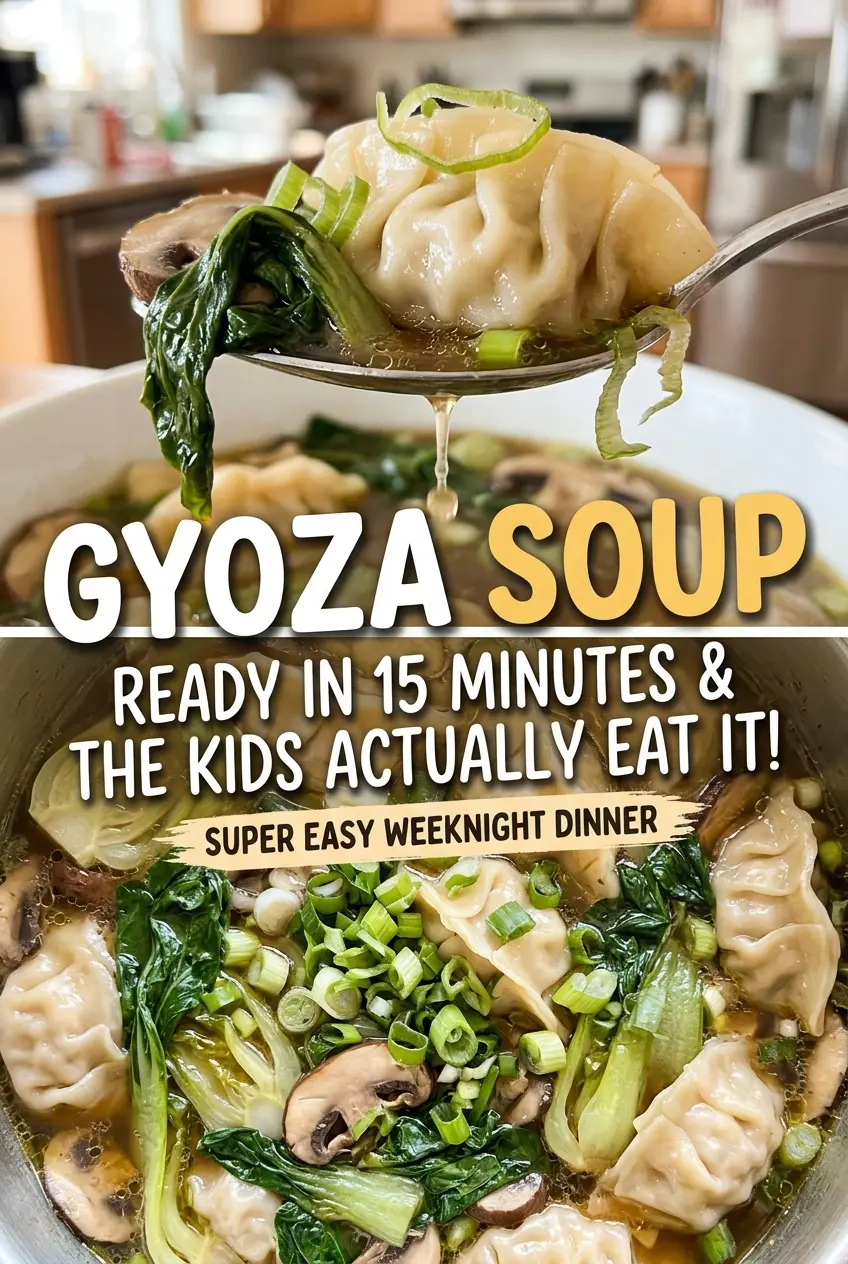
Gyoza Soup
Ingredients
Equipment
Method
- Bring the chicken broth to a simmer in a large pot, then add the minced garlic, grated ginger, soy sauce, mirin, and rice vinegar.
- Simmer for 5 minutes to meld the flavors, keeping the broth at a gentle bubble.
- Add the sliced shiitake mushrooms to the simmering broth and cook for 3-4 minutes, until softened and fragrant.
- Add the bok choy and cook for 2-3 minutes until wilted but still bright green.
- Add the gyoza directly to the simmering broth and cook according to package directions (usually 5-7 minutes) until cooked through.
- Stir in the sesame oil, then taste and season with salt.
- Serve hot, topped with green onions, sesame seeds, and chili oil.