Chicken lasagna soup lands in that sweet spot between comforting and practical: all the tomato-rich, cheesy, noodle-studded satisfaction of lasagna, but in a bowl that comes together without layering, baking, or waiting for a casserole to set. The broth stays bright and savory, the chicken turns tender instead of dry, and the broken noodles give you that familiar lasagna texture in a spoonable format that feels hearty enough for dinner.
What makes this version work is the order. Browning the chicken first gives the broth a deeper base, and cooking the tomato paste with the onion and garlic takes away that raw edge that can hang around in quick soups. The cheese dollop matters too: ricotta, mozzarella, and parmesan melt into the hot soup instead of disappearing into it, so every bowl gets creamy pockets instead of a uniform blur.
Below, you’ll find the little choices that keep the noodles from going mushy and the cheese from clumping. There’s also a storage note worth reading if you want leftovers that still taste like lasagna soup, not a pot of overcooked pasta.
The broth had such a rich tomato flavor, and the noodles held up all the way through dinner. I loved that the ricotta-mozzarella mix melted into the soup instead of turning stringy.
Chicken lasagna soup is the kind of one-pot dinner that deserves a spot in your Pinterest board for cold nights and easy leftovers.
The Reason the Noodles Stay Tender Instead of Turning Starchy
Lasagna soup fails when the pasta sits in the pot too long. Broken lasagna noodles release starch fast, and once they cross that line, the broth turns thick and the noodles go soft in a way that feels heavy instead of cozy. The fix is to simmer them only until just tender, then get the soup off the heat.
The other thing that changes the result is the broth base. Tomato paste cooked with onion and garlic gives you a deeper, more rounded tomato flavor than just dumping everything in at once. That extra minute or two in the pot is what keeps the soup tasting layered instead of flat.
- Chicken breast or thighs — Breast cooks a little leaner and shreds cleanly, while thighs bring more richness and stay forgiving if you simmer a few minutes longer. Dice the chicken into even pieces so it browns instead of steaming.
- Tomato paste — This is not just for color. Cooking it briefly in the pot gives the broth a concentrated tomato backbone and removes the raw, metallic edge.
- Lasagna noodles — Break them into rough pieces, not tiny shards. Larger pieces hold their shape better and give you the texture you want in every spoonful.
- Ricotta, mozzarella, and parmesan — This combination gives you creaminess, stretch, and sharpness in one dollop. If you skip the parmesan, the topping tastes flatter and less like lasagna.
What Each Ingredient Is Actually Doing in This Soup
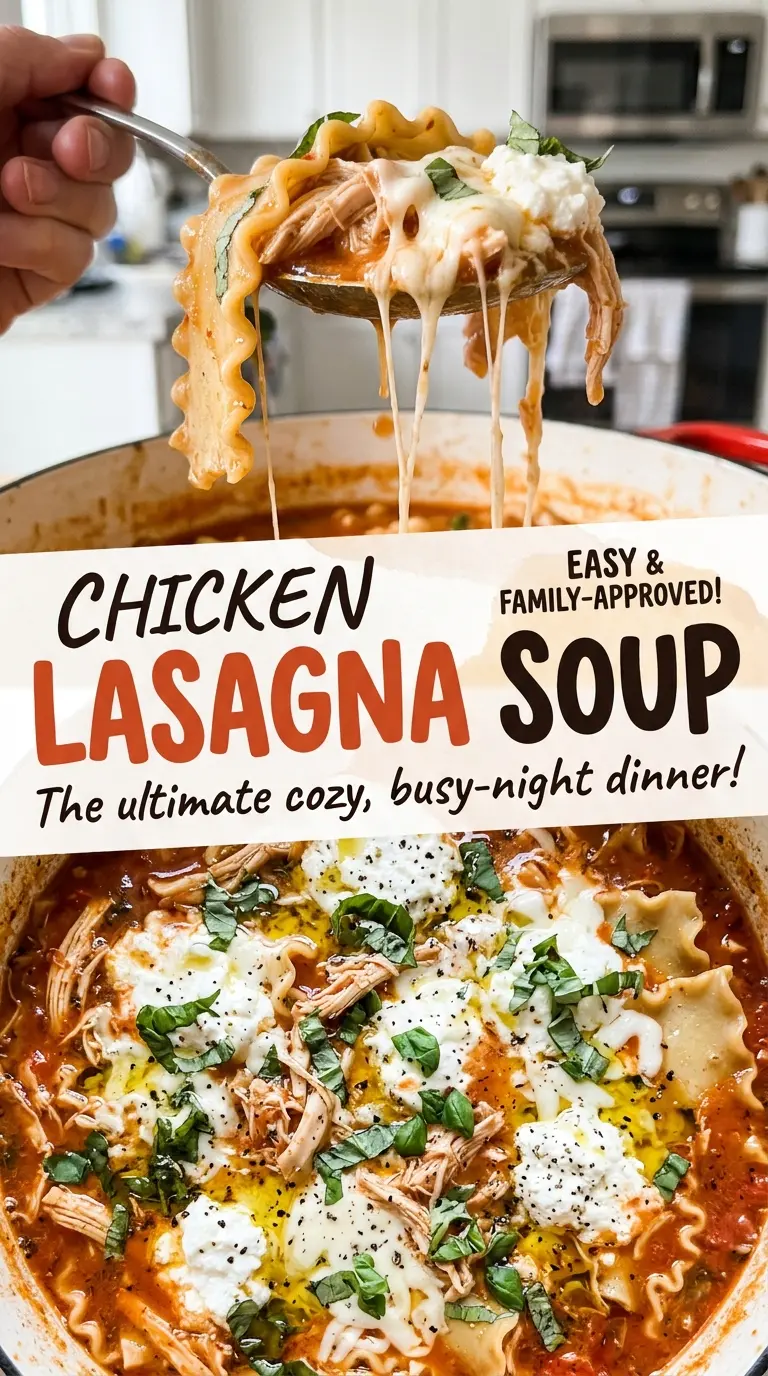
Chicken carries the soup from side dish to dinner. Thighs give you a slightly richer bowl, but breast works well if you don’t overcook it.
Onion and garlic build the savory base. The onion needs time to soften before the garlic goes in, or the garlic can burn and turn bitter fast.
Crushed tomatoes and diced tomatoes work together for body and texture. Crushed tomatoes make the broth cohesive, while diced tomatoes leave little bursts of tomato in the spoon.
Broth stretches everything into soup. Use a good chicken broth here, because it sets the tone for the whole pot.
Lasagna noodles should be added at the end so they stay intact. If you cook them too early, they’ll absorb too much liquid and steal the texture from the soup.
The cheese dollop is what makes this taste like lasagna rather than tomato chicken pasta. Stir the ricotta mixture together before serving so the cheeses melt into a loose, creamy topping instead of separate clumps.
Building the Soup in the Right Order
Browning the Chicken First
Heat the pot before the chicken goes in and let it sit long enough to pick up color on the first side. You want browned edges, not pale, gray pieces swimming in moisture. If the pan looks crowded, brown the chicken in batches; otherwise it will steam and you’ll lose the savory base that carries through the whole soup.
Softening the Onion and Cooking the Tomato Paste
Once the chicken is out, cook the onion in the same pot until it turns translucent and sweet-smelling. Add the garlic and tomato paste together, then stir until the paste darkens slightly and smells cooked, not sharp. If the garlic starts to brown fast, lower the heat right away because burnt garlic will overpower the tomatoes.
Simmering the Broth and Noodles
Add the tomatoes, broth, and seasonings, then bring the pot to a steady boil before dropping in the noodles. Reduce to a simmer once the noodles go in so they cook evenly without breaking apart from aggressive bubbling. Pull the pot off the heat as soon as the noodles are tender; the carryover heat will finish them, and that keeps the texture in the sweet spot.
Finishing with the Cheese Dollop
Mix the ricotta, mozzarella, parmesan, and basil in a small bowl until it looks thick and spoonable. Add a generous spoonful to each bowl, then ladle the hot soup around it so it softens naturally. If you stir it hard into the whole pot, the cheese disappears and you lose the contrast that makes each bowl feel special.
Three Ways to Adjust This Soup Without Losing What Makes It Work
Use Thighs for a Richer Bowl
Chicken thighs bring more flavor and stay tender even if the soup simmers a little longer. They’re the better choice if you want a heartier, slightly richer broth, but you’ll still get the same lasagna-style finish.
Make It Gluten-Free with the Right Pasta
Use a sturdy gluten-free lasagna noodle or broken gluten-free pasta with a similar shape. Gluten-free noodles can soften fast, so check them a minute or two early and stop cooking while they still have a little bite.
Dairy-Free Topping That Still Feels Creamy
Skip the ricotta-mozzarella mixture and top each bowl with a spoonful of dairy-free ricotta-style spread or a cashew cream thickened with nutritional yeast. You won’t get the same melt, but you’ll keep that creamy contrast against the tomato broth.
Make It Spicier Without Throwing Off the Balance
Increase the red pepper flakes by another 1/4 teaspoon or finish each bowl with a pinch of crushed red pepper. Keep the heat subtle enough that it lifts the tomatoes instead of covering them.
Storage and Reheating
- Refrigerator: 3 to 4 days. The noodles will keep absorbing broth, so expect the soup to thicken.
- Freezer: It freezes, but the noodles soften after thawing. For the best texture, freeze the soup base without noodles and cook fresh noodles when you reheat it.
- Reheating: Warm it gently on the stove over medium-low heat with a splash of broth. The common mistake is boiling it hard, which makes the noodles bloated and can turn the chicken dry.
Answers to the Questions Worth Asking

Chicken Lasagna Soup
Ingredients
Equipment
Method
- Heat olive oil in a large pot over medium-high heat, then add diced chicken. Cook until browned, then remove and set aside.
- Keep the pot over medium-high heat for the next step using the same cooking juices.
- Sauté diced onion in the same pot for 4 minutes. Add minced garlic and tomato paste, then cook for 2 minutes.
- Add crushed tomatoes, diced tomatoes, chicken broth, Italian seasoning, dried basil, dried oregano, and red pepper flakes. Bring the mixture to a boil.
- Return the browned chicken to the pot and add broken lasagna noodles. Simmer for 10-12 minutes, until noodles are tender and chicken is cooked through.
- Season with salt and black pepper to taste. Stir well so seasoning is evenly distributed.
- Mix ricotta, shredded mozzarella, and parmesan to form a thick cheese dollop. Add fresh basil for a speckled, aromatic topping.
- Ladle the soup into bowls and serve with a generous spoonful of the cheese dollop in the center. Let it melt slightly into the hot tomato broth before eating.