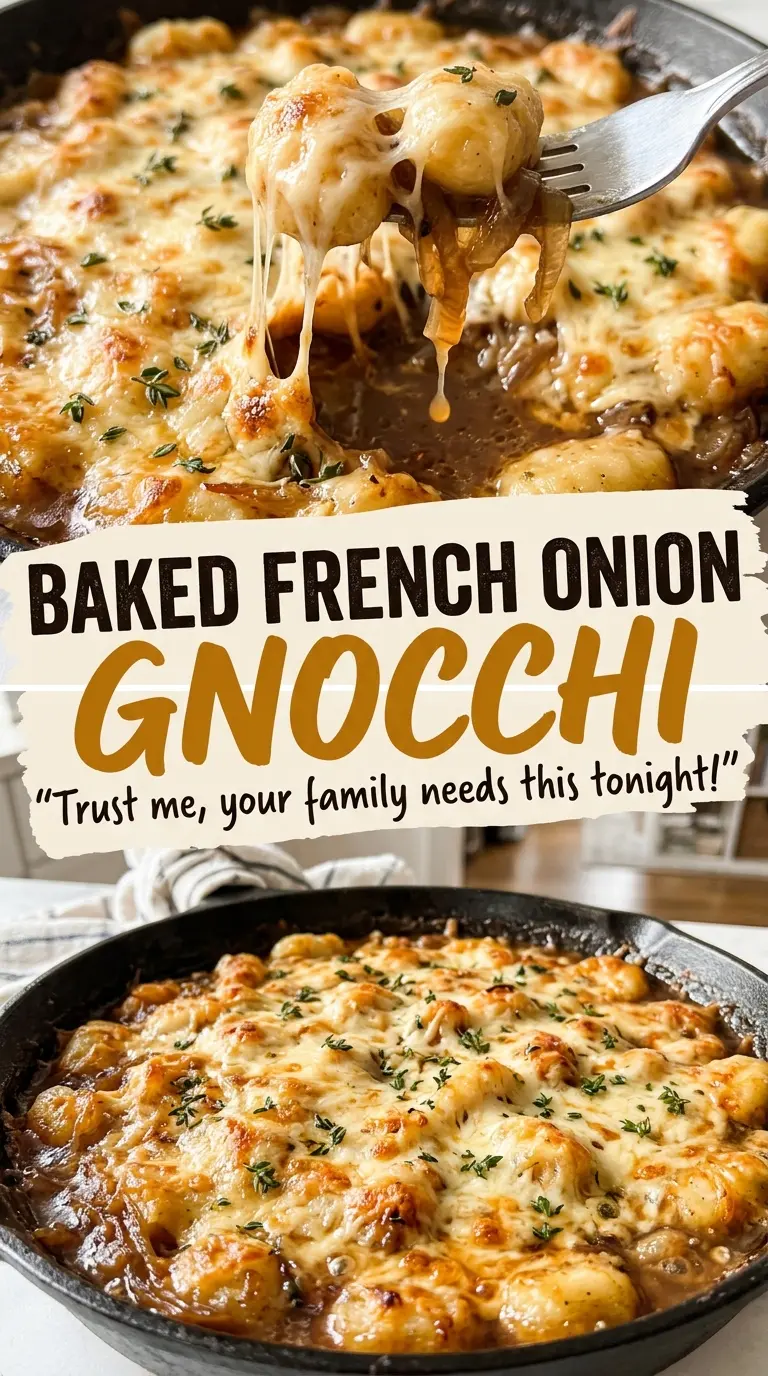
Deeply caramelized onions, a glossy savory broth, and a bubbling layer of Gruyere turn simple potato gnocchi into a skillet dinner with real restaurant energy. The gnocchi cook right in the sauce, so they soak up all that oniony richness instead of tasting like a separate add-in. What lands on the table is creamy, brothy at the edges, and topped with a golden crust that cracks under the spoon.
The key here is patience with the onions. They need time in butter and olive oil to lose their sharp bite and turn jammy and sweet, which gives the whole dish its French onion character. A splash of white wine or sherry loosens the browned bits from the pan, and the broth plus cream creates enough liquid for the gnocchi to cook without turning the dish into soup.
Below, you’ll find the small details that keep the sauce balanced, the best way to handle the broil so the cheese browns before the gnocchi overcooks, and a few smart swaps if you need to work with what you’ve got.
The onions took a little time, but it was worth it. The sauce got silky and the gnocchi cooked perfectly in the skillet without falling apart. My husband kept going back for more of the crispy Gruyere on top.
Save this baked French onion gnocchi for the night you want a cozy skillet dinner with a crisp Gruyere top and rich onion broth.
The Onion Step You Can’t Rush If You Want Real French Onion Flavor
The biggest mistake in dishes like this is stopping the onions too early. Pale onions taste sweet, but they don’t have the deep, savory backbone that makes French onion anything worth the effort. You want the onions softened, then bronzed, then darker still until they collapse into a jammy layer that coats the pan and smells almost nutty.
That caramelization does the heavy lifting, so the rest of the dish can stay simple. If the onions start sticking hard or threatening to burn, lower the heat and add a small splash of water to loosen the pan. You’re not trying to brown them fast; you’re trying to build sweetness and depth without any harsh edges.
What Each Ingredient Is Actually Doing in This Dish
- Potato gnocchi — Shelf-stable or refrigerated gnocchi both work here because they cook right in the skillet. Don’t boil them first; they need the sauce to soften and thicken around them, which gives the dish its one-pan texture.
- Onions — Use three large onions, and give them the full caramelization time. Yellow onions are the best choice for sweetness and balance, but white onions will work if that’s what you have.
- Dry white wine or dry sherry — This lifts the browned fond from the skillet and adds the sharp edge French onion soup needs. If you skip it, the dish tastes flatter, so use the wine if you can; if you don’t want alcohol, a splash of extra broth plus a teaspoon of white wine vinegar will replace some of the brightness.
- Beef broth — This gives the dish its classic French onion depth. A good broth matters here, because it’s the main liquid in the pan; low-sodium is smart so you can control the salt at the end.
- Worcestershire sauce — This is the quiet backbone ingredient. It adds umami and a little tang, which makes the broth taste fuller without turning it into a steak sauce dish.
- Heavy cream — A small amount rounds out the broth and keeps it from tasting thin after the gnocchi go in. Half-and-half can work, but the sauce won’t finish as lush.
- Gruyere — This is the cheese you want for the top. It melts smoothly and browns beautifully, and that nutty flavor is part of the whole French onion effect; Swiss cheese is the closest substitute if needed.
- Fresh thyme — Use fresh if you can, because the little leaves perfume the sauce without taking over. Dried thyme works in a pinch, but reduce the amount to about a third of what you’d use fresh.
Building the Sauce So the Gnocchi Cook Instead of Turning Mushy
Caramelizing the onions until they lose all sharpness
Melt the butter with the olive oil in a large oven-safe skillet, then add the sliced onions and cook them over medium-low heat. The onions should soften first, then turn golden, then finally deep amber and jammy over 35 to 40 minutes. If the heat is too high, they’ll brown on the outside before they taste sweet all the way through. Stir often, scrape the bottom, and keep going until the pan smells rich instead of raw.
Deglazing and building the broth
Pour in the wine or sherry and let it hiss, then stir and scrape until the browned bits dissolve into the liquid. That step turns the stuck-on fond into flavor instead of leaving it behind on the pan. Add the garlic and thyme for just a minute so the garlic loses its raw edge, then pour in the broth, Worcestershire sauce, and cream. Bring everything to a gentle simmer; if it boils hard, the cream can turn grainy and the onions can lose their silky texture.
Cooking the gnocchi in the sauce
Stir in the uncooked gnocchi and coat them in the broth. They should sit mostly submerged, not floating in a huge amount of liquid. As they cook, the sauce will thicken a little and the gnocchi will plump up, so resist the urge to add extra liquid unless the pan looks nearly dry. If the mixture seems too loose right before baking, that’s fine; the gnocchi finish by absorbing some of it in the oven.
Finishing under heat until the top browns
Scatter the Gruyere evenly over the skillet, then bake or broil until the cheese is melted, bubbling, and deeply golden in spots. The gnocchi should be tender and the sauce should look glossy around the edges. If you use the broiler, stay close to the oven because Gruyere goes from bronzed to scorched fast. Let the dish sit for a few minutes before serving so the sauce settles and coats the gnocchi instead of running everywhere on the plate.
How to Adapt This for a Different Pantry or a Different Table
Make it vegetarian without losing the French onion feel
Swap the beef broth for a rich vegetable broth, but choose one that tastes savory on its own or the dish will fall flat. Add an extra teaspoon of Worcestershire if you use a vegetarian version, or use soy sauce if that’s what you keep on hand. The result will still be deeply oniony, just a little lighter and less beef-forward.
Make it gluten-free with a careful swap
Use gluten-free gnocchi and check the Worcestershire sauce, since some brands contain wheat. The cooking method stays the same, but gluten-free gnocchi can soften a little faster, so keep an eye on the bake and pull it once the sauce is bubbling and the gnocchi are tender.
Use what you have instead of Gruyere
Swiss, Emmental, or a blend of mozzarella and Parmesan can stand in for Gruyere. You’ll lose some of that nutty, French onion flavor, but the topping will still melt well and brown. If you use mozzarella, mix in a handful of Parmesan so the top tastes more savory and less plain.
Storage and Reheating
- Refrigerator: Store in an airtight container for up to 3 days. The gnocchi will absorb more sauce as it sits, so the dish gets thicker in the fridge.
- Freezer: It freezes, but the sauce can loosen a little and the gnocchi texture softens after thawing. Freeze in portions for up to 2 months if needed, then thaw overnight before reheating.
- Reheating: Reheat covered in a 350F oven with a splash of broth or cream until hot, then uncover for the last few minutes to re-crisp the top. The common mistake is blasting it in the microwave until the sauce breaks and the gnocchi turn gummy.
Questions I Get Asked About This Recipe

Baked French Onion Gnocchi
Ingredients
Equipment
Method
- Melt the butter with the olive oil in a large oven-safe skillet, then add the thinly sliced onions. Cook over medium-low heat for 35-40 minutes until deeply caramelized, stirring occasionally until they turn dark golden brown.
- Deglaze the skillet with the dry white wine or dry sherry, scraping up any browned bits. Cook for 2 minutes to reduce slightly.
- Add the minced garlic and fresh thyme, then cook for 1 minute until fragrant. Keep the heat moderate so the garlic doesn’t brown.
- Add the beef broth, Worcestershire sauce, and heavy cream, then bring to a simmer. Stir until smooth and lightly thickened.
- Add the uncooked potato gnocchi and stir to coat in the sauce. Spread into an even layer so they cook through uniformly.
- Scatter the shredded Gruyere cheese over the top. Cover the surface so you get a consistent golden crust.
- Broil or bake at 425F for 15-18 minutes, until the gnocchi are cooked through, the sauce is bubbling, and the cheese is golden. Rest 5 minutes before serving so the sauce clings to the gnocchi.