Black pepper chicken lands in that sweet spot between takeout comfort and fast weeknight cooking. The chicken stays tender, the peppers keep a little bite, and the sauce turns glossy and clingy instead of thin and watery. What gives it its punch is the pepper itself: not a background note, but a bold, warm heat that cuts through the soy, oyster sauce, and brown sugar.
This version works because the chicken is cooked hot and fast in batches, which keeps it from steaming, and the sauce is mixed before anything hits the pan. That cornstarch slurry matters too. It thickens in the last few minutes, so the sauce coats the chicken instead of pooling at the bottom of the skillet. Freshly cracked black pepper makes a bigger difference here than pre-ground pepper ever will.
Below, you’ll find the exact point where the sauce should go from thin to glossy, plus a few simple swaps if you need to work with what you already have in the fridge.
The sauce thickened right at the end and coated every piece of chicken instead of turning soupy. I also loved that the black pepper stayed bold without tasting bitter.
Save this black pepper chicken for the nights when you want glossy takeout-style sauce, tender chicken, and cracked pepper heat over rice.
The Trick to Keeping the Chicken Seared, Not Steamed
High heat is what gives black pepper chicken its edge, but high heat can backfire fast if the pan is crowded. When too much chicken goes in at once, the temperature drops and the meat starts releasing liquid before it browns. That leaves you with pale, rubbery chicken and a sauce that never quite gets the chance to cling properly.
Cooking the chicken in batches solves that. The goal is a light golden crust on the outside and just-cooked centers, because the chicken goes back into the pan for the final toss with sauce. The vegetables only need a short cook too; they should soften around the edges and stay bright enough to still taste like bell pepper instead of collapsing into the sauce.
What Each Ingredient Is Actually Doing in This Dish
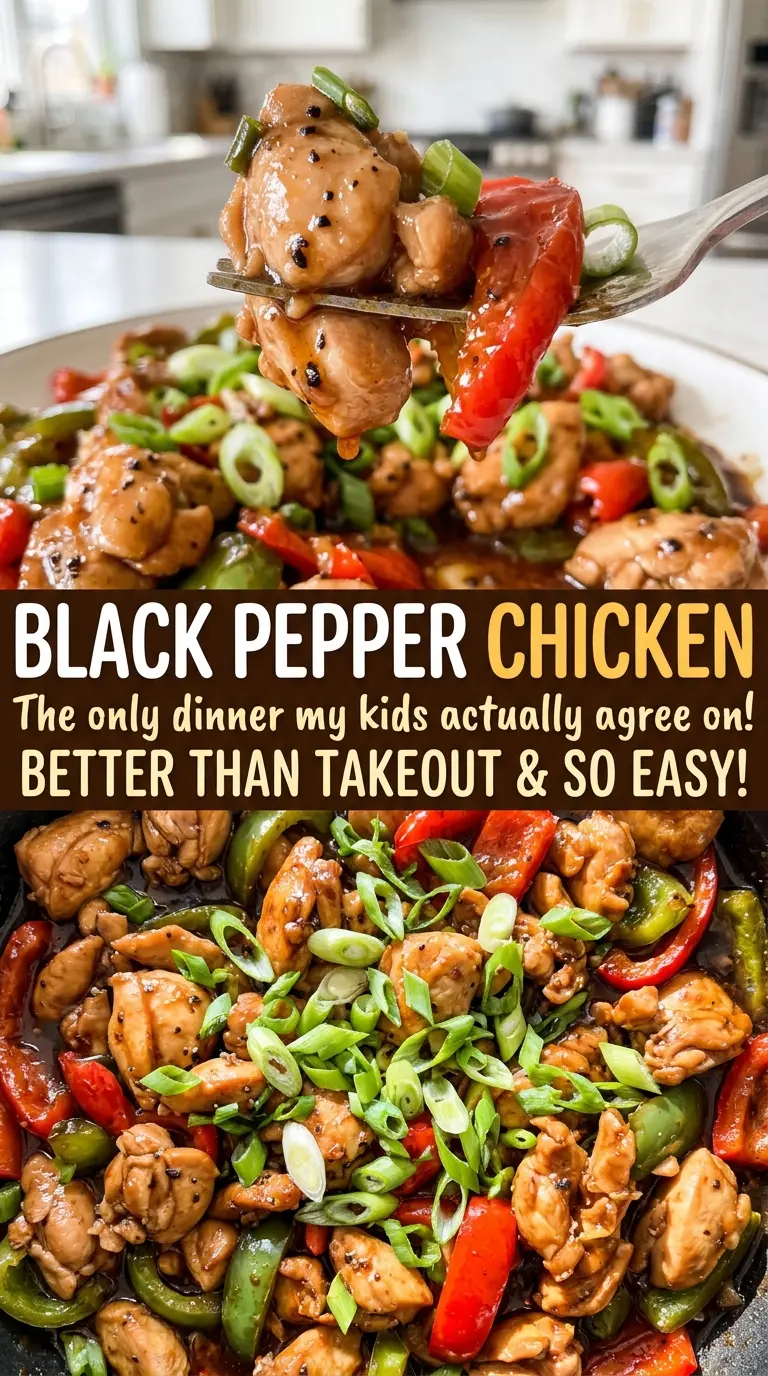
The chicken breast works well here because it cooks quickly and slices neatly into bite-size pieces. Cut it thin against the grain so it stays tender; thick chunks need longer cooking and can dry out before the sauce is ready. Chicken thighs will work too, but they bring a richer, slightly juicier result and need a little extra time in the pan.
- Freshly cracked black pepper — This is the backbone of the dish. Pre-ground pepper tastes flatter and harsher here, while freshly cracked pepper gives you a cleaner heat that blooms in the sauce.
- Dark soy sauce — This deepens the color and adds a little molasses-like richness. If you skip it, the dish still works, but the sauce will look lighter and taste less layered.
- Oyster sauce — It brings body and a savory roundness that makes the sauce taste like more than soy sauce plus sugar. There isn’t a perfect substitute, but hoisin can work in a pinch; the result will be sweeter and a little less savory.
- Cornstarch slurry — This is what turns the sauce glossy and clingy in the final minute. Stir it again right before adding it, since cornstarch settles fast and a separated slurry won’t thicken evenly.
- Ginger and garlic — They go in late so they stay fragrant instead of burning. If they hit the pan too early over high heat, they turn bitter fast.
- Bell pepper and onion — They add sweetness and crunch that balance the peppery sauce. Slice them evenly so they cook at the same pace and don’t leave you with limp onion and raw pepper at the same time.
The 20 Minutes That Matter Most
Whisking the Sauce First
Mix the soy sauce, oyster sauce, dark soy sauce, brown sugar, black pepper, cornstarch, and water before the pan ever heats up. Once the chicken and vegetables are moving, there won’t be time to measure and stir without overcooking something. The sauce should look thin and dark with no cornstarch lumps. If you see streaks of white powder, whisk longer before it goes anywhere near the heat.
Searing the Chicken in Batches
Heat the oil until it shimmers, then add the chicken in a single layer. You want the sizzle to stay loud; if it fades, the pan is overloaded. Let the pieces sit long enough to pick up color before you stir. If you keep tossing too soon, the chicken turns gray instead of developing the browned edges that carry the sauce later.
Cooking the Vegetables Without Losing Their Bite
Add the onion and bell pepper after the chicken comes out. Stir-fry them for about three minutes, just until the onion turns translucent at the edges and the pepper softens slightly but still holds shape. Garlic and ginger go in at the end of this stage for about a minute. If they start to brown hard, the heat is too high and they’ll turn sharp instead of fragrant.
Finishing With the Sauce
Return the chicken to the pan, pour in the sauce, and toss constantly. In the next two to three minutes, the liquid should go from thin to glossy and start coating the back of a spoon. If it stays watery, the pan wasn’t hot enough or the cornstarch wasn’t mixed in evenly. Once it thickens, kill the heat and add an extra pinch of black pepper so the finish stays sharp and aromatic.
Three Ways to Make This Recipe Your Own
Use chicken thighs for a richer, juicier result
Boneless skinless thighs stay a little more forgiving if you like to cook by sight instead of clock. They won’t dry out as quickly as breast meat, and they give the sauce a fuller, more savory finish. Cut them into even pieces and still cook them in batches so the pan stays hot.
Make it gluten-free with one careful swap
Use a certified gluten-free soy sauce or tamari, and check that your oyster sauce is labeled gluten-free as well. The texture stays the same because the cornstarch still does the thickening work. The only real difference is that some gluten-free sauces taste slightly less salty, so the black pepper stands out even more.
Add more vegetables without watering down the sauce
Sliced mushrooms, snap peas, or broccoli all fit well here, but cook them long enough to drive off surface moisture before the sauce goes in. If you add too much raw vegetable at once, the pan cools and the sauce turns thin. Keep the total volume modest, or use a larger skillet so everything still fries instead of steams.
Turn down the heat without losing the peppery flavor
If you want less bite, start with 1 teaspoon of cracked black pepper in the sauce and finish with a smaller pinch at the end. You still get the warm pepper aroma, just without the full kick that makes this version so bold. That adjustment changes the dish from sharp and punchy to more mellow and savory.
Storage and Reheating
- Refrigerator: Store leftovers in an airtight container for up to 4 days. The sauce thickens a bit as it chills, and the peppers soften slightly.
- Freezer: It freezes fairly well for up to 2 months, though the bell peppers will lose some of their snap. Cool it completely before freezing and thaw overnight in the fridge.
- Reheating: Warm it in a skillet over medium-low heat with a splash of water to loosen the sauce. The most common mistake is blasting it over high heat, which tightens the chicken and can make the sauce separate.
Questions I Get Asked About This Recipe
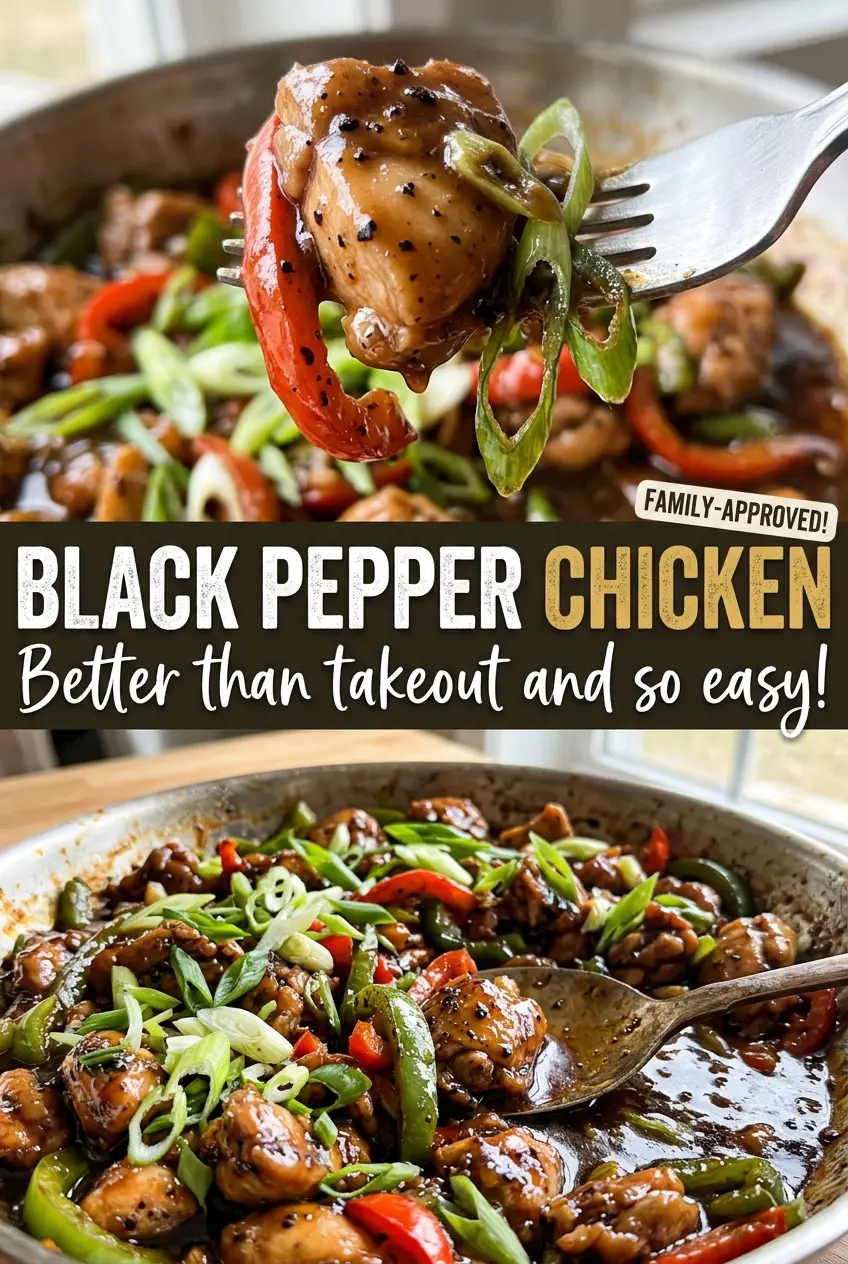
Black Pepper Chicken
Ingredients
Equipment
Method
- Whisk soy sauce, oyster sauce, dark soy sauce, brown sugar, and freshly cracked black pepper together, then whisk cornstarch with water until smooth and add to the mixture. Set aside so the pepper sauce base is ready to pour.
- Heat vegetable oil in a wok or large skillet over high heat. Stir-fry chicken in batches until golden, then remove to a plate.
- Stir-fry bell pepper and onion for 3 minutes. Add garlic and ginger and cook for 1 minute, keeping everything hot and fragrant.
- Return chicken to the skillet and pour the sauce over the top. Toss to coat so the glossy sauce clings to the chicken and vegetables.
- Cook for 2-3 minutes until the sauce thickens and coats everything. Season with extra cracked black pepper, then serve immediately over steamed rice.