Rich tomato broth, tender noodles, and a creamy cheese topping make this high protein lasagna soup land somewhere between comfort food and weeknight practicality. It tastes like lasagna in a bowl, but it comes together faster than the baked version and doesn’t ask you to layer anything. The turkey gives it enough heft to count as a real dinner, and the white beans add extra body without making the soup feel heavy.
The part that makes this version work is balance. Tomato paste gets cooked long enough to lose that raw edge, the crushed tomatoes simmer with broth until the base tastes rounded, and the noodles go in late so they stay pleasantly chewy instead of turning mushy. Blending the cottage cheese before mixing it with mozzarella and parmesan matters too — that’s what keeps the topping creamy instead of grainy.
Below, I’ve broken down the one step that keeps the soup from turning thick and gluey, plus the small ingredient choices that make the biggest difference if you want it extra creamy, a little spicier, or easier to meal prep.
The broth thickened up beautifully and the blended cottage cheese topping tasted just like ricotta, only lighter. I used cannellini beans and the soup had enough body that my husband went back for seconds before I even sat down.
Save this high protein lasagna soup for the nights when you want creamy lasagna flavor, hearty turkey, and a fast one-pot dinner.
The Step That Keeps Lasagna Soup from Turning to Paste
If the noodles go in too early, they keep drinking broth until the soup turns thick and starchy instead of spoonable. That’s the main mistake people make with pasta soups. You want the base fully flavored first, then the broken noodles added only long enough to turn tender.
The tomato paste is another small step that changes the whole pot. Cook it for a minute or two after the onion and garlic so it darkens slightly and loses the sharp raw taste. That quick cook gives the broth a deeper, more lasagna-like flavor without needing a long simmer.
- Browned turkey or chicken — This gives the soup its savory backbone. Lean meat works best here because the broth stays cleaner and the cheese topping adds richness later.
- White beans — They’re the hidden trick for extra protein and a fuller texture. Cannellini beans are mild and creamy, but great northern beans work too if that’s what you have.
- Cottage cheese — Blending it smooth is what makes the topping work. If you skip the blender, the curds stay obvious; once blended, it acts a lot like a lighter ricotta mixture.
- Lasagna noodles — Break them into irregular pieces so each spoonful feels a little different. Oven-ready noodles won’t work the same way here because they soften too fast and can go gummy.
What Each Ingredient Is Doing in This Bowl
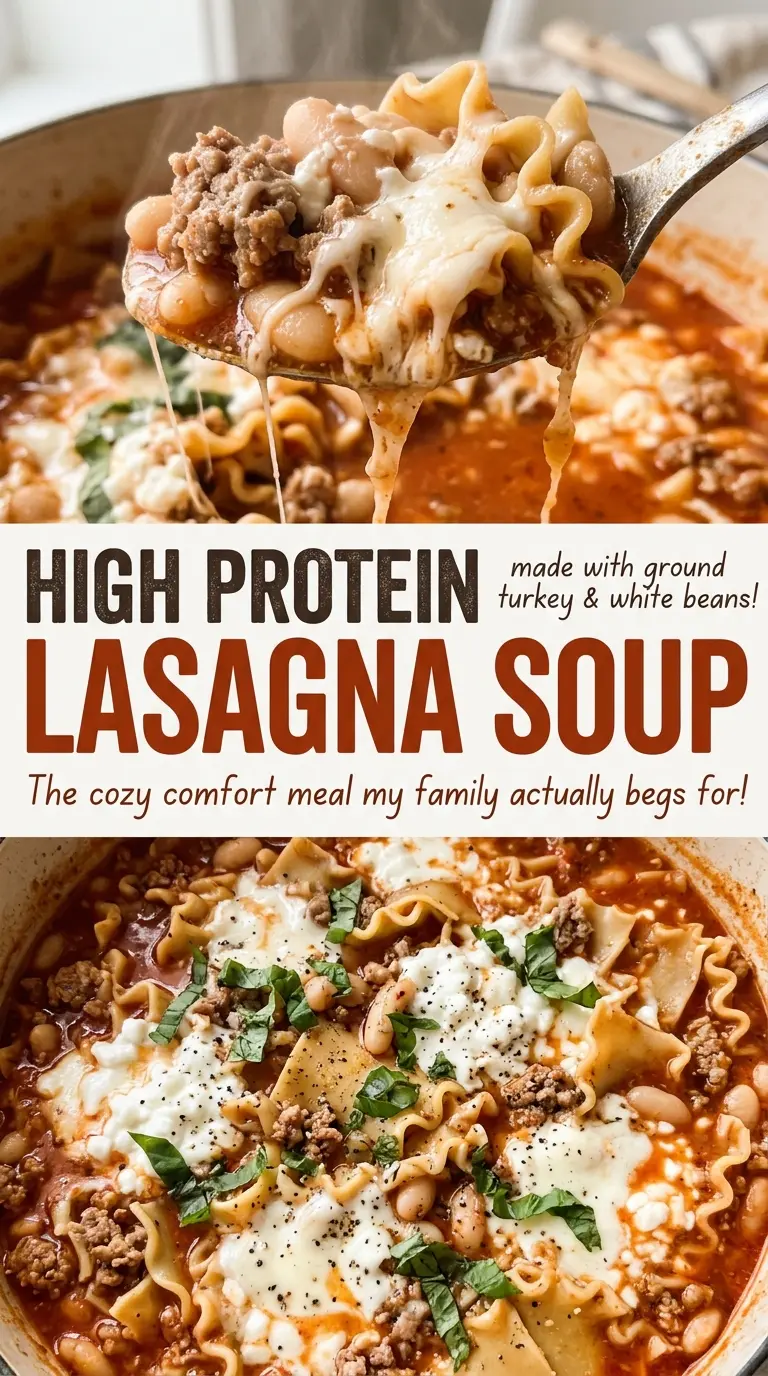
- Lean ground turkey or chicken — Either one gives the soup a clean, mild base that lets the tomato and herbs come through. Turkey has a slightly richer taste; chicken stays a touch lighter. If you use a fattier ground meat, drain it well or the broth can feel greasy.
- White beans — They add body and protein without changing the flavor much. Cannellini beans are the best choice because they’re creamy and soft, but any canned white bean will work after a good rinse and drain.
- Crushed tomatoes and tomato paste — Crushed tomatoes build the broth, while tomato paste adds depth and that cooked-down lasagna taste. The paste needs to hit the hot pot before the liquid goes in so it can caramelize a little and lose the tinny edge.
- Cottage cheese, mozzarella, and parmesan — This is the part that makes the bowl taste like lasagna instead of plain tomato soup. Blending the cottage cheese is the key move, and part-skim mozzarella melts well without making the topping oily.
- Broken lasagna noodles — The wide, ruffled pieces trap broth and cheese in a way regular short pasta doesn’t. If you need a substitute, mafaldine or campanelle gets you close, but the dish won’t read quite as much like lasagna.
The 20 Minutes That Actually Matter
Getting the Meat Browned
Cook the turkey or chicken over medium-high heat until it loses the pink color and you start seeing browned bits at the bottom of the pot. Those bits are part of the flavor, so don’t rush the browning by stirring constantly. If a lot of liquid collects, let it cook off before moving on, or the meat will steam and taste flat.
Building the Tomato Base
Cook the onion until it turns soft and translucent, then stir in the garlic just until you smell it. Tomato paste goes in next and needs a short cook before the broth and tomatoes join the pot. That step deepens the color and keeps the finished soup from tasting one-note. Once the liquid goes in, scrape the bottom well so all those browned bits dissolve into the broth.
Simmering the Noodles Without Overdoing It
Add the broken noodles after the broth is seasoned and at a steady boil, then lower the heat to a lively simmer. Keep them moving occasionally so they don’t clump together at the bottom. When they’re tender but still have a little bite, stop the cooking. The noodles will keep softening in the hot soup, especially if you let it sit before serving.
Finishing with the Cheese Topping
Blend the cottage cheese until completely smooth, then stir in the mozzarella and parmesan. Spoon it over hot soup so it softens on contact instead of sinking straight in. If the soup is too boiling-hot when you add the topping, the cheese can separate and go stringy, so let each bowl cool for a minute first.
Three Ways to Adapt This Without Losing the Point
Dairy-Free Version
Skip the cheese topping and finish each bowl with a spoonful of dairy-free ricotta or a drizzle of extra-virgin olive oil. You’ll lose the creamy lasagna feel, but the soup base still works because the broth, tomato, and herbs carry the flavor on their own.
Gluten-Free Swap
Use gluten-free lasagna noodles or another sturdy gluten-free pasta shape that can handle simmering. Watch the texture closely, because many gluten-free pastas break down faster than wheat noodles and can turn soft before the broth is fully flavored.
Make It Spicier
Increase the red pepper flakes or add a pinch of crushed calabrian chile paste with the tomato paste. That gives the broth a slow burn that plays well with the creamy cheese topping instead of overpowering it.
Storage and Reheating
- Refrigerator: Store the soup without the cheese topping for up to 4 days. The noodles will absorb some broth, so expect it to thicken.
- Freezer: The soup base freezes well for up to 3 months, but freeze it before adding the noodles if you want the best texture. Cook fresh noodles when you reheat, or the pasta will get mushy.
- Reheating: Warm it gently on the stove over medium-low heat with a splash of broth or water. Reheat slowly so the dairy topping doesn’t separate and the noodles don’t break apart.
Answers to the Questions Worth Asking

High Protein Lasagna Soup
Ingredients
Equipment
Method
- Heat a large pot over medium-high heat and add the ground turkey. Break it up and cook until browned, then drain any excess fat.
- Add the diced onion to the same pot and sauté for 4 minutes. Stir in the minced garlic and cook for 1 minute.
- Stir in the tomato paste and cook for 1-2 minutes. This should deepen slightly in color before you add liquids.
- Add the crushed tomatoes, chicken broth, Italian seasoning, dried oregano, and red pepper flakes. Bring the mixture to a boil over high heat.
- Add the broken lasagna noodles and drained white beans. Reduce to a simmer and cook for 10-12 minutes, until the noodles are tender.
- Season with salt and pepper to taste. Stir well and keep at a gentle simmer as needed.
- Blend the cottage cheese until smooth, then mix it with the mozzarella and parmesan. Keep mixing until the mixture looks evenly combined.
- Ladle the soup into bowls and top each serving with the high-protein cheese mixture. Serve immediately while hot.