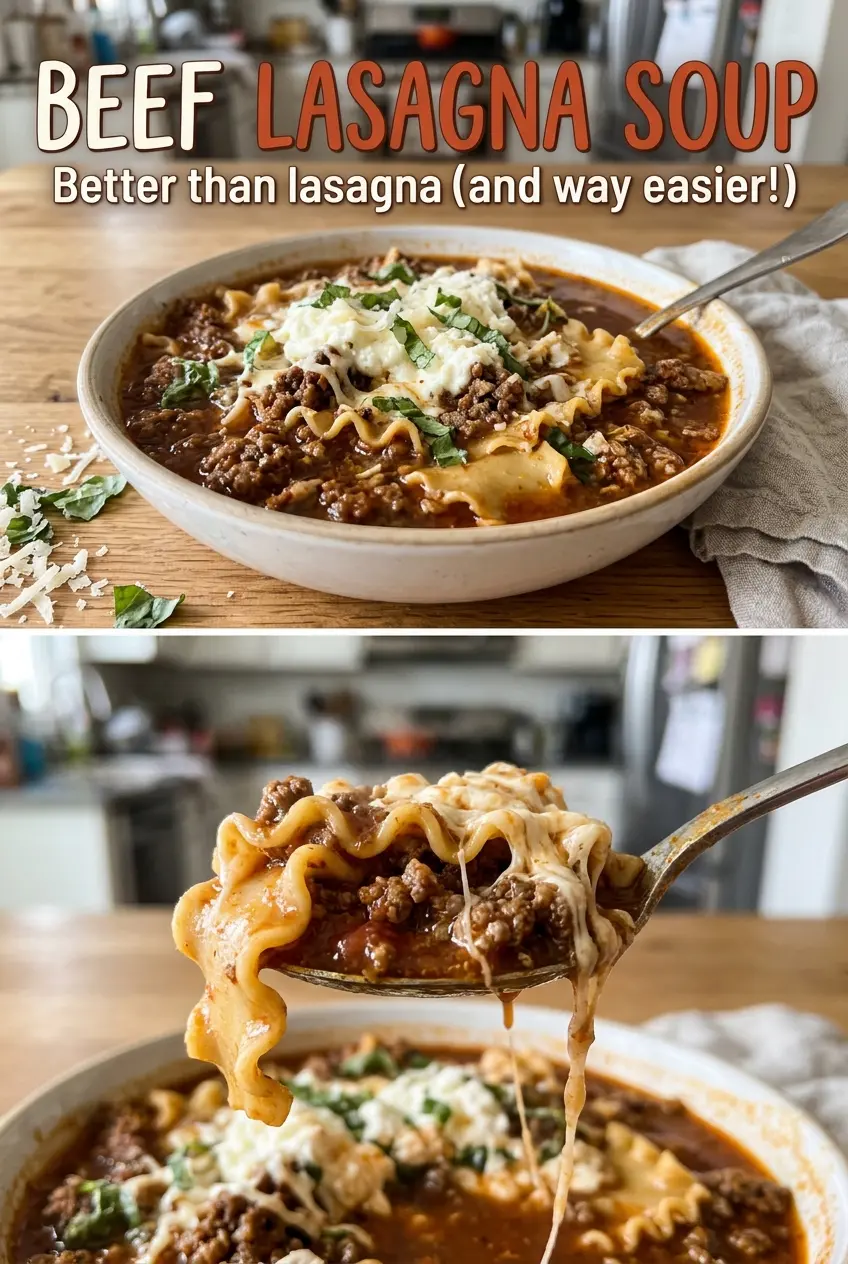
Beef lasagna soup has all the comfort of baked lasagna without the layering, waiting, or heavy pan to haul to the table. The broth turns rich and tomatoey, the ground beef gives it real body, and the broken noodles soak up just enough flavor to taste like they belong there. Then the cheese dollop melts into the bowl and gives you that creamy, stretchy finish that makes every spoonful feel complete.
What makes this version work is the order. Browning the beef first gives the soup depth before anything liquid goes in, and cooking the tomato paste with the onion and garlic wakes it up so it tastes less flat and canned. The broken lasagna noodles simmer right in the broth, which thickens the pot naturally, but they need a little stirring so they don’t settle and stick to the bottom.
Below, you’ll find the small details that keep the broth bold, the noodles tender, and the cheese topping creamy instead of clumpy. There’s also a few smart swaps if you need to stretch it, lighten it up, or work with what you’ve already got in the pantry.
The broth had that deep lasagna flavor without tasting heavy, and the noodles stayed tender because I stirred a couple of times while it simmered. The ricotta-mozzarella topping melted into the soup just like the photo.
Save this beef lasagna soup for the nights when you want lasagna flavor in one pot with a ricotta-mozzarella finish.
The Broth Tastes Flat When You Skip the Tomato Paste Step
Lasagna soup should taste like something that simmered long enough to matter, not like beef floating in tomato water. The tomato paste is what gives the pot its deep, cooked-through backbone, and frying it briefly with the onion and garlic changes it from sharp and raw to concentrated and savory. That small extra minute is what keeps the finished broth from tasting thin.
The other mistake is rushing straight from browning to boiling. Once you add the broth and tomatoes, the soup needs a real simmer so the beef, herbs, and noodles can settle into the same flavor. If the heat stays too high, the broth can turn harsh and the noodles can break apart before they’re tender.
What Each Ingredient Is Doing in This Bowl

- Lean ground beef — This is the base flavor and the reason the soup eats like a meal. Lean beef keeps the broth from turning greasy, but if you use a fattier blend, drain it well after browning so the finished soup stays balanced.
- Tomato paste — Don’t skip this. It adds a roasted, concentrated tomato note that canned tomatoes alone can’t give you. Let it cook with the onions and garlic for a minute or two so it loses that raw edge.
- Crushed tomatoes and diced tomatoes — The crushed tomatoes build the body of the broth, while the diced tomatoes give you little pockets of tomato in the spoon. If you only have one type, use it; the soup will still work, just with a slightly different texture.
- Broken lasagna noodles — These give the dish its lasagna identity. Break them into uneven pieces so the bowl feels rustic and spoonable, and stir during simmering so they don’t weld themselves to the bottom of the pot.
- Ricotta, mozzarella, and parmesan — This cheese mixture is the closest thing to the creamy middle of baked lasagna. Ricotta gives body, mozzarella brings the melt, and parmesan sharpens the whole bowl. If your ricotta is very thick, loosen it with a spoonful of hot soup before topping each bowl.
Building the Pot in the Right Order
Browning the Beef First
Cook the ground beef in a large pot until it’s no longer pink and you see some browned bits on the bottom. Those browned bits matter; they deepen the broth once the liquids go in. Drain off the fat before moving on, or the soup can taste heavy instead of rich.
Softening the Onion and Waking Up the Tomato Paste
Add the diced onion to the same pot and cook it for about 4 minutes, just until it turns soft and translucent at the edges. Stir in the garlic and tomato paste and cook for 2 minutes, enough time for the mixture to darken slightly and smell sweet, not sharp. If the garlic starts to brown hard, the pot is too hot and the flavor can turn bitter.
Simmering the Soup Base
Pour in the tomatoes, beef broth, Italian seasoning, basil, oregano, red pepper flakes, and black pepper, then bring the pot to a boil before lowering it to a simmer. You want active bubbles at first, then a gentler movement once the noodles go in. A hard boil can rough up the tomatoes and make the broth taste choppy instead of smooth.
Cooking the Noodles and Finishing the Bowl
Add the broken lasagna noodles and simmer for 10 to 12 minutes, stirring now and then so they don’t stick together. The noodles are done when they’re tender but still hold their shape; if they go too long, they start to fall apart and thicken the soup more than you want. Taste for salt at the end, then serve with a generous spoonful of the ricotta-mozzarella-parmesan mixture and a little fresh basil on top.
How to Adapt This for What’s in Your Kitchen
Make It a Little Lighter
Use extra-lean ground beef, or swap in ground turkey if that’s what you keep on hand. Turkey gives you a milder broth, so lean harder on the Italian seasoning and parmesan to bring the flavor back up. The soup still gets that lasagna feel from the tomatoes and cheese topping.
Gluten-Free Version
Use your favorite gluten-free lasagna-style pasta and cook it just until tender. Some gluten-free noodles soften faster than wheat noodles and can turn mushy if you simmer them too long, so start checking a few minutes early. If the broth thickens too much, splash in a little extra beef broth at the end.
Dairy-Free Topping
You can skip the ricotta-mozzarella topping and finish each bowl with a drizzle of good olive oil and a handful of chopped basil. The soup itself is already hearty and satisfying, though you lose the creamy lasagna-style finish that makes the original version feel extra cozy.
Storage and Reheating
- Refrigerator: Store for up to 4 days. The noodles keep absorbing broth, so expect the soup to thicken.
- Freezer: It freezes well, but the noodles soften after thawing. For the best texture, freeze the soup without the noodles if you can, then cook fresh noodles when you reheat.
- Reheating: Warm it gently on the stove over medium-low heat with a splash of broth or water. Microwaving at full power can make the noodles rubbery and uneven, so heat in short bursts if that’s your only option.
Questions I Get Asked About This Recipe
Beef Lasagna Soup
Ingredients
Equipment
Method
- Brown the ground beef in a large Dutch oven until cooked through, then drain excess fat.
- If the pot looks dry, let the meat sit for 30 seconds off the heat so it’s not greasy before the next step.
- Sauté the diced onion in the same Dutch oven for 4 minutes, stirring, until softened.
- Add the minced garlic and tomato paste and cook for 2 minutes, scraping up browned bits.
- Add the crushed tomatoes, diced tomatoes, beef broth, Italian seasoning, dried basil, dried oregano, red pepper flakes, and black pepper, then bring to a boil.
- Add the broken lasagna noodles, reduce heat to a gentle simmer, and cook 10-12 minutes until tender.
- Season with salt to taste and stir occasionally to prevent the noodles from sticking.
- Mix the ricotta, shredded mozzarella, and parmesan together until evenly combined.
- Ladle the soup into bowls and top each serving with a very generous spoonful of the cheese dollop and fresh basil.