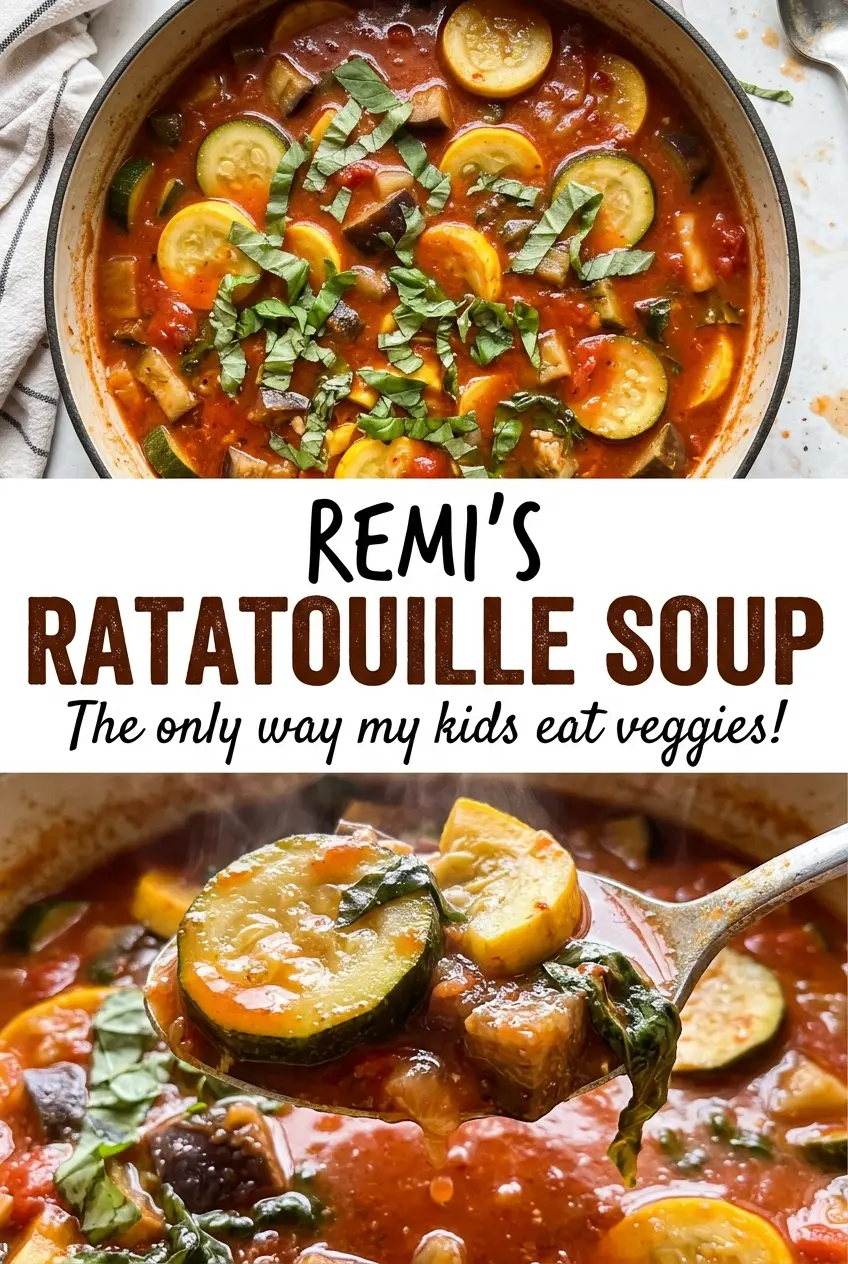
Remi’s Ratatouille Soup turns all the best parts of ratatouille into a bowl that eats like a meal: silky broth, tender vegetables, and just enough tomato to keep everything bright and savory. The eggplant softens into the soup instead of staying chewy, the zucchini and squash hold their shape without going mushy, and the basil at the end lifts the whole pot instead of disappearing into it.
What makes this version work is the order. The eggplant gets salted first, which keeps it from soaking up too much oil and helps it cook down with a better texture. The onions and peppers go in before the garlic, so the garlic stays sweet instead of bitter, and the tomatoes simmer long enough to mellow out and pull all those Provençal herbs together.
Below, I’ll walk through the one step people skip that matters most, plus a few swaps that still keep the soup tasting balanced and fresh.
The vegetables held their shape but still got tender, and the broth tasted layered instead of flat. I also loved that the eggplant never turned spongy after salting it first.
Save this ratatouille soup for the nights when you want a hearty bowl with tender vegetables and a bright basil finish.
The Reason the Vegetables Stay Distinct Instead of Turning to Mush
The biggest mistake in a vegetable soup like this is dumping everything in at once and walking away. Eggplant, zucchini, and yellow squash all cook at different speeds, and if they all enter the pot together, the zucchini collapses before the eggplant loses its raw edge. This recipe fixes that by giving the denser vegetables a head start and adding the softer ones later.
Salting the eggplant first matters more than people think. It pulls out excess moisture and takes some of the bitterness with it, which means the eggplant browns better and absorbs less broth later. You still want it cut into even dice, because uneven pieces are what leave you with some vegetables falling apart while others stay undercooked.
What Each Ingredient Is Actually Doing in This Soup

- Eggplant — This is the ingredient that gives the soup its deep, soft body. Salting it first is worth the extra step because it keeps the cubes from going soggy and bland. If you skip that rest, the eggplant can drink up too much oil and turn heavy.
- Zucchini and yellow squash — These add freshness and keep the soup from feeling one-note. They cook fast, so they go in after the eggplant has started to soften. Cut them a little larger than the eggplant if you want them to keep more structure in the finished bowl.
- Crushed tomatoes plus diced tomatoes — The crushed tomatoes build the broth, while the diced tomatoes give you little bursts of texture. Using both keeps the soup from tasting like puree. If you only have one kind, use it, but the texture changes noticeably.
- Herbes de Provence, basil, and thyme — These are what make the soup read as ratatouille instead of generic vegetable stew. Dried herbs need time in the hot liquid to bloom, while fresh basil goes in at the end so it stays bright. Don’t swap in a heavy Italian seasoning blend unless that’s all you have, because it can muddy the flavor.
- Good olive oil — The final drizzle matters. It gives the soup a glossy finish and a peppery note that ties the vegetables together. A basic cooking olive oil works in the pot, but use the better bottle at the table.
Building the Pot in the Right Order
Salting and drying the eggplant
Toss the diced eggplant with salt and let it sit for about 15 minutes. You’ll see moisture bead on the surface, and that’s exactly what you want. Rinse it off and pat it dry so it browns instead of steaming. If the eggplant goes into the pot wet, it softens unevenly and can turn spongy before it ever develops flavor.
Softening the aromatics first
Start with olive oil, onion, and red bell pepper in a large pot. Cook them until the onion turns translucent and the peppers begin to slump; that’s the point where their raw sharpness has cooked out. Add the garlic after that and keep it moving for a minute or two. Garlic burns fast, and once it does, the whole soup tastes harsh.
Layering in the vegetables and broth
Add the eggplant first so it can start softening before the quicker-cooking squash goes in. After a few minutes, stir in the zucchini and yellow squash, then the tomatoes, broth, and herbs. Bring everything up to a simmer, not a hard boil, because aggressive bubbling can break the vegetable pieces apart before the flavors settle. The soup is ready for the long simmer when the top moves in slow, lazy bubbles.
Finishing with basil and olive oil
Stir in the fresh basil only after the vegetables are tender. If it cooks too long, it loses its color and much of its aroma. Taste for salt and pepper at the end, then drizzle with olive oil right before serving. That last hit of oil makes the broth taste fuller and keeps the bowl from tasting flat.
Three Ways to Adapt This Without Losing the Character of the Soup
Make it vegan and keep the same richness
This soup is already naturally vegan as written if you skip the parmesan at serving. The olive oil finish still gives it a rounded, silky feel, and a little extra fresh basil at the end makes up for the missing cheese. If you want a savory finish without dairy, add a pinch of nutritional yeast at the table instead of stirring it into the pot.
Use what you have in place of yellow squash
Another zucchini works fine here, and so does peeled cucumber in a pinch if you add it near the end. The flavor stays mild, but the texture changes a little because cucumber softens more quickly. Avoid skipping the squash entirely unless you increase the zucchini, since you’ll lose some of the sweet, tender middle layer that makes the soup feel balanced.
Add protein without turning it into a different dish
White beans are the cleanest add-in if you want the soup to eat even more like a main course. Stir in one drained can during the simmer so they absorb the tomato broth without breaking apart. Chicken would work too, but it pushes the dish away from ratatouille and into standard vegetable soup territory.
Storage and Reheating
- Refrigerator: 4 days. The vegetables soften a little more overnight, but the soup stays flavorful.
- Freezer: It freezes well for up to 3 months. Cool it completely first and leave a little space in the container because the broth expands.
- Reheating: Warm it gently on the stove over medium-low heat until hot. A hard boil can break the vegetables down too far and dull the fresh basil flavor, so keep the heat steady and moderate.
Questions I Get Asked About This Recipe
Remi's Ratatouille Soup
Ingredients
Equipment
Method
- Toss the diced eggplant with salt and let sit for 15 minutes. Visual cue: the pieces should look slightly wet and rehydrated after resting.
- Rinse the eggplant and pat it dry. Visual cue: the surface should look matte and not pooled with water.
- Heat the olive oil in a large pot over medium heat until it shimmers. Visual cue: you should see light ripples in the oil.
- Sauté the onion and bell peppers for 5 minutes. Visual cue: they should soften and smell fragrant.
- Add the garlic and eggplant and cook for 5 minutes. Visual cue: the eggplant should begin to turn tender and lightly golden at the edges.
- Add the zucchini and yellow squash and cook for 3 minutes. Visual cue: the vegetables should still hold some shape but look glossy and slightly softened.
- Add both tomatoes, vegetable broth, herbs de Provence, dried basil, dried thyme, and red pepper flakes. Visual cue: the pot should turn a vibrant, broth-colored red with specks of herbs.
- Simmer for 20-25 minutes until all vegetables are very tender. Visual cue: a spoon should easily crush the zucchini/eggplant with minimal resistance.
- Stir in the fresh basil and season with salt and pepper. Visual cue: bright green ribbons should swirl through the soup.
- Finish with a drizzle of good olive oil. Visual cue: a sheen should appear on top right before serving.