Crusty rolls, warm layers of salami and ham, and melted provolone make these baked Italian grinder sandwiches taste like they came straight off a deli line. The oven does the heavy lifting here: it warms the meats, melts the cheese, and lightly toasts the bread so every bite has that soft-and-crisp contrast that makes a grinder worth building in the first place.
The part that makes this version stand out is the finishing layer. Instead of piling cold lettuce on top and hoping for the best, the shredded lettuce gets tossed with mayonnaise, red wine vinegar, and Italian seasoning, then folded with chopped giardiniera. That gives you tang, crunch, and a little heat without making the sandwich soggy. The bread still holds, the cheese stays stretchy, and the whole thing eats cleanly.
You’ll find a few practical notes below on how to keep the rolls from turning greasy, which giardiniera works best, and how to adapt the filling if you want a little more heat or a lighter sandwich.
The bread stayed crisp on the outside and the cheese melted perfectly without making everything soggy. I used mild giardiniera and the tangy lettuce topping made the whole sandwich taste like a real deli grinder.
Baked Italian grinder sandwiches with melty provolone and tangy giardiniera are the kind of quick dinner worth keeping close.
The Reason These Grinder Sandwiches Stay Crisp Instead of Collapsing
The biggest mistake with hot grinder sandwiches is building them like a cold sub and expecting the oven to fix everything. If the lettuce goes on before baking, it wilts into the bread. If the sandwich gets overfilled with dressing, the bottom roll turns slick before you’ve taken the first bite. This version keeps the wet ingredients for the end, where they can brighten the sandwich without soaking through the crust.
Another detail that matters is baking the sandwiches open-faced. That exposes the cheese directly to the heat, so it melts into the meat instead of sliding around inside a closed roll. The bread toasts at the edges, the cheese traps the fillings in place, and you get enough structure to add the lettuce mixture afterward without losing the whole sandwich to gravity.
What Each Ingredient Is Actually Doing in This Sandwich
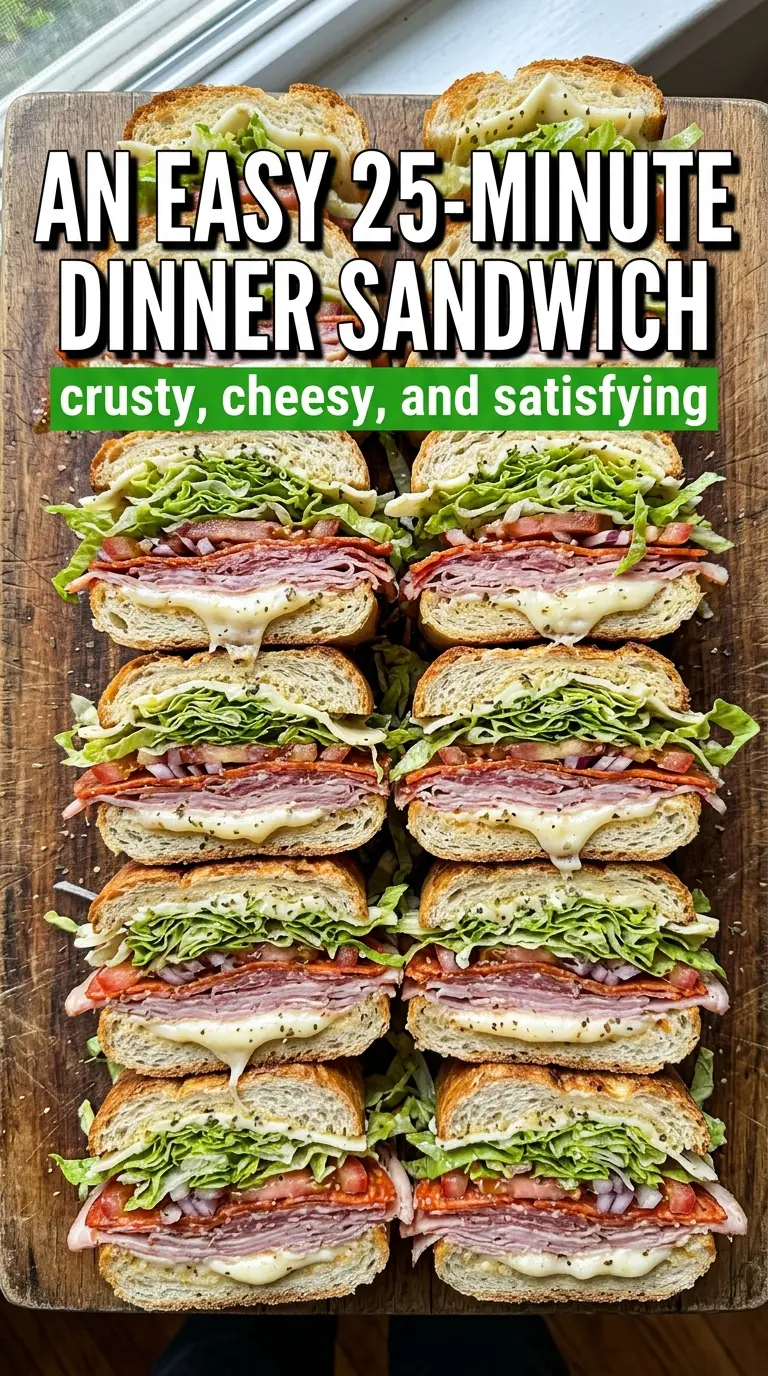
- Hoagie rolls — A sturdy roll matters here. Soft sandwich bread collapses under the heat and dressing, while a crusty hoagie or grinder roll gives you a shell that stays intact. If your rolls are dense, a quick split and light olive oil brush helps the cut side toast instead of drying out.
- Olive oil and garlic — This is the base layer that seasons the bread before the fillings go in. The oil carries the garlic into the crumb and keeps the inside from tasting flat. Fresh garlic is worth using because it perfumes the bread as it bakes; garlic powder works in a pinch, but it’s less rounded.
- Salami and ham — The mix gives you salt, richness, and a little chew. Salami brings the deeper cured flavor, while ham keeps the sandwich from tasting too heavy. Use thin slices so the meat warms through quickly and layers neatly instead of clumping.
- Provolone — Provolone melts cleanly and has enough character to stand up to the meats. Mozzarella will melt, but it tastes milder and gives you a softer result. If you want a sharper edge, use a provolone that has aged a little longer.
- Giardiniera — This is the ingredient that wakes the sandwich up. Chop it fine enough that every bite gets a little tang and crunch, but not so fine that it disappears. Mild or hot both work; hot giardiniera adds a peppery kick, while mild keeps the balance cleaner.
- Mayonnaise, red wine vinegar, and Italian seasoning — This quick dressing coats the lettuce and keeps the sandwich from eating dry. Mayo gives body, vinegar cuts through the richness, and the herbs make the topping taste deliberate instead of like an afterthought. If you use a heavier mayo, add the vinegar slowly so the dressing stays loose enough to toss.
Building the Heat, Then Adding the Crunch
Season the rolls first
Split the hoagie rolls and brush the cut sides with olive oil mixed with minced garlic. That first layer does two jobs: it flavors the bread and creates a little barrier against the fillings. If you skip it, the inside of the roll tastes plain next to the meats and cheese. Don’t flood the bread; a thin, even coating is enough to keep the crumb from turning greasy.
Stack the meats and cheese with the oven in mind
Layer the salami, ham, and provolone on the bottom half of each roll, then set them open-faced on the baking sheet. Keep the meat fairly even so the cheese melts across the whole sandwich instead of pooling in one spot. The goal is hot fillings and softened cheese, not dried-out edges, so bake just until the provolone goes glossy and starts to slump into the meat.
Dress the lettuce after baking
Whisk the mayonnaise, red wine vinegar, and Italian seasoning, then toss it with the shredded lettuce and chopped giardiniera. The lettuce should look lightly coated, not drenched. Add it too early and it goes limp before the sandwich is assembled; add it after baking and it stays crisp enough to cut through the rich meat and cheese.
Close and slice while the rolls are warm
Top the hot sandwiches with the dressed lettuce mixture, close the rolls, and slice right away. The heat from the bread loosens the filling just enough to bring everything together, but it won’t stay perfect forever. If you let the sandwiches sit closed for too long before serving, the bottom softens and the top loses that fresh-baked feel.
Three Ways to Adapt These Sandwiches Without Losing the Point
Make It Spicier with Hot Giardiniera
Swap mild giardiniera for hot and keep the rest of the recipe the same. The extra pepper heat plays nicely with the salty meats and cuts through the mayo dressing, but it does make the sandwich feel sharper and less mellow.
Use Turkey and Mozzarella for a Lighter Sandwich
Replace the salami and ham with sliced turkey and swap in mozzarella if that’s what you have. The sandwich will be milder and less salty, so the giardiniera and vinegar dressing matter even more. You lose some of the deli-style punch, but you still get a hot, satisfying grinder.
Make It Gluten-Free with a Sturdy Roll
Use a gluten-free hoagie-style roll that can handle heat and fillings without crumbling. Many gluten-free breads need a little extra toasting to hold up, so bake them open-faced until the cut side feels dry and lightly crisp before adding the lettuce topping.
Storage and Reheating
- Refrigerator: Store the baked meat-and-cheese portion for up to 3 days. Keep the dressed lettuce separate or it will wilt and water down the rolls.
- Freezer: The assembled sandwiches don’t freeze well because the lettuce and mayo topping lose their texture. You can freeze the baked meat-and-cheese filling separately, then assemble fresh with new rolls and topping.
- Reheating: Reheat the meat-and-cheese portion in a 350°F oven until warmed through and the cheese is soft again. Don’t microwave the full sandwich with lettuce on it or the bread turns chewy and the topping goes limp.
Questions I Get Asked About This Recipe
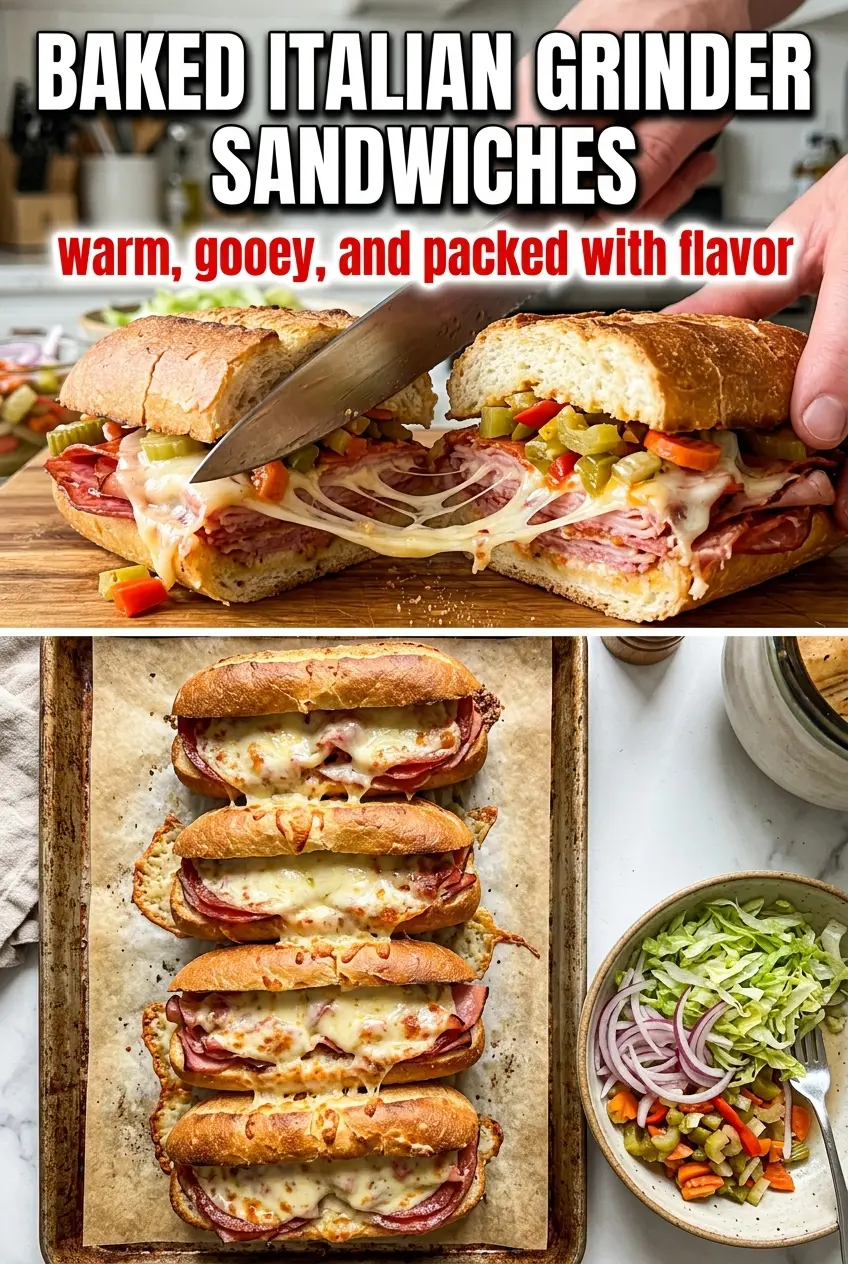
Baked Italian Grinder Sandwiches
Ingredients
Equipment
Method
- Preheat the oven to 375°F. Slice the hoagie rolls open and brush the insides with olive oil mixed with garlic.
- Layer the sliced salami, sliced ham, and sliced provolone cheese evenly across the bottom half of each roll.
- Place the sandwiches open-faced on a sheet pan and bake for 10–12 minutes, until the cheese is melted and the meat is warmed through.
- Meanwhile, whisk together the mayonnaise, red wine vinegar, and Italian seasoning.
- Toss the shredded lettuce with the dressing and giardiniera, chopped.
- Top the warm sandwiches with the dressed lettuce mixture, close the rolls, and slice before serving.