Beef taco pasta lands in that sweet spot where comfort food meets weeknight dinner and nobody at the table asks for a separate main and side. The sauce clings to every ridge of rotini, the beef gives it real heft, and the taco seasoning brings enough warmth and spice to keep each bite interesting. It eats like a cheesy skillet dinner, but it comes together with the kind of speed that makes it easy to keep in the regular rotation.
The trick is balancing the dairy with the tomato base. If the cream goes in too early or the heat is too high, the sauce can separate instead of turning silky. Let the beef and seasoning simmer with the tomatoes and broth first, then add the cream at a lower heat and finish with the cheese off the hottest part of the burner. That keeps the sauce smooth and coats the pasta instead of pooling at the bottom of the pan.
Below, I’ve included the small details that matter most: how to keep the sauce creamy, which ingredient swaps still work, and what to do if you want this a little lighter or a little richer.
The sauce turned out creamy without being greasy, and the rotini held onto every bit of that taco seasoning. My kids asked for seconds and my husband went back for the last scoop straight from the skillet.
Love the creamy taco-seasoned sauce and melty cheese? Save Beef Taco Pasta to Pinterest for a fast skillet dinner that tastes like two comfort foods in one.
The Step That Keeps the Sauce Creamy Instead of Grainy
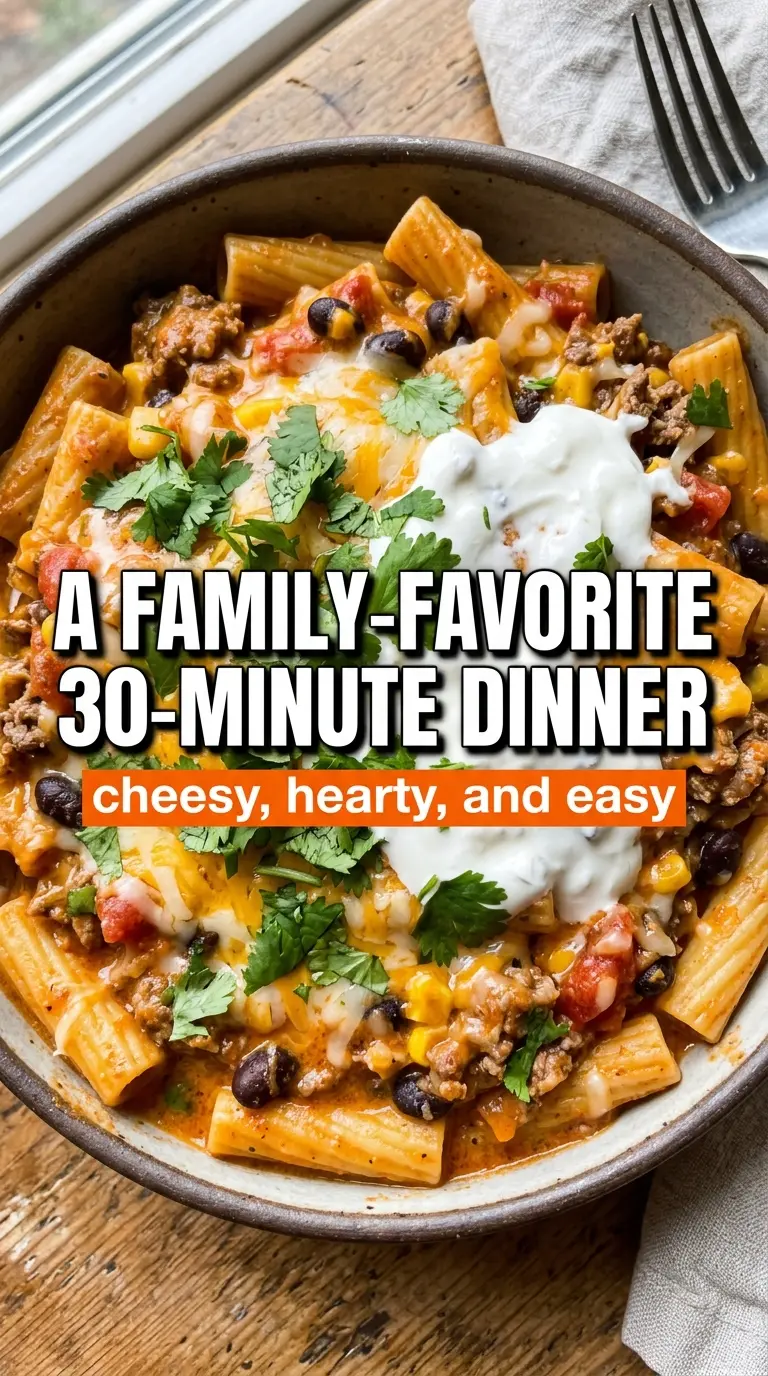
The most common mistake with a dish like this is rushing the dairy into a pan that’s still blasting heat. Tomato, broth, cream, and cheese can live together, but they need a gentle hand. If the skillet is too hot when the cream and cheese go in, the sauce can look greasy or slightly broken instead of glossy and smooth.
The other place people lose texture is the pasta itself. Rotini is a strong choice because the spirals trap the sauce in every curve, but overcooked pasta turns soft fast once it sits in the skillet. Pull it when it still has a little bite, then let the sauce finish it for the last minute or two.
- Ground beef — An 80/20 or 85/15 blend gives you enough fat for flavor without turning the pan greasy. If you use something leaner, leave a tablespoon or two of the drippings in the skillet so the seasoning has something to bloom in.
- Taco seasoning — A packet keeps the flavor balanced and predictable. If you want to use homemade seasoning, add it with a little extra salt and a pinch of cornstarch so the sauce still has body.
- Diced tomatoes with green chiles — These add acidity, moisture, and a little heat all at once. Regular diced tomatoes work in a pinch, but you’ll lose some of the taco-style bite, so add a few spoonfuls of mild green chiles if you have them.
- Heavy cream — This is what turns the skillet mixture into a real sauce. Half-and-half will work, but the result is lighter and a little less stable; keep the heat lower if you use it.
- Mexican blend cheese — A shreddable melt cheese matters here because it finishes the sauce and gives the dish its pull. Pre-shredded cheese is fine, though freshly shredded melts more smoothly because it doesn’t have the anti-caking coating.
- Rotini pasta — The shape matters more than people think. Any short pasta with ridges or curves will catch the sauce, but smooth pasta won’t hold onto the beef mixture the same way.
Building the Skillet in the Right Order
Brown the beef first
Cook the beef in a large skillet over medium-high heat until it’s no longer pink and you’ve got browned bits at the bottom of the pan. Those bits add depth once the tomatoes and broth go in, so don’t drain the pan too aggressively unless there’s a large amount of fat. Break the meat into small pieces as it cooks so every forkful has a little beef instead of a few big clumps.
Let the seasoning bloom in the liquid
Stir in the taco seasoning, tomatoes, and beef broth, then let the mixture simmer for about 5 minutes. You want the liquid to reduce slightly and take on a deeper, more unified color. If it still looks thin and separated at this point, it hasn’t simmered long enough for the spices to settle in.
Finish with cream and cheese at lower heat
Pour in the heavy cream and stir until the sauce looks smooth and slightly opaque, then fold in the cooked pasta. Add the cheese over low heat or with the skillet off the burner, then cover briefly so it melts without seizing. If the sauce starts to look oily, the pan is too hot; pull it off the burner and stir gently until it comes back together.
Serve while the sauce is still loose
Top with cilantro and a spoonful of sour cream right before serving. The sauce thickens as it sits, which is great for leftovers but not what you want on the first pass, so serve it while it still slides slowly over the pasta. If it tightens too much in the pan, splash in a tablespoon or two of broth and stir until it loosens again.
What to Change When You Want It a Little Different
Swap in ground turkey for a lighter version
Ground turkey works well here, but it needs a little help because it’s leaner and doesn’t bring the same richness as beef. Add a tablespoon of oil when browning and keep the taco seasoning generous so the dish still tastes full and savory. The final result is lighter, with a cleaner finish and a little less depth.
Use gluten-free pasta without changing the method
Gluten-free rotini works as long as you cook it just to al dente and drain it well. Some gluten-free pastas soften faster once they’re mixed into a hot skillet, so keep an eye on texture and stir it in at the very end. The sauce behaves the same way, but the pasta won’t hold up to long simmering.
Make it spicier without wrecking the balance
Add a pinch of cayenne, a diced jalapeño with the beef, or use hot diced tomatoes with green chiles. The key is to build heat in layers instead of dumping in a lot of hot sauce at the end, which can muddy the creamy sauce. A little heat works better than a lot here because the cheese and cream should still taste like part of the dish.
Storage and Reheating
- Refrigerator: Store in an airtight container for up to 4 days. The pasta will absorb some sauce, so it thickens as it sits.
- Freezer: It freezes, but the cream sauce can turn a little grainy after thawing. If you want to freeze it, cool it fully and pack it tightly; expect a softer texture when reheated.
- Reheating: Warm it slowly on the stovetop or in the microwave with a splash of broth or milk. High heat is the fastest way to make the sauce split, so reheat gently and stir often.
Answers to the Questions Worth Asking

Beef Taco Pasta
Ingredients
Equipment
Method
- Cook the rotini pasta in salted boiling water according to package directions. Drain and set aside.
- Brown the ground beef in a large skillet over medium-high heat for 6–7 minutes, breaking it apart as it cooks.
- Stir in the taco seasoning, diced tomatoes with green chiles, and beef broth, then simmer for 5 minutes.
- Pour in the heavy cream and stir until combined, then fold in the cooked pasta.
- Sprinkle the shredded Mexican blend cheese over the top and cover for 2–3 minutes, until melted.
- Garnish with fresh cilantro and sour cream before serving.