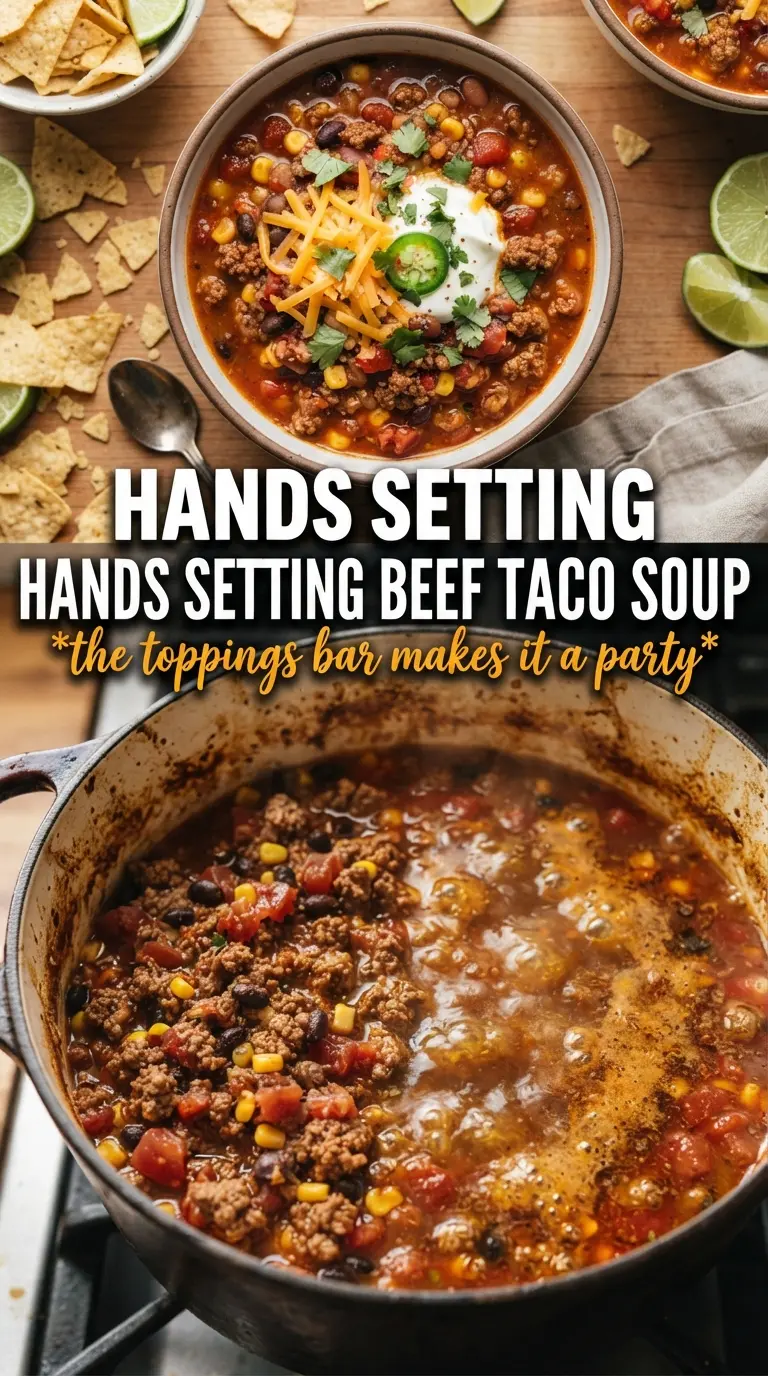
Beef taco soup lands in that sweet spot between hearty chili and a fast weeknight soup: spoonable, bold, and loaded with enough texture to keep every bite interesting. The broth turns deep orange-red from the beef, tomatoes, and taco seasoning, and the beans and corn give it the kind of satisfying heft that makes a bowl feel like dinner, not a starter.
What makes this version work is building the flavor in stages instead of dumping everything into a pot and hoping for the best. Browning the beef first gives you a savory base, then the onion, pepper, and garlic pick up the browned bits left behind. The spices bloom for a full minute before the broth goes in, which keeps the soup from tasting flat or dusty.
Below, I’ll walk through the little decisions that matter here: when to drain the fat, why the taco seasoning goes in early, and how to balance the broth so it stays soupy instead of turning into chili. I’ve also included a few smart swaps and the best way to reheat leftovers without losing that just-simmered flavor.
The broth had so much flavor after just 20 minutes, and the beans held their shape instead of turning mushy. I topped mine with sour cream and crushed tortilla chips, and my husband went back for a second bowl.
Love the deep Tex-Mex broth and hearty beefy texture? Save this beef taco soup for an easy dinner that tastes like it simmered all afternoon.
The Secret to Keeping Taco Soup Brothy, Not Thick and Heavy
Beef taco soup can tip into chili territory fast if you let it cook too long or use too little broth. This version stays spoonable because the beans and corn add body without turning the pot pasty, and the simmer time is just long enough for the broth to take on the spice blend without reducing into something dense.
The other mistake people make is skipping the seasoning bloom. Taco seasoning, cumin, chili powder, and smoked paprika need heat and fat to wake up. When they hit the pot right after the beef and vegetables, they cling to the ingredients instead of floating around in the broth tasting raw.
- Ground beef — An 80/20 blend gives you enough fat for flavor, then you drain the excess so the soup doesn’t turn greasy. Leaner beef works, but it gives up some of the rich base that makes this bowl taste meaty.
- Rotel and diced tomatoes — This combination builds both brightness and body. If you only have plain diced tomatoes, add a small pinch more chili powder and a spoonful of tomato paste if the soup tastes thin.
- Beef broth — This carries the whole pot. A good broth makes the soup taste rounded and savory; a weak one leaves the spices doing all the work.
- Toppings — Cheddar, sour cream, tortilla chips, jalapeños, and cilantro don’t just garnish the bowl. They give you cold, creamy, crunchy contrast against the hot soup, which is what makes each spoonful feel finished.
What Each Ingredient Is Actually Doing in This Recipe
- Primary ingredient (the star) — Quality matters most. Choose the best you can find.
- Cooking medium (oil, butter, or broth) — This carries flavors and prevents dryness.
- Seasonings (salt, pepper, spices, herbs) — Layer flavors so nothing overpowers. Build depth gradually.
- Aromatics (garlic, onion, herbs) — Cook with fat to bloom flavors. Become the foundation.
- Supporting ingredients — Complement the main ingredient without overpowering it.
- Sauce or liquid (if applicable) — Brings flavors together. Balance richness with acid.
- Acid (lemon, vinegar, wine, or other) — Brightens and prevents flat-tasting results.
- Final finish (garnish, glaze, or sauce) — Prevents one-dimensional taste and adds visual appeal.
Building the Base Before the Broth Goes In
Browning the Beef Properly
Cook the ground beef over medium-high heat until it’s deeply browned in spots, not just gray and cooked through. Those browned bits are part of the soup’s flavor, so don’t rush this stage or crowd the pot. If there’s a lot of fat in the pan after browning, drain it off before you move on; too much fat makes the finished soup feel oily instead of rich.
Softening the Vegetables in the Drippings
Add the onion and bell pepper to the same pot and let them cook until the onion turns translucent and the pepper loses its raw bite. They’ll pick up flavor from the browned beef stuck to the bottom of the pot. Stir in the garlic at the end of this stage so it smells fragrant, not scorched; garlic burns fast and turns bitter if it sits in the hot pan too long.
Blooming the Spices
Stir in the taco seasoning, cumin, chili powder, and smoked paprika and cook for about a minute before adding liquid. The pot should smell toasted and smoky, not dusty. If the spices stick, your heat is too high; lower it and stir constantly so the seasonings coat the meat and vegetables evenly.
Simmering to Bring It Together
Add the beans, corn, tomatoes, and broth, then bring everything up to a boil before dropping it to a steady simmer. You’re looking for gentle bubbles around the edges, not a hard boil that breaks down the beans. After about 20 minutes, the broth should taste rounded and the vegetables should be fully integrated without falling apart.
How to Adapt This Bowl for Different Kitchens and Different Crowds
Dairy-Free Toppings That Still Feel Complete
Skip the cheddar and sour cream and use avocado, diced jalapeños, cilantro, and crushed tortilla chips instead. You’ll lose the creamy tang from dairy, but the soup still feels finished because the cool avocado and crunchy chips bring the same contrast.
Make It Gluten-Free Without Guesswork
Use a certified gluten-free taco seasoning and check the broth label before you start. The rest of the ingredients are naturally gluten-free, so the swap is easy as long as you don’t assume the seasoning packet is safe.
Turn It Into a Thicker, Heartier Bowl
Simmer uncovered for the last 10 minutes if you want a thicker soup with a more stew-like finish. That concentrates the broth and makes the beans and meat sit closer together in the bowl, but it does change the texture enough that it eats more like chili.
Storage and Reheating
- Refrigerator: Keeps well for 4 days. The broth thickens a little as it chills, but the flavor gets even better overnight.
- Freezer: Freezes well for up to 3 months in airtight containers. Leave a little space at the top because the liquid will expand.
- Reheating: Warm it gently on the stove over medium-low heat or in the microwave in short bursts, stirring between rounds. Don’t boil it hard during reheating or the beans can split and the broth can taste overly reduced.
Answers to the Questions Worth Asking

Beef Taco Soup
Ingredients
Equipment
Method
- Heat a large Dutch oven over medium-high heat and brown the ground beef, breaking it up until cooked through. Drain the fat off after browning.
- In the same Dutch oven, sauté the onion and green bell pepper for 4 minutes until softened. Add the garlic and cook for 1 minute, stirring to prevent scorching.
- Stir in the taco seasoning, cumin, chili powder, and smoked paprika and cook for 1 minute. Keep stirring until fragrant and well combined.
- Add the kidney beans, black beans, corn, Rotel tomatoes, diced tomatoes, and beef broth. Bring the mixture to a boil over medium-high heat.
- Reduce to a simmer and cook for 20 minutes, stirring occasionally, until the broth tastes deeply flavored. Season with salt and black pepper to taste.
- Serve the soup hot in bowls and top with cheddar, sour cream, tortilla chips, jalapeños, and cilantro.