Beef tips and gravy hits the table with exactly what you want from a comfort dinner: tender chunks of seared beef, a deep brown gravy, and the kind of savory smell that pulls everyone into the kitchen before you call them. The best versions don’t taste like flour-thickened broth with meat in it. They taste like the pan was used on purpose, because it was. Browning the beef first, then building the gravy in the same skillet, gives the sauce that rich, beefy backbone people remember.
The mushrooms and onions do more than bulk up the pan. They soften, pick up the browned bits, and help turn the drippings into something silky instead of flat. A little Worcestershire sauce sharpens the gravy without making it taste tangy, and thyme keeps the whole thing grounded. If your gravy has ever turned out thin, pale, or a little grainy, the fix is all in the order: sear hard, whisk the flour in after the vegetables are coated in fat, and simmer long enough for the starch to lose that raw edge.
Below, I’ll walk through the part that matters most — how to get the beef browned without steaming it, and how to thicken the gravy so it clings to mashed potatoes instead of running off the plate. I’ve also included a few smart swaps and storage notes, because this is the kind of dinner people are happy to eat again tomorrow.
I followed the searing step in batches and the gravy came out thick and glossy instead of watery. The mushrooms soaked up all the pan flavor, and it was perfect over egg noodles.
Save these beef tips and gravy for the night you want a rich skillet dinner with tender beef and mashed potato-worthy gravy.
The Sear Is What Makes the Gravy Taste Like Beef
If the beef goes into the pan all at once, it steams. Steamed beef turns gray, gives off liquid, and leaves you with a thin gravy that tastes mostly like broth. Working in batches keeps the skillet hot enough for a real crust, and that crust is where the deep flavor starts. Those browned bits left behind are not a mess to clean up later. They’re the foundation of the sauce.
The other mistake people make is rushing the flour. Once it hits the vegetables and fat, it needs a minute to coat everything and lose that raw, dusty taste. Then the broth goes in slowly while you whisk, so the gravy starts smooth instead of clumping at the bottom of the pan.
What Each Ingredient Is Actually Doing in This Dish

- Beef sirloin — Sirloin gives you tender bites that still hold up to searing and simmering. Cut it into even cubes so everything cooks at the same pace. If you swap in chuck, braise it longer because it needs more time to turn tender.
- Cremini mushrooms — These add earthy depth and help the gravy taste fuller. White mushrooms work, but they’re milder and a little less savory. Slice them thick enough that they don’t disappear during the simmer.
- Worcestershire sauce — This is the quiet ingredient that wakes up the whole pan. It doesn’t make the gravy taste like Worcestershire; it just adds the kind of salty, fermented depth you’d miss if it weren’t there.
- Beef broth — Use a broth you’d actually drink on its own, because it makes up most of the sauce. A low-sodium broth gives you better control over the salt level and keeps the gravy from tasting over-seasoned once it reduces.
- Flour — All-purpose flour thickens the gravy and gives it that clingy texture that coats mashed potatoes. Add it after the onions and mushrooms soften so it can cook in the fat before the broth goes in.
Building the Gravy Without Losing the Sear
Brown the Beef in a Hot Pan
Season the beef first, then let the skillet get properly hot before the first batch goes in. You want an immediate sizzle and a dark crust forming within minutes, not a slow grey simmer. Leave space between the pieces so they can sear instead of crowding into each other. If the pan starts filling with liquid, pull the pieces out and keep going in smaller batches.
Soften the Vegetables in the Drippings
Use the same skillet and keep all those browned bits in the pan. The onions should turn translucent and the mushrooms should shrink and take on a deeper color; that’s when they’ve picked up enough flavor to matter. Add the garlic at the end so it stays fragrant instead of burning, which would make the gravy taste bitter.
Thicken, Then Simmer Until the Sauce Clings
Sprinkle the flour over the vegetables and stir until nothing looks dry. When the broth goes in, whisk constantly and scrape the bottom of the pan so the fond dissolves into the gravy. After the beef goes back in, simmer gently until the sauce turns glossy and coats the back of a spoon. If it still looks thin, give it a few more minutes; it thickens as the flour fully cooks and the liquid reduces.
What to Change When You Need a Different Version
Use chuck roast for a richer, longer-cooked version
Chuck gives you a deeper beef flavor and a more fall-apart texture, but it needs a longer simmer than sirloin. Cut it into cubes and cook until it’s fork-tender instead of stopping as soon as it’s merely warm through. The gravy will be a little richer, but the dish will take closer to stew territory.
Make it dairy-free and naturally gluten-free
This recipe is already dairy-free as written. For gluten-free, swap the flour for a gluten-free all-purpose blend or use cornstarch slurry at the end, but add it gradually because cornstarch thickens fast and can turn the gravy a little glossy instead of rustic.
Add a little red wine for a deeper gravy
A splash of dry red wine after the mushrooms soften adds a rounder, more savory finish. Let it cook off before the flour goes in so the gravy doesn’t taste sharp. The final result is less weeknight-basic and more restaurant-style.
Storage and Reheating
- Refrigerator: Store in an airtight container for up to 4 days. The gravy thickens as it chills, and the beef stays tender if it wasn’t overcooked the first time.
- Freezer: This freezes well for up to 2 months. Cool it completely, portion it into freezer-safe containers, and leave a little room at the top for expansion.
- Reheating: Warm it gently on the stovetop over low heat with a splash of broth or water. High heat can tighten the beef and make the gravy split or get pasty.
Answers to the Questions Worth Asking
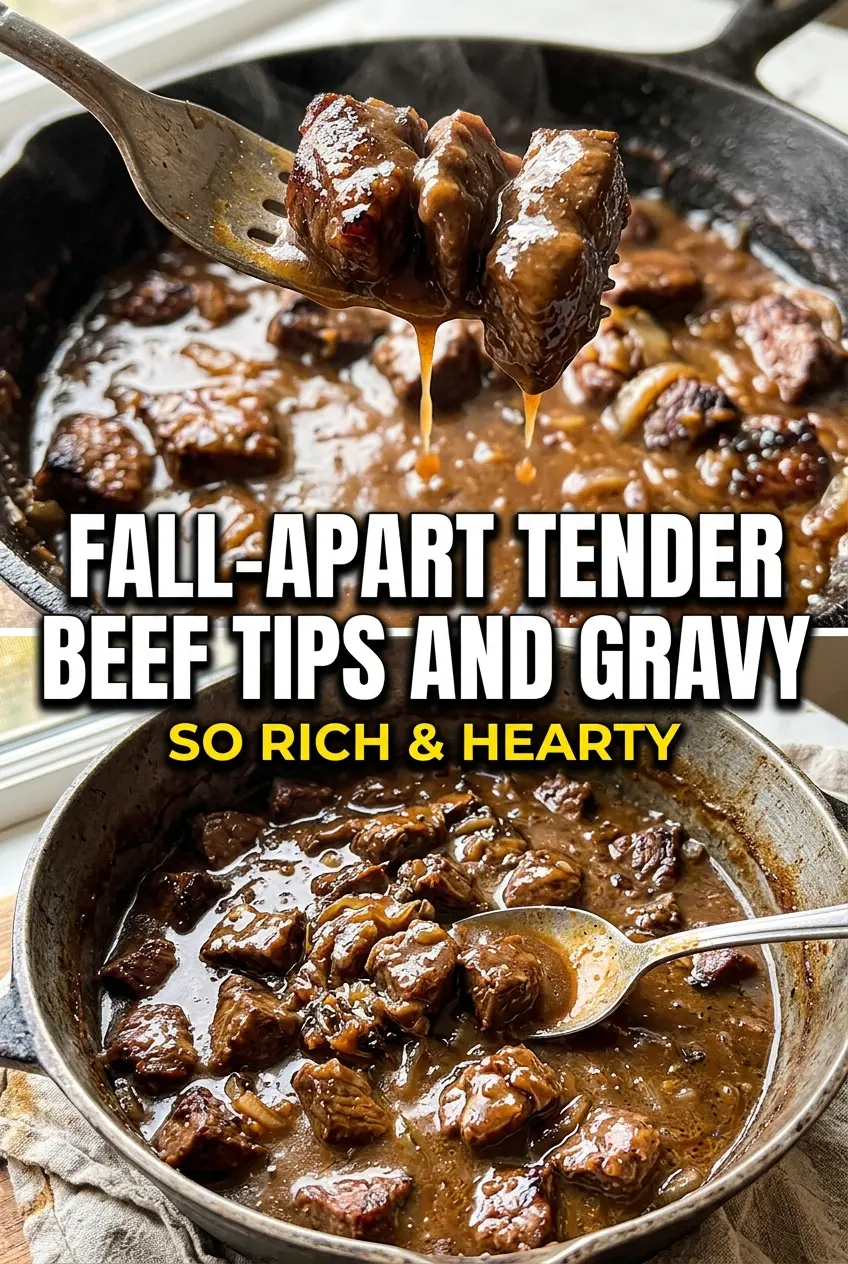
Beef Tips and Gravy
Ingredients
Equipment
Method
- Season the beef cubes with kosher salt and black pepper. Heat 2 tablespoons olive oil in a large skillet over medium-high heat and sear the beef in batches for 2–3 minutes per side, until browned, then remove and set aside.
- Add the remaining olive oil to the skillet and sauté the yellow onion and cremini mushrooms for 5–6 minutes, until softened.
- Add the minced garlic and cook for 30 seconds. Sprinkle in the all-purpose flour and stir to coat the vegetables.
- Slowly whisk in the beef broth, Worcestershire sauce, and dried thyme, scraping up any browned bits from the pan.
- Return the seared beef to the skillet and simmer for 15–20 minutes, until the sauce thickens and the beef is tender.
- Garnish with chopped fresh parsley and serve.