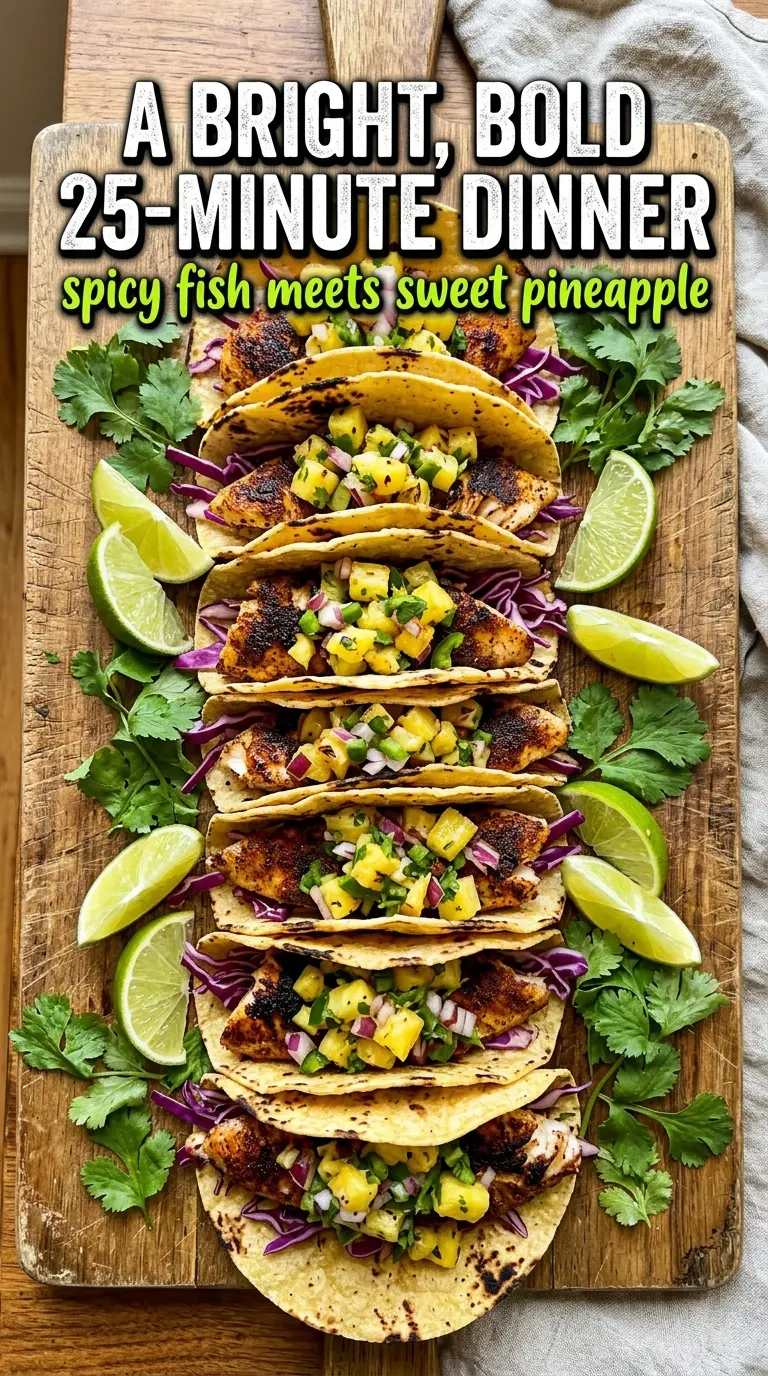
Blackened tilapia tacos hit that sweet spot between fast and special: crisp-edged fish, cool cabbage, juicy pineapple salsa, and a little sour cream to pull everything together. The contrast is what makes them work. You get smoky heat on the outside of the fish, then a bright, sweet finish from the salsa that keeps every bite from feeling heavy.
The trick is treating the tilapia gently but giving the spice rub enough heat to bloom in the pan. Tilapia cooks fast, which is exactly why it can go from flaky to dry in a minute or two if you walk away from it. A hot skillet, a thin slick of oil, and a short rest after cooking keep the texture tender while the seasoning builds that dark, savory crust.
Below, I’ve included the one detail that matters most when you’re making blackened fish tacos at home, plus a few smart swaps if you want to adjust the heat or serve these with what you already have on hand.
The fish got that dark blackened crust without sticking, and the pineapple salsa cut the heat perfectly. I used corn tortillas warmed in a dry pan, and the whole thing tasted like a restaurant taco night.
Blackened tilapia fish tacos with pineapple salsa are the kind of quick dinner that disappears fast, especially when the fish gets a proper crust and the salsa stays bright and juicy.
The Secret to Blackening Tilapia Without Turning It Dry
Blackening fish is less about burying it in spice and more about controlling the heat. Tilapia is thin, which means the surface can darken beautifully before the center overcooks, but only if the pan is fully hot before the fish goes in. If the skillet is lukewarm, the spice mixture just sits there and steams, and you lose both the crust and the clean, flaky texture.
The other mistake is moving the fillets too soon. Once they hit the oil, let them sit until the edges look deeply browned and the fish releases with little resistance. If it clings to the pan, give it another 20 to 30 seconds. Forcing it early tears the crust and leaves the seasoning behind.
- Smoked paprika — This gives the blackened coating its deeper color and a warm, smoky backbone. Regular paprika works in a pinch, but you lose some of that campfire note that makes the fish taste like more than just spiced tilapia.
- Cayenne — This is the heat source, and it does the heavy lifting. Cut it back if you want a gentler taco, but don’t swap it for chili powder if you want the same sharp, direct heat.
- Tilapia — Mild, thin fillets are ideal here because they cook quickly and let the spice rub stay front and center. If you use a thicker white fish, add a minute or two per side and watch for opacity in the center instead of relying only on the clock.
- Corn tortillas — They bring a little toasted corn flavor that fits the fish better than flour tortillas do. Warm them in a dry skillet so they become flexible; microwaved tortillas tend to tear once you start loading them.
- Sour cream — A small drizzle softens the heat and ties the salsa to the fish. Plain Greek yogurt works too, though it adds more tang and a firmer texture.
What Each Layer Is Doing in These Fish Tacos
- Olive oil — You only need enough to coat the skillet and help the spices bloom. Too much oil softens the crust instead of blackening it.
- Pineapple — Fresh pineapple keeps the salsa bright and juicy, and its acidity naturally balances the smoky heat. Canned pineapple can work if it’s packed in juice, but drain it well so the salsa doesn’t get watery.
- Red onion — This adds crunch and a little bite that stands up to the soft fish. If raw onion tastes harsh to you, rinse it briefly under cold water after dicing.
- Cilantro and lime juice — These keep the salsa lively. The lime should taste sharp, not muted; bottled juice works in a backup situation, but fresh lime gives the salsa its best lift.
- Purple cabbage — It brings crunch and a clean, peppery edge. Shred it fine so it doesn’t fight the fish for space in each taco.
Building the Crust, Then Keeping the Tacos Fresh
Seasoning the Fish Evenly
Mix the paprika, cayenne, garlic powder, onion powder, and salt together before you touch the fish. That keeps the seasoning balanced, and it helps the rub coat each fillet evenly instead of clumping in one spot. Press it on lightly; if you pack it down too hard, it can fall off in the pan as soon as you flip the fillets.
Getting the Blackened Sear
Heat the oil over medium-high until it shimmers, then lay the fish in gently. You want an immediate sizzle. Cook the fillets for 3 to 4 minutes on the first side, then flip once and finish just until they flake easily with a fork. If the spice smell turns acrid instead of smoky, the pan is too hot and the surface is burning before the fish cooks through.
Making the Pineapple Salsa Last Minute
Stir the pineapple, red onion, cilantro, jalapeño, and lime juice together right before serving. The salt from the fish and the juice from the pineapple start softening the onions fast, so the salsa tastes brightest when it’s fresh. Let it sit too long and it turns watery, which blurs the contrast that makes the tacos work.
Assembling the Tacos While Everything Is Still Warm
Warm the tortillas in a dry skillet, then flake the tilapia into large pieces so the crust stays visible. Add cabbage first, then fish, then salsa, and finish with a small drizzle of sour cream. That order keeps the tortilla from getting soggy and gives you a little crunch in every bite.
How to Change These Fish Tacos Without Losing the Balance
Make them dairy-free
Swap the sour cream for a dairy-free crema or use mashed avocado with a little lime juice and salt. You’ll lose the tang of sour cream, but you’ll keep the cooling finish that balances the spice.
Turn down the heat without flattening the flavor
Cut the cayenne in half and keep the smoked paprika the same. That keeps the fish smoky and darkened without making the tacos punishingly hot.
Use a different white fish
Cod, mahi mahi, or halibut all work here, but thicker fillets need a little more time in the pan. Watch for opaque flesh that flakes in big pieces, not just a browned surface.
Storage and Reheating
- Refrigerator: Store the fish, salsa, and toppings separately for up to 2 days. The fish will soften a bit, but it still makes a good leftover lunch.
- Freezer: The cooked fish can be frozen, though the texture is a little less tender after thawing. Freeze it flat and reheat gently; don’t freeze the salsa, since the pineapple turns mushy.
- Reheating: Warm the fish in a skillet over low heat or in a 300°F oven until just heated through. High heat dries tilapia out fast, so skip the microwave if you want to keep the texture intact.
Questions I Get Asked About This Recipe
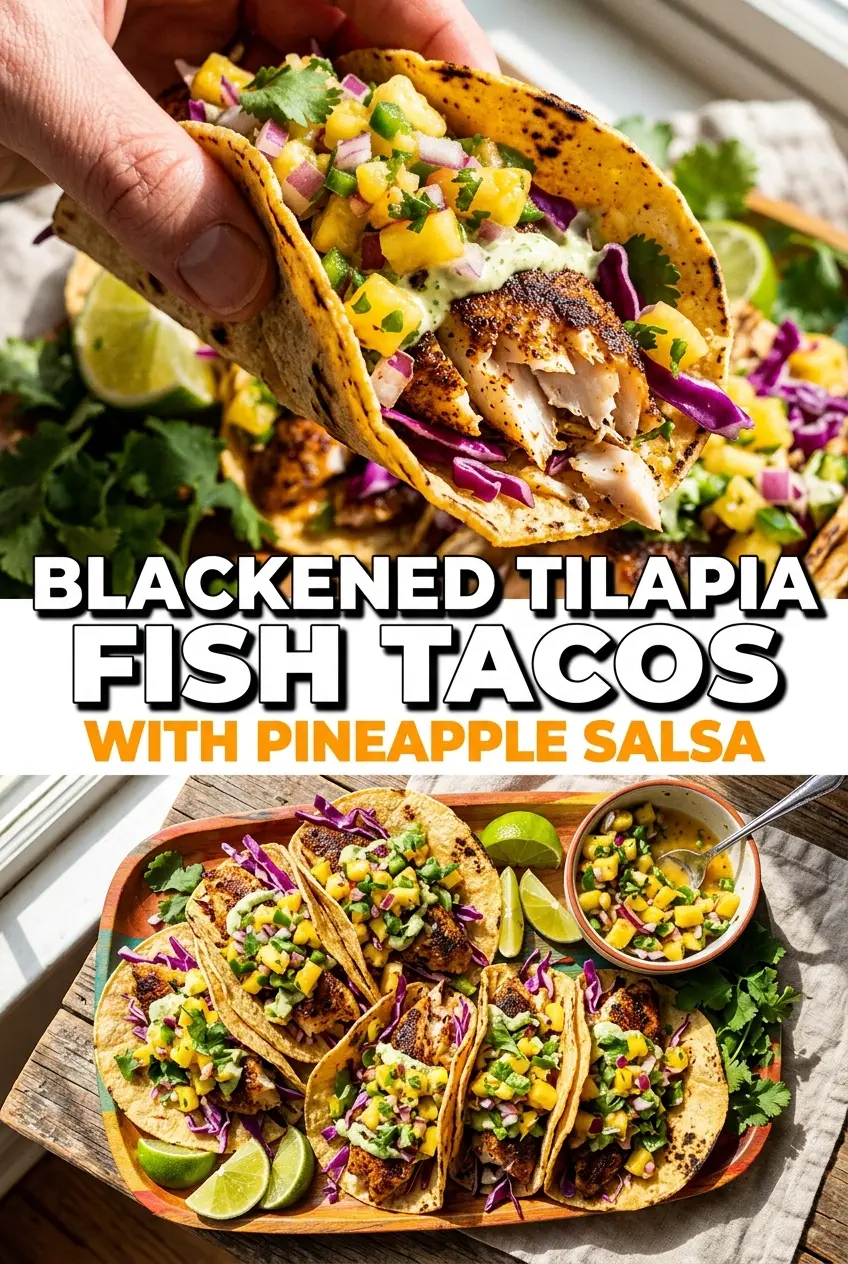
Blackened Tilapia Fish Tacos With Pineapple Salsa
Ingredients
Equipment
Method
- Combine the smoked paprika, cayenne pepper, garlic powder, onion powder, and kosher salt in a small bowl, then rub evenly over both sides of the tilapia fillets.
- Heat the olive oil in a skillet over medium-high heat, then cook the tilapia for 3–4 minutes per side until blackened and flaky; set aside after cooking so the fish firms up slightly.
- In a separate bowl, combine the fresh pineapple, red onion, fresh cilantro, jalapeño, and lime juice to make the salsa with a bright, juicy mix.
- Warm the small corn tortillas in a dry skillet for 20–30 seconds per side until pliable and lightly toasted with visible steam.
- Flake the tilapia into large pieces and divide among the tortillas so each taco has substantial fish.
- Top each taco with shredded purple cabbage, pineapple salsa, and a drizzle of sour cream before serving for a crisp, tangy finish.