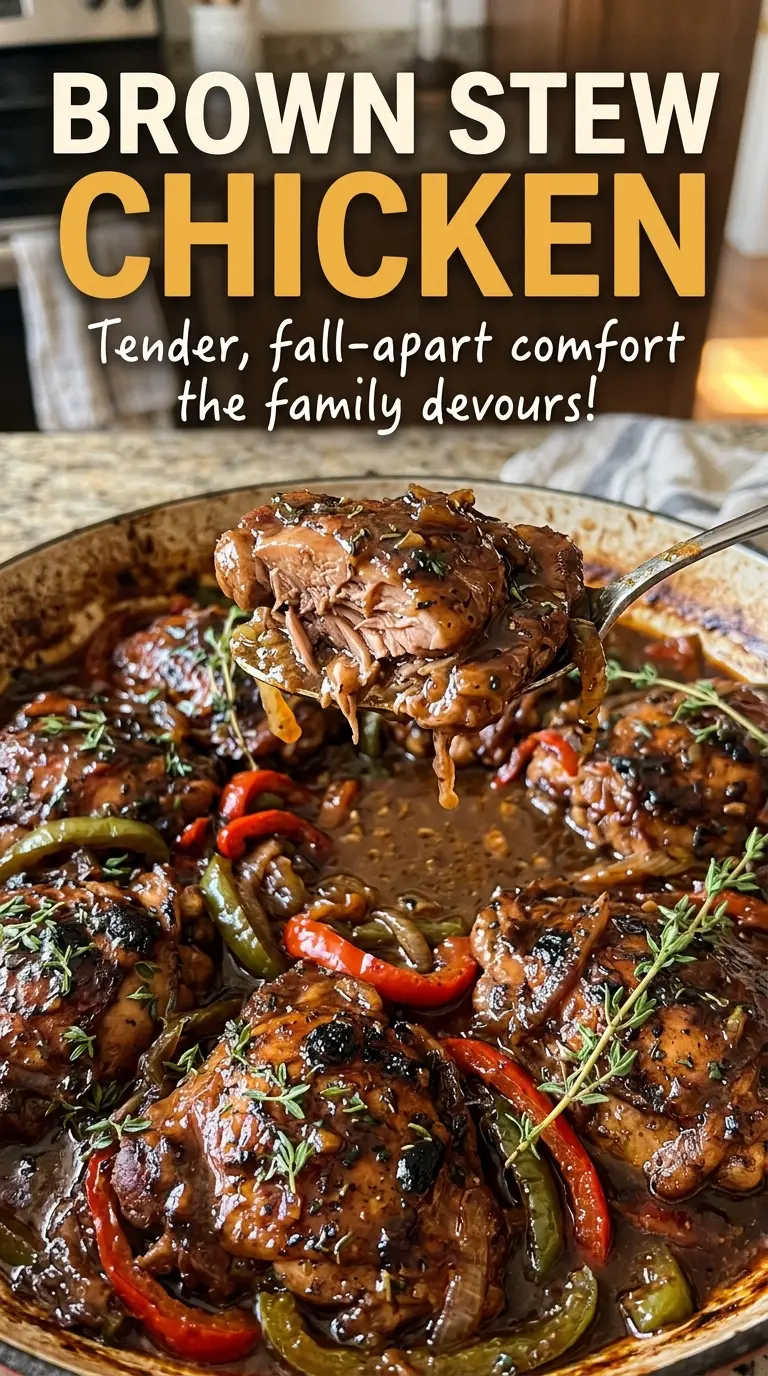
Brown stew chicken lands on the table with deep mahogany gravy, tender chicken that pulls cleanly from the bone, and peppers and onions that have soaked up every bit of that savory sauce. The best versions don’t taste rushed. They taste like the chicken was seasoned all the way through, seared hard enough to build flavor, then simmered until the gravy turns glossy and rich without losing the shape of the vegetables.
The two things that matter most here are the marinade and the browning step. Browning sauce gives the chicken that dark color and a head start on flavor, while the little bit of sugar in the pan creates the base for the stew’s color and depth. If you’ve ever ended up with pale stew or bitter gravy, the problem usually starts before the broth goes in. A calm, medium-brown caramel is what you want, not burnt sugar and not a timid blonde syrup.
Below, I’ll walk through the part that trips people up most: getting the chicken deeply browned without scorching the pan. You’ll also see how to keep the gravy from turning thin, plus a few swaps that still respect the spirit of Jamaican brown stew chicken.
The gravy got that deep brown color without tasting burnt, and the chicken was so tender it fell off the bone after 40 minutes. Even the peppers held their shape and tasted like they’d simmered all afternoon.
Save this Jamaican brown stew chicken for when you want deep, savory gravy and fall-apart chicken with hardly any guesswork.
The Browning Step Is What Gives This Stew Its Signature Color
A lot of brown stew chicken goes wrong before the chicken ever hits the pot. If the sugar gets too dark, the stew turns bitter. If it barely colors at all, the gravy ends up looking flat and thin even when the flavor is there. The goal is a warm caramel that coats the chicken and gives the broth that deep, reddish-brown color Jamaican brown stew is known for.
The other common mistake is crowding the pan during the sear. The chicken needs contact with the hot oil long enough to pick up color on more than one side. If the pieces steam, they dump moisture into the pan and the sugar can’t do its job. Work in batches if your skillet is tight, and keep the heat steady so the caramel doesn’t jump from golden to burned in a few seconds.
What Each Ingredient Is Actually Doing in This Dish
- Bone-in chicken thighs and drumsticks — These stay juicy through the longer simmer and give the gravy more body than boneless pieces. Thighs are the most forgiving cut here; drumsticks add extra flavor and hold up well in the stew. Boneless chicken works in a pinch, but it won’t have the same richness or stay as succulent.
- Browning sauce — This gives the marinade color and helps the finished stew take on that classic dark tone. It’s not the same as soy sauce or kitchen bouquet, and those swaps will change the taste. If you can’t find it, a small amount of dark molasses can add color, but use less than you think because it can take the dish in a sweeter direction.
- Sugar — This is what creates the caramel base in the pot. You want just enough to turn a rich amber color before the chicken goes in. If it smokes heavily or smells burned, start over; bitter caramel will carry through the whole stew.
- Scotch bonnet or habanero — This brings heat, but also a fruity edge that fits Jamaican cooking. Use it minced and small if you want the flavor without a huge fire alarm. Leaving it out won’t ruin the stew, but you’ll lose some of the dish’s backbone.
- Fresh thyme — Dried thyme helps in the marinade, but fresh thyme in the pot gives the stew a greener, more aromatic finish. Strip the leaves into the broth and save a few sprigs for garnish. It’s one of those ingredients that reads as subtle until you leave it out.
Building the Stew So the Gravy Stays Rich
Marinating for Real Flavor, Not Just Color
Coat the chicken with the browning sauce, seasonings, garlic powder, onion powder, thyme, salt, and pepper, then leave it alone for at least 2 hours. Overnight is better because the seasoning has time to move past the surface. If the chicken goes into the pot cold and underseasoned, the stew can only taste seasoned on the outside. Keep it covered in the refrigerator while it marinates so the spices stay bright and the chicken stays safe.
Caramelizing the Sugar Without Burning It
Heat the oil first, then add the sugar and watch it closely. It should melt, foam a little, and turn a deep amber color, not black. The second it smells sharp or acrid, the pot is too hot and the sugar is past the point of use. Move quickly at this stage because the caramel keeps cooking even after the chicken goes in.
Getting Color on the Chicken Before the Simmer
Put the marinated chicken into the caramel and let it sear until deeply golden on several sides. Don’t rush this part. The pan needs to recover between pieces, or the chicken will release liquid and pale out instead of browning. You’re looking for a dark, sticky coating that clings to the chicken and leaves browned bits in the bottom of the pot.
Finishing the Stew Slowly
Add the onions, peppers, garlic, green onions, and Scotch bonnet, then pour in the broth and bring everything up to a boil. After that, drop the heat, cover the pot, and let it simmer until the chicken is fall-apart tender and the gravy has thickened enough to coat a spoon. If the gravy looks thin near the end, uncover the pot for the last few minutes so the liquid can reduce instead of watering down the flavor.
How to Adapt This for Different Kitchens and Different Heat Levels
Milder Brown Stew Chicken
Skip the Scotch bonnet or use only a tiny amount, minced very fine. You’ll still get the savory, caramelized flavor of the stew without the heat that can overpower the gravy. The dish stays true to the original structure, just with a softer finish.
Gluten-Free Version
This recipe is naturally close to gluten-free as long as your browning sauce and seasoning blend are certified gluten-free. That label matters because some spice mixes and bottled sauces hide wheat-based additives. Keep the rest of the recipe the same and you won’t lose any texture or depth.
Using Boneless Chicken
Boneless thighs will cook faster, usually in about 25 to 30 minutes once the broth goes in. They’re a little less forgiving, so pull them as soon as they’re tender or they’ll dry out. You’ll lose some of the body that bone-in chicken brings to the gravy, but the stew still tastes right.
Storage and Reheating
- Refrigerator: Store in an airtight container for up to 4 days. The gravy thickens as it sits, and the flavor usually gets even better by day two.
- Freezer: It freezes well for up to 3 months. Let it cool completely first, then freeze the chicken and gravy together; the peppers may soften a bit after thawing, but the stew still holds up.
- Reheating: Reheat gently on the stovetop over low heat with a splash of broth or water if the gravy has tightened too much. High heat can make the chicken stringy and can cause the sauce to separate around the edges.
Answers to the Questions Worth Asking

Brown Stew Chicken
Ingredients
Equipment
Method
- Combine the chicken with browning sauce, all-purpose seasoning, garlic powder, onion powder, dried thyme, salt, and pepper, then cover and marinate for at least 2 hours or overnight in the refrigerator.
- After marinating, let the chicken sit 10 minutes at room temperature while you prepare the stovetop, then proceed with cooking.
- Heat the vegetable oil in a large skillet or Dutch oven over medium heat, add the sugar, and let it caramelize until golden brown.
- Add the marinated chicken pieces to the caramel oil and brown over medium heat until deeply golden on all sides, then remove to a plate.
- In the same pot, sauté the onion, bell peppers, garlic, green onions, and scotch bonnet (if using) for 4 minutes, stirring until fragrant.
- Return the browned chicken to the pot, add the chicken broth, and bring everything to a boil.
- Reduce heat to maintain a gentle simmer, cover, and simmer for 35-40 minutes until the chicken is fall-apart tender and the gravy is thick.
- Serve the brown stew chicken with rice, spooning the thick mahogany gravy over the top, and garnish with fresh thyme.