Burst cherry tomato pasta lands in that sweet spot between effortless and satisfying: glossy noodles, tomatoes that collapse into their own juices, and garlic that perfumes the whole pan without turning bitter. The sauce stays light, but it still clings to every strand, which is what keeps this from feeling like plain pasta with tomatoes tossed on top.
The trick is patience at the skillet. Let the tomatoes cook long enough to wrinkle, split, and start releasing a little jammy juice, then use a splash of pasta water to turn that into a silky coating instead of a watery puddle. Garlic goes in first and only for a minute, because once it browns too far the whole dish tastes harsh instead of sweet and fresh.
You’ll also find a few small fixes below for getting the sauce to cling properly, swapping the pasta shape, and storing leftovers without losing that fresh basil finish.
The tomatoes broke down into the prettiest saucy texture, and the pasta water made it cling instead of sitting in the bottom of the bowl. I used a little extra parmesan at the end and my husband went back for seconds right away.
Save this burst cherry tomato pasta for the nights when you want a light garlic-basil dinner that still feels saucy and complete.
The Reason the Sauce Clings Instead of Pooling at the Bottom
Tomato pasta fails in one of two ways: the tomatoes stay too intact and taste raw, or they melt down but leave you with watery sauce that slides off the noodles. This version solves both by giving the tomatoes time to burst in the oil, then using pasta water as the bridge between the tomato juices and the starch on the noodles. That starch is what helps the sauce turn glossy and hold together.
The other detail that matters is the heat level. Medium heat is enough for the garlic to perfume the oil without browning it, and once the tomatoes go in, you want enough heat for them to collapse but not so much that the juices evaporate before they can become sauce. If the pan looks dry before the pasta goes in, add pasta water early instead of waiting for the sauce to burn onto the skillet.
What Each Ingredient Is Actually Doing in This Dish
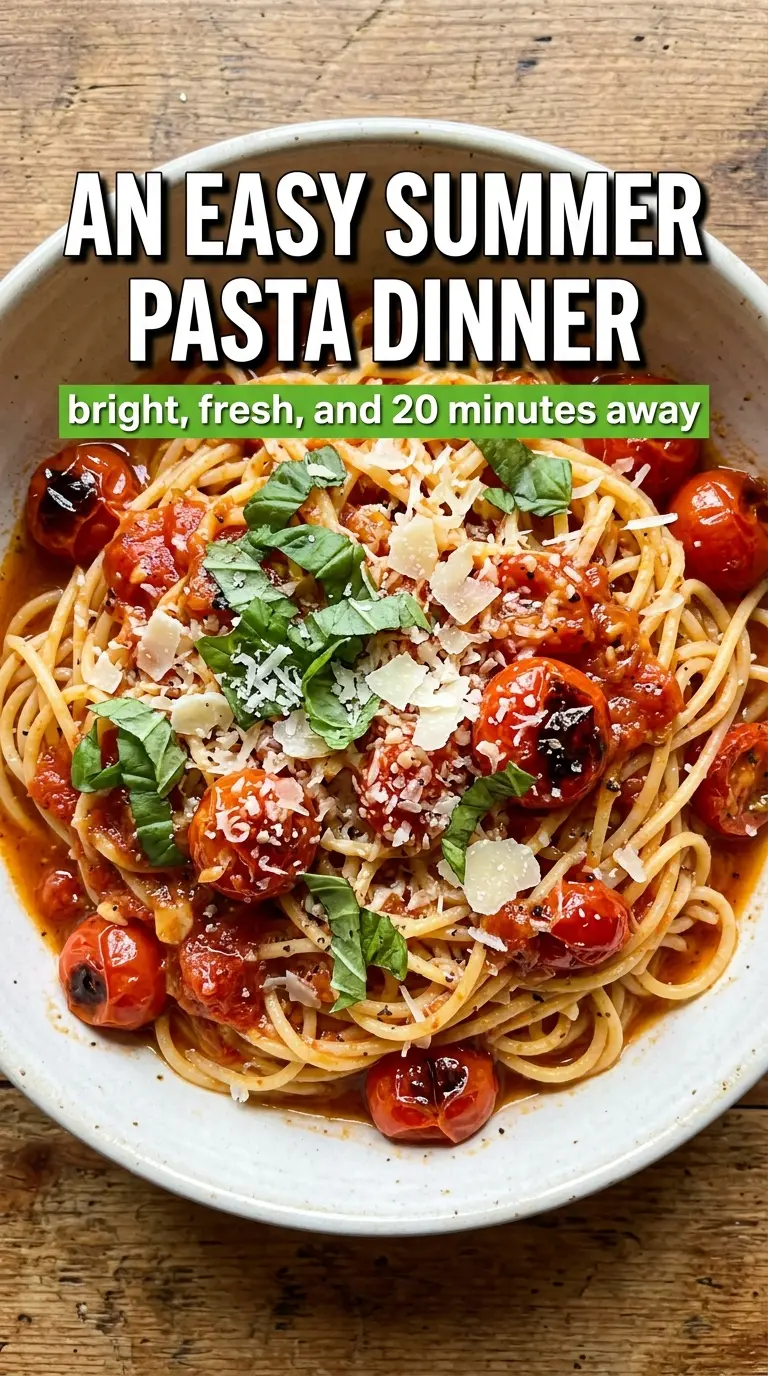
- Cherry tomatoes — These are the whole point of the dish. Their skin holds in the juices long enough for the heat to concentrate the flavor, then they burst into a sauce that tastes sweet and bright instead of canned or flat. Grape tomatoes work too, but very large tomatoes release more water and take longer to break down.
- Olive oil — This carries the garlic flavor and helps the tomato juices emulsify with the pasta water. Use a decent everyday olive oil here; you’ll taste it. A neutral oil works in a pinch, but the sauce loses some depth.
- Garlic — Slice it instead of mincing it so it softens gently and infuses the oil without disappearing. Minced garlic can work, but it burns faster and gives you less control. If yours starts to color before the tomatoes go in, pull the pan off the heat for a moment.
- Parmesan — This adds salt, body, and a little richness at the finish. Grated parmesan melts into the sauce better than the pre-shredded stuff, which can stay dusty or clump. If you need a dairy-free version, skip it and finish with more olive oil and a pinch of extra salt.
- Fresh basil — Add it off the heat so it stays fragrant and green. Basil bruised into hot sauce can turn dull fast. Tear it by hand; a knife tends to darken the edges and mute the aroma.
Building the Pan Sauce Without Losing the Fresh Tomato Flavor
Start the Pasta Water First
Salt the pasta water well before anything else. That water seasons the noodles from the inside, and it also gives you the starchy liquid that turns the tomato juices into a sauce. Reserve at least a cup before draining, because the pasta will need a few splashes to loosen and gloss the pan sauce later.
Wake Up the Garlic in the Oil
Warm the olive oil over medium heat, then add the sliced garlic and let it sizzle for about a minute. You want fragrance, not color. The moment garlic turns deep gold, it shifts from sweet to bitter, and that bitterness shows up in a sauce this simple.
Let the Tomatoes Collapse on Their Own Terms
Add the cherry tomatoes and red pepper flakes, then cook until the tomatoes split and slump. Press a few gently with the back of a spoon to help them along, but don’t mash all of them at once or you’ll lose the mix of texture that makes the dish interesting. If the pan starts to look dry before enough tomatoes burst, lower the heat slightly and keep going until the juices thicken.
Finish the Sauce With Pasta Water and Cheese
Toss the drained pasta straight into the skillet and add pasta water a little at a time. The sauce should look loose at first, then turn silky as you toss and the starch and oil come together. Take the pan off the heat before adding the basil and parmesan so the cheese melts into the sauce instead of clumping.
How to Adapt This for Different Needs and Leftovers
Make it dairy-free without losing body
Skip the parmesan and finish with another drizzle of olive oil plus a little more salt. You won’t get the same savory, cheesy finish, but the sauce still clings well because the pasta water and tomato juices do most of the structural work.
Use gluten-free pasta without turning the sauce thin
Choose a sturdy gluten-free spaghetti or linguine and pull it from the water when it still has a little bite. Gluten-free pasta can go from firm to soft fast, and if it overcooks, it won’t hold the sauce as well. Reserve the pasta water anyway, but add it gradually because some brands release less starch than wheat pasta.
Add protein without crowding the tomatoes
Toss in cooked shrimp, shredded rotisserie chicken, or white beans at the very end so the tomato sauce stays front and center. Heavy add-ins earlier in the cooking process can mute the freshness and make the pan feel crowded.
Storage and Reheating
- Refrigerator: Store in an airtight container for up to 3 days. The basil will darken a bit, and the pasta will absorb more sauce as it sits.
- Freezer: Freezing isn’t ideal. The tomatoes and basil lose their fresh texture, and the pasta turns softer after thawing.
- Reheating: Warm gently in a skillet with a splash of water or olive oil over low heat. The common mistake is blasting it in the microwave until the pasta dries out and the tomatoes taste flat.
Answers to the Questions Worth Asking
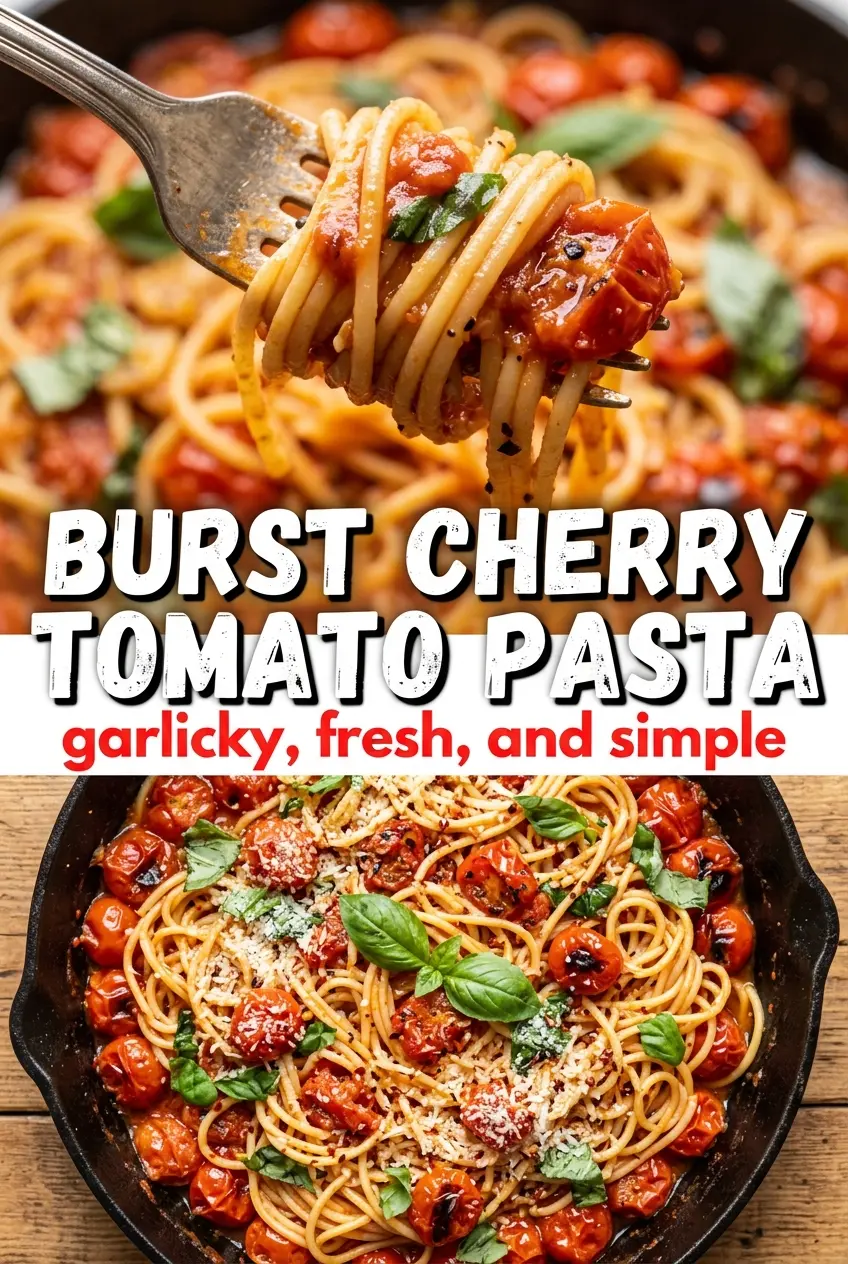
Burst Cherry Tomato Pasta With Garlic And Basil
Ingredients
Equipment
Method
- Bring a large pot of salted water to a boil, then cook spaghetti or linguine according to package directions until al dente. Before draining, reserve 1 cup of pasta water and then drain the pasta.
- Heat olive oil in a large skillet over medium heat, then add sliced garlic and cook for 1 minute until fragrant. Keep the heat at medium so the garlic turns aromatic without browning.
- Add cherry tomatoes and red pepper flakes to the skillet and cook for 8–10 minutes until the tomatoes burst and release their juices. Press the tomatoes gently with a spoon to help them burst as they cook.
- Add the cooked pasta to the skillet and toss until every strand is coated in the tomato-garlic mixture. Toss continuously so the pasta starts picking up sauce right away.
- Add reserved pasta water a splash at a time, tossing after each addition until a light sauce forms. Stop when the sauce clings but still looks glossy rather than watery.
- Remove the skillet from heat, then stir in torn fresh basil and grated parmesan cheese. Stir just until the basil wilts slightly and the cheese melts into the sauce.
- Season with salt and pepper to taste, then serve the pasta warm. Taste the sauce after seasoning to ensure the balance is right.