Cheesy beef and potato soup lands the way a good bowl of comfort should: thick, savory, and substantial enough to count as dinner without needing anything on the side. The potatoes soften into the broth just enough to make the soup feel hearty, while the beef keeps every spoonful grounded and satisfying. When the cheddar melts in at the end, it doesn’t turn this into a gluey cheese soup — it gives you a creamy, rich finish with actual texture left in the bowl.
The part that makes this version work is the balance between starch, dairy, and broth. Russet potatoes break down just enough to help thicken the base, and mashing a few in the pot gives the soup body without needing flour. The condensed cheddar soup adds stability, which means the heavy cream and shredded cheese can go in without the whole pot turning grainy or separating. That small step keeps the texture smooth and spoonable instead of thin and watery.
Below you’ll find the exact order that keeps the vegetables tender, the potatoes intact, and the cheese melted cleanly. There’s also a note on how much of the potatoes to mash, because that one detail changes the whole texture of the soup.
The potatoes softened just right and the cheddar melted in without getting grainy. I mashed a few pieces like you suggested and the soup turned out thick enough to eat with a spoon, not a cracker.
Save this cheesy beef and potato soup for the nights when you want a thick, cheesy bowl that eats like a meal.
The Trick to Keeping the Cheese Smooth Instead of Grainy
The biggest mistake in a soup like this is pushing the cheese in too early or over too much heat. Once dairy gets scorched, it can turn sandy or separate, and no amount of stirring will bring it back together. That final handful of cheddar belongs in the pot after the heat is lowered and the potatoes are already tender.
Mashing some of the potatoes right in the pot does two jobs at once. It thickens the broth naturally and gives the soup a softer, creamier body without turning it into purée. If you want a chunkier bowl, mash less. If you want it thicker and closer to chowder, mash more.
What Each Ingredient Is Actually Doing in This Soup
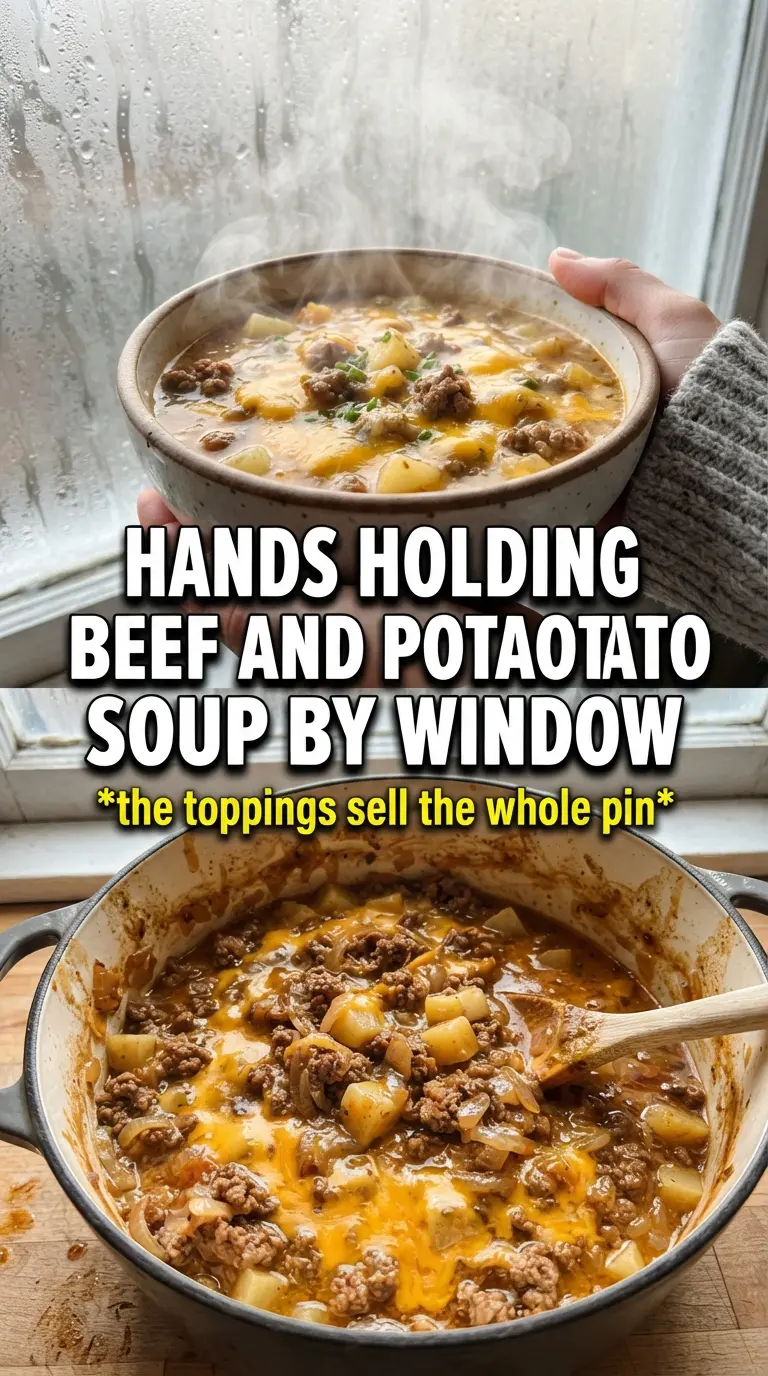
- Ground beef — This gives the soup its savory backbone. Brown it well so you get those darker bits on the bottom of the pot; that’s where a lot of the flavor lives. If you want a leaner version, use 90/10 beef, but drain it well or the soup will feel greasy.
- Russet potatoes — Russets are the right choice because they soften quickly and help thicken the broth as they cook. Yukon Golds will hold their shape a little more, which is fine if you want bigger pieces, but you won’t get quite the same body from the soup.
- Condensed cheddar soup — This is the ingredient that keeps the cheese sauce stable. It gives the pot a little insurance so the heavy cream and shredded cheddar don’t split when they go in. There isn’t a perfect substitute if you want the same texture, though a homemade cheese sauce can work if you’re comfortable building a roux.
- Heavy cream — This softens the broth and gives the soup that rich, rounded finish. Half-and-half works in a pinch, but the soup will be a little lighter and less velvety. Don’t add milk here unless you’re okay with a thinner broth.
- Sharp cheddar — Use a block and shred it yourself if you can. Pre-shredded cheese often carries anti-caking starch that can make the soup a little less smooth. Sharp cheddar gives you enough bite to taste through the potatoes and beef.
- Worcestershire, smoked paprika, and garlic powder — These don’t make the soup taste smoky or tangy in an obvious way; they deepen the base so it tastes cooked, not flat. Worcestershire adds savoriness, paprika adds warmth, and garlic powder keeps the seasoning present even after the dairy goes in.
The 20 Minutes That Turn Broth Into Soup
Brown the Beef First
Cook the ground beef in a large pot until it’s no longer pink and the edges have some color. That browning matters because it leaves flavor in the pan, and you’ll build the soup right on top of it. Drain the fat if there’s a lot of it, but leave a thin coating behind so the vegetables don’t start dry.
Soften the Vegetables in the Same Pot
Add the onion, carrots, and celery and cook them until the onion turns translucent and the carrots start to lose their raw bite, about 5 minutes. Stir in the garlic for the last minute so it stays fragrant instead of bitter. If the pot starts to look dry, a splash of broth will keep the vegetables from sticking before the soup base goes in.
Simmer Until the Potatoes Give Up Easily
Add the broth, potatoes, Worcestershire, garlic powder, and smoked paprika, then bring everything to a boil before dropping it to a steady simmer. The potatoes should be tender enough that a spoon slides through without resistance, but not so soft that they collapse completely. If the heat is too high, the broth will reduce before the potatoes cook through, so keep the simmer gentle.
Finish With the Dairy Off the Heat
Mash a portion of the potatoes right in the pot, then stir in the condensed cheddar soup and heavy cream. Return the beef, add the shredded cheddar, and stir until it melts fully. If the soup looks grainy, the pot was too hot when the cheese went in, so pull it off the burner for a minute before stirring again.
Three Ways to Adjust the Bowl Without Losing the Soul of It
Make It Gluten-Free
This soup can be gluten-free if your condensed cheddar soup and broth are certified gluten-free. The texture stays the same, which is the main advantage here, but you do need to check labels because the canned soup is the piece most likely to contain hidden wheat.
Swap in Ground Turkey
Ground turkey works if you want something lighter, but you’ll lose some of the deep beefy base that makes the soup taste so hearty. Add an extra pinch of smoked paprika and a little more Worcestershire to bring back some of that savory depth.
Make It Thicker and More Chowder-Like
Mash more of the potatoes and simmer the soup uncovered for the last few minutes to let some liquid cook off. That gives you a denser, spoon-coating texture without adding flour. The tradeoff is that the soup won’t stay as brothy, so plan on serving it soon after it finishes.
Storage and Reheating
- Refrigerator: Store in an airtight container for up to 4 days. The potatoes will keep soaking up broth, so the soup thickens as it sits.
- Freezer: It does freeze, but the cream and cheese can change the texture slightly after thawing. Freeze in portions if you want, then stir well after reheating to bring it back together.
- Reheating: Warm it gently over low heat on the stovetop, stirring often. High heat is the fastest way to get a broken, grainy soup, especially once the cheese is already in the pot.
Answers to the Questions Worth Asking

Cheesy Beef and Potato Soup
Ingredients
Equipment
Method
- Brown the ground beef in a large pot, then drain the fat and set the beef aside.
- Sauté the onion, carrots, and celery in the pot for 5 minutes until softened.
- Add the garlic and cook for 1 minute, stirring until fragrant.
- Add beef broth, potatoes, garlic powder, smoked paprika, and Worcestershire, then bring the mixture to a boil.
- Simmer for 20 minutes, stirring occasionally, until the potatoes are tender and easily pierced with a fork.
- Mash some of the potatoes in the pot to thicken the soup, leaving some chunks for texture.
- Stir in the condensed cheddar soup and heavy cream until smooth and creamy.
- Return the browned beef to the pot and stir to combine with the creamy base.
- Stir in the shredded sharp cheddar and continue stirring until fully melted and glossy.
- Season with salt and pepper to taste, then serve hot.