Tender chicken and fettuccine coated in a silky Alfredo sauce earns a permanent spot in the dinner rotation because it delivers that rich, restaurant-style finish without asking for much more than a skillet, a pot of pasta water, and a little attention at the stove. The sauce clings to every strand instead of pooling at the bottom of the bowl, and the chicken stays juicy enough to feel like part of the dish rather than an afterthought.
What makes this version work is the order of operations. The chicken gets browned first, then the same pan builds the sauce, which means the garlic and butter pick up the savory bits left behind. Parmesan goes in off a gentle simmer, not a hard boil, so it melts into a smooth sauce instead of turning grainy. A splash of pasta water at the end loosens everything just enough to coat the fettuccine without watering it down.
Below, I’ve included the small details that keep Alfredo from breaking, plus the swaps that still give you a creamy, satisfying bowl when you need to work with what you have.
The sauce turned out glossy and thick, and adding the pasta water at the end kept it from getting gluey. My chicken stayed juicy too, which never happens when I make Alfredo at home.
Save this Chicken Alfredo for the nights when you want a creamy sauce that clings to every strand of fettuccine.
The Trick to Alfredo That Stays Silky Instead of Turning Grainy
Alfredo breaks for two common reasons: the heat is too high when the cheese goes in, or the sauce gets thinned with cold liquid at the wrong moment. Parmesan needs a gentle environment to melt into cream. If the pan is boiling, the fat can separate and the sauce starts looking oily and rough instead of smooth.
The other mistake is letting the pasta sit too long before it meets the sauce. Fettuccine should go straight from the colander into the skillet while it still has a little surface moisture. That starch helps the sauce grab on, and the reserved pasta water gives you control over the final texture without making the dish feel heavy.
What Each Ingredient Is Actually Doing in This Dish

- Fettuccine — The wide noodles hold onto the sauce better than thinner pasta. If you swap in linguine or spaghetti, the dish still works, but you lose some of that thick, luxurious coating.
- Chicken breasts — Slicing them before cooking helps them cook quickly and evenly, which keeps them tender. Chicken thighs work too if you want a richer result, but they’ll bring a little more fat into the sauce.
- Heavy cream — This gives the sauce its body and keeps it stable when the Parmesan melts in. Half-and-half can work in a pinch, but the sauce will be thinner and more likely to need extra cheese to thicken.
- Parmesan — Use a freshly grated block if you can. Pre-shredded cheese often has anti-caking starches that make the sauce less smooth and a little sandy.
- Butter and garlic — These build the base flavor in the same pan you used for the chicken, which is where the depth comes from. The garlic only needs 30 seconds; any longer and it turns bitter under the cream.
- Reserved pasta water — This is the tool that lets you loosen the sauce without thinning the flavor. Add it a splash at a time until the sauce coats the pasta cleanly.
Building the Sauce Without Breaking It
Cooking the Pasta and Chicken
Cook the fettuccine in well-salted boiling water until it’s just tender with a little bite left in the center. Drain it after you reserve the pasta water, because that starchy liquid is part of the recipe, not an extra. Season the chicken evenly before it hits the skillet, then cook it over medium-high heat until the outside turns golden and the center reaches 165°F. If the pan is crowded, the chicken steams instead of browns, and you lose the savory base that makes the sauce taste fuller.
Starting the Alfredo Base
Use the same skillet after the chicken comes out. Melt the butter, then stir in the garlic just until it smells warm and fragrant. The second the garlic turns pale gold, add the cream and lower the heat so the liquid stays at a gentle simmer. A hard boil can make the dairy separate, and once that happens, whisking won’t fully bring it back.
Melting in the Parmesan
Add the Parmesan gradually and whisk until the sauce looks smooth, glossy, and slightly thickened. If the cheese clumps or the sauce looks gritty, the pan is too hot. Pull it off the burner for a minute and keep whisking; the residual heat is enough to finish the melt without breaking the emulsion.
Bringing Everything Together
Return the chicken and pasta to the skillet and toss until every strand looks coated. Add reserved pasta water a tablespoon at a time if the sauce tightens up too much. You’re looking for a sauce that clings in a thin sheen, not one that sits in a puddle at the bottom of the pan. Finish with parsley and extra Parmesan so the dish tastes complete, not just rich.
Three Ways to Adjust This Chicken Alfredo Without Losing the Creamy Finish
Make It Gluten-Free With the Right Pasta
Use a sturdy gluten-free fettuccine and pull it from the water while it still has a little firmness. Gluten-free pasta can go from perfect to soft fast, and overcooked noodles won’t hold the sauce as well. Keep the pasta water, since it helps the sauce cling whether the pasta contains gluten or not.
Swap in Chicken Thighs for a Richer Bite
Boneless chicken thighs bring a little more richness and stay juicy even if they cook a minute longer than the breasts. Slice them after cooking so they stay tender. The sauce will taste a touch deeper, but the dish also gets a little heavier.
Go Lighter With Half-and-Half
Half-and-half can replace the heavy cream if that’s what you have, but the sauce won’t be as plush. Let it simmer gently and expect to use a little extra Parmesan for body. Don’t boil it hard, or the sauce can separate before it thickens.
Add Vegetables Without Wrecking the Sauce
Broccoli, peas, or sautéed mushrooms fit in well, but cook them separately or after the chicken so they don’t release water into the cream. Watery vegetables are the fastest way to thin Alfredo. Fold them in at the end so the sauce stays thick and the vegetables stay bright.
Storage and Reheating
- Refrigerator: Store leftovers in an airtight container for up to 3 days. The sauce thickens as it chills, so expect it to look a little tighter the next day.
- Freezer: Alfredo doesn’t freeze well. The cream and Parmesan can separate when thawed, leaving the sauce grainy.
- Reheating: Warm it slowly in a skillet over low heat with a splash of milk or cream, stirring often. High heat is the mistake that turns leftovers oily and clumpy.
Answers to the Questions Worth Asking
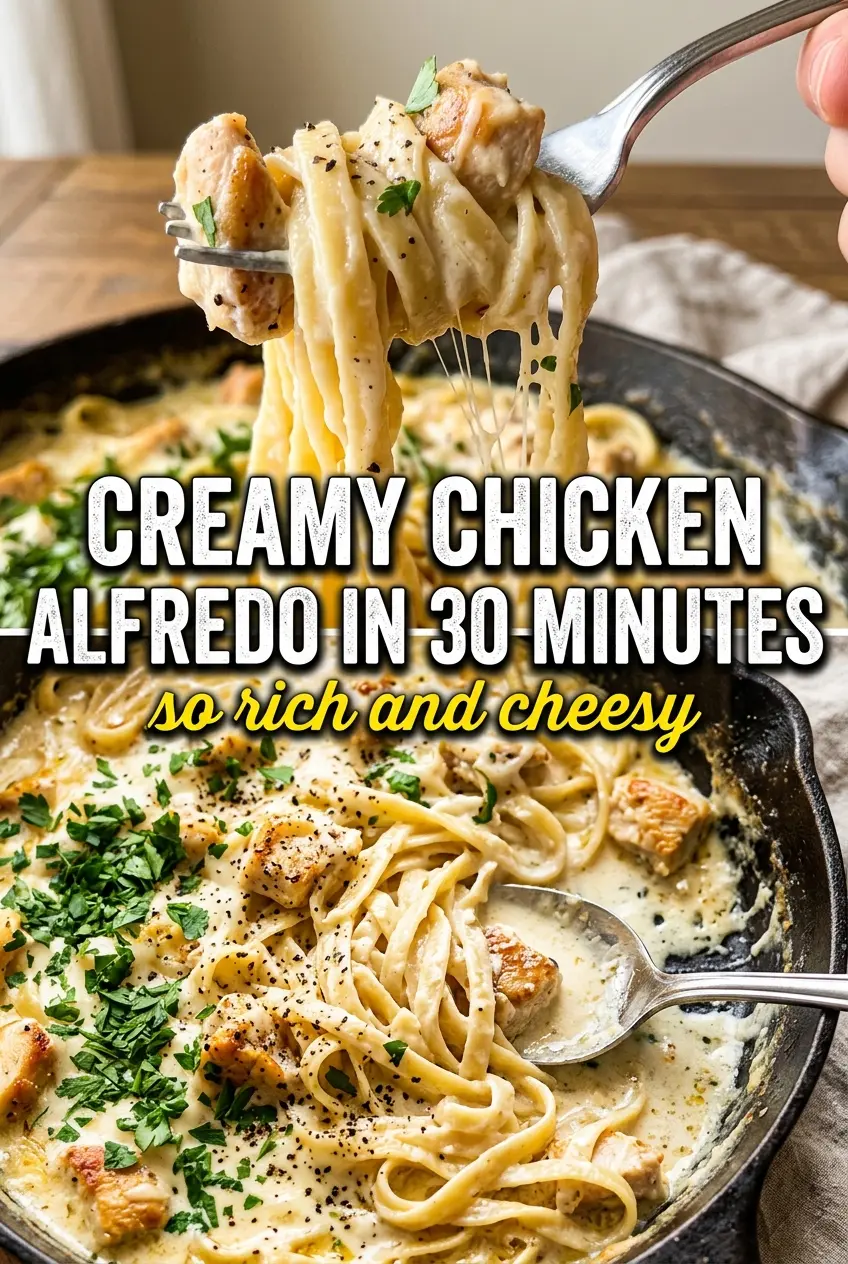
Chicken Alfredo
Ingredients
Equipment
Method
- Cook the fettuccine in salted boiling water according to package directions. Reserve ½ cup pasta water before draining so you can thin the sauce later.
- Season the chicken with half the salt and pepper. Heat the olive oil in a large skillet over medium-high heat and cook the chicken for 6–7 minutes, until golden and cooked through, then remove and set aside.
- In the same skillet, melt the butter and sauté the garlic for 30 seconds, until fragrant. Keep the heat at medium so the garlic doesn’t brown.
- Pour in the heavy cream and bring it to a gentle simmer, then whisk in the Parmesan until smooth and glossy. Reduce heat slightly if needed to maintain a gentle simmer.
- Return the chicken and cooked pasta to the skillet, tossing to coat. Thin with reserved pasta water if needed, then season with the remaining salt and pepper.
- Garnish with fresh parsley and extra Parmesan before serving. Serve immediately while the sauce is creamy and cohesive.