Clear, savory broth, tender chicken, and springy noodles make this Chinese chicken noodle soup the kind of bowl that settles in fast and disappears even faster. The broth stays light enough to sip, but it still carries enough ginger, garlic, and soy to taste full and satisfying. Bok choy and shiitake mushrooms give it that clean, restaurant-style balance that keeps every spoonful interesting.
What makes this version work is timing. The chicken simmers gently in the broth instead of boiling hard, so it stays tender instead of stringy. The noodles are cooked separately, which keeps them from soaking up all the broth and turning gummy before the soup even reaches the table. A small finish of rice vinegar and white pepper sharpens the whole bowl without making it taste sour or overly spicy.
Below you’ll find a few simple ways to keep the broth clear, how to adjust the seasoning without losing the balance, and what to do if you want to make it ahead for a quick lunch or dinner later in the week.
The broth stayed clear and the ginger really came through. I cooked the noodles separately like you said, and they held up perfectly instead of getting mushy in the leftovers.
Save this Chinese chicken noodle soup for the nights when you want a clear, gingery broth and noodles that stay springy instead of soggy.
The Trick to Keeping the Broth Clear and the Noodles Separate
The biggest mistake in noodle soup is boiling everything together from the start. That clouds the broth, overcooks the chicken, and leaves the noodles swollen and soft before the bowl reaches the table. This version keeps the broth clean and the texture sharp by treating the noodles like their own component instead of tossing them into the pot and hoping for the best.
Another detail that matters here is the order of seasoning. Garlic and ginger go in first so they can perfume the broth, then soy sauce, sesame oil, and rice vinegar build the savory base before the chicken goes in. White pepper comes at the end because its warmth can get lost if it cooks too long, and a final taste with salt keeps the soup from tasting flat once the noodles and vegetables are added.
What Each Ingredient Is Actually Doing in This Bowl
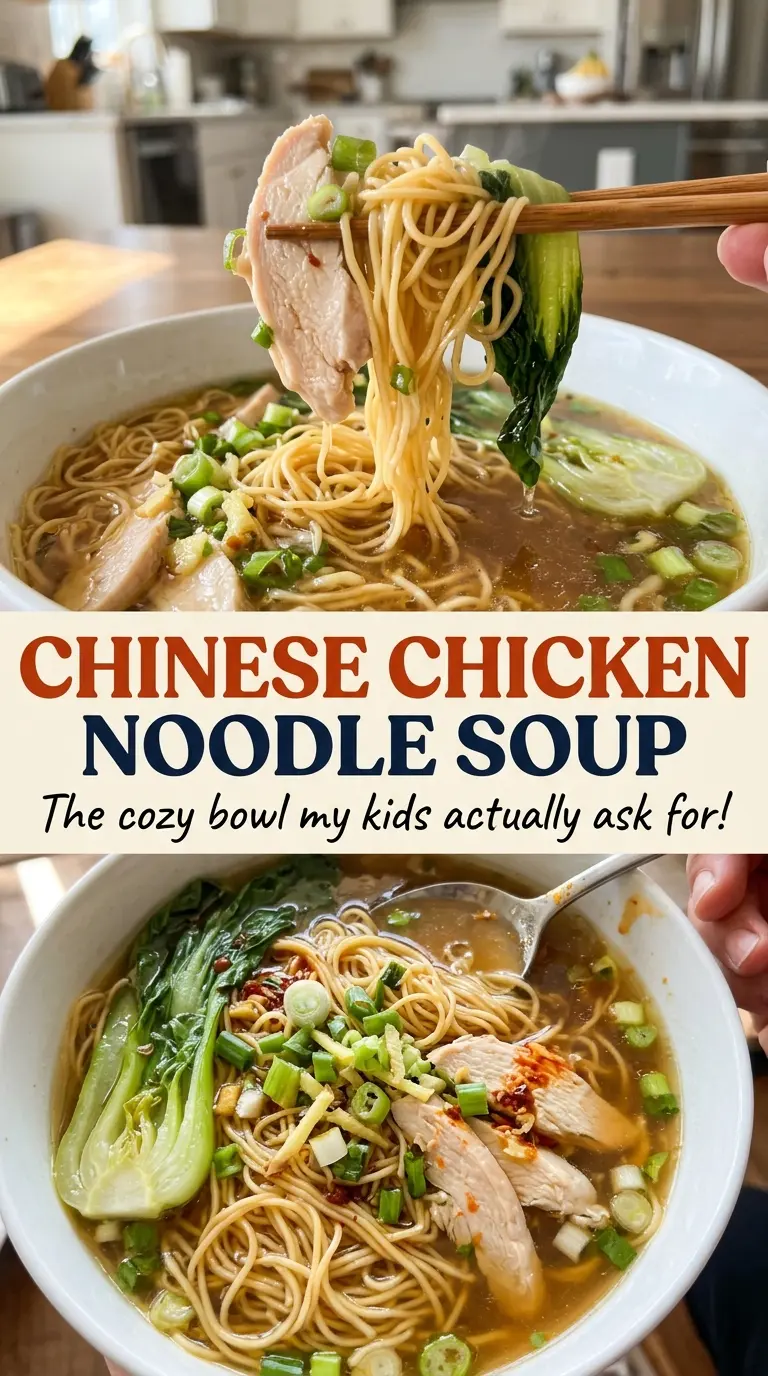
- Chicken breast — Thin slicing helps it cook quickly and stay tender in the broth. If you cut it thick, it takes longer to cook and the edges can go chalky before the center is done. Thighs work too if you want a richer, slightly silkier bowl.
- Thin Chinese wheat noodles or rice noodles — These give the soup its body without making it heavy. Cook them separately so they don’t drink up the broth and turn starchy. If you only have rice noodles, rinse them briefly after cooking to stop them from clumping.
- Shiitake mushrooms — They add a deeper, more savory note than button mushrooms, which helps the soup taste layered even though it uses a short ingredient list. Fresh shiitakes are best, but dried ones rehydrated in warm water also work if you want a stronger mushroom flavor.
- Bok choy — This softens fast and gives the soup a fresh, slightly sweet edge. Add it at the end so the stalks stay crisp-tender instead of turning limp and dull.
- Ginger, garlic, soy sauce, sesame oil, and rice vinegar — Together they build the backbone of the broth. Ginger and garlic bring warmth, soy adds salt and color, sesame oil rounds things out, and rice vinegar keeps the soup from tasting one-note. Don’t skip the vinegar; even a small amount wakes up the whole pot.
Building the Soup So the Chicken Stays Tender
Starting the Broth
Bring the broth to a gentle simmer before you add anything else. You want small bubbles, not a hard boil, because aggressive heat makes the broth look cloudy and can tighten the chicken too quickly once it goes in. Add the garlic and ginger first and let them cook for a few minutes so their aroma softens into the broth instead of tasting sharp and raw.
Seasoning Before the Chicken Goes In
Stir in the soy sauce, sesame oil, and rice vinegar while the broth is still hot. That gives the base time to taste cohesive before the chicken and mushrooms start releasing their own flavor. Taste at this point if you want to adjust the salt later, because the noodles and vegetables won’t season the broth for you.
Simmering the Chicken and Mushrooms
Add the sliced chicken and mushrooms and keep the heat low enough that the broth barely moves. In about 10 to 12 minutes, the chicken should be opaque all the way through and still juicy when you bite into it. If you let the soup boil hard here, the chicken will tighten and the mushrooms lose their clean bite.
Finishing With Noodles and Greens
Cook the noodles separately and divide them into bowls first. Then add the bok choy to the broth and cook just until the leaves wilt and the stems turn bright green, which takes only a few minutes. Ladle the soup over the noodles, then finish with white pepper, a little salt if needed, green onions, cilantro, and a drizzle of chili oil for heat.
How to Adapt This Bowl Without Losing What Makes It Good
Use chicken thighs for a richer broth
Thighs give you a softer, slightly more savory result and stay juicy even if the soup sits for a few minutes before serving. Slice them thin so they cook on the same timeline as the breast. The broth will taste a little rounder and less lean.
Make it gluten-free with rice noodles and tamari
Swap the wheat noodles for rice noodles and use tamari instead of soy sauce. The texture changes a bit — rice noodles are softer and less springy — but the broth still tastes balanced and clean. Cook the rice noodles just until tender so they don’t get sticky in the bowl.
Add more vegetables without weakening the broth
Sliced carrots, napa cabbage, or baby spinach all fit well here. Add firmer vegetables with the mushrooms so they have time to soften, and add delicate greens at the very end. The key is keeping the pot from becoming overloaded, or the broth starts to taste watered down.
Store the components separately for better leftovers
If you know you’ll have leftovers, keep the noodles separate from the broth. That single step protects the texture overnight and keeps the soup tasting fresh instead of swollen and murky. Reheat the broth on the stove until steaming, then add the noodles just before serving.
Storage and Reheating
- Refrigerator: Store the broth, chicken, and vegetables for up to 4 days. The noodles soften in the soup, so keep them separate if possible.
- Freezer: The broth and chicken freeze well for up to 2 months, but the noodles and bok choy don’t hold up well after thawing. Freeze the soup base without the noodles, then cook fresh noodles when you’re ready to serve it.
- Reheating: Warm the broth gently on the stove over medium-low heat until just steaming. Avoid a hard boil, which can make the chicken tough and the greens overcooked. Add freshly cooked noodles to each bowl before ladling in the hot soup.
Answers to the Questions Worth Asking

Chinese Chicken Noodle Soup
Ingredients
Equipment
Method
- Bring the chicken broth to a simmer in a large Dutch oven over medium-high heat, then add the minced garlic and grated ginger and cook for 5 minutes.
- Stir in the soy sauce, sesame oil, and rice vinegar, then adjust the seasoning to taste.
- Add the thinly sliced chicken breast and sliced shiitake mushrooms to the simmering broth, then cook for 10-12 minutes until the chicken is cooked through.
- Cook the thin Chinese wheat noodles or rice noodles separately according to package directions, then drain and divide them into bowls.
- Add the chopped bok choy to the broth and cook for 3 minutes, until wilted.
- Ladle the soup over the noodles and season with white pepper and salt.
- Garnish with sliced green onions, cilantro, and a drizzle of chili oil before serving.