Fluffy egg whites, tender vegetables, and just enough melted cheddar make this breakfast scramble feel light without being boring. The texture is the payoff here: soft curds, sweet peppers and onions, wilted spinach, and cheese that melts into the eggs instead of disappearing into them. It comes together fast, but it still eats like a real breakfast.
The key is not rushing the vegetables or the eggs. Let the onion and bell pepper soften first so they lose their raw bite, then add the spinach only long enough to wilt. Egg whites dry out faster than whole eggs, so gentle heat and a short cook time keep the scramble tender instead of bouncy.
Below, I’ve included the small details that matter most: how to keep egg whites from turning rubbery, which vegetables work best, and a few easy variations if you want to change it up without losing the light texture.
The egg whites stayed fluffy instead of getting watery, and the peppers had just enough bite left. I added the cheese at the end like you said, and it melted right into the scramble without making it heavy.
Save this Egg White Breakfast Scramble for a fast, fluffy breakfast with vegetables and melted cheddar.
The Reason Egg Whites Turn Rubbery So Fast
Egg whites don’t give you much room for error. They go from soft and tender to dry and tight faster than whole eggs because they don’t have the fat from yolks to cushion the heat. That’s why the pan stays over medium heat here, and why the eggs come off the stove while they still look a little glossy.
The other trap is cooking the vegetables too fast. Raw onion and bell pepper need a few minutes to soften before the egg whites go in, or they’ll stay crunchy and throw off the texture of the whole scramble. Once the eggs hit the pan, the goal is gentle movement, not constant stirring. Large, soft curds give you the best result.
What Each Ingredient Is Actually Doing in This Dish

- Egg whites — These are the base and the main texture to protect. Carton egg whites work fine here, but if you separate whole eggs yourself, let the whites sit for a minute so they cook a little more evenly in the pan.
- Olive oil — It keeps the vegetables from sticking and adds enough richness that the scramble doesn’t taste flat. Butter works too, but olive oil gives the eggs a cleaner finish and handles the vegetables well.
- Bell pepper and onion — This is the flavor foundation. Dice them small so they soften in time; larger pieces stay too firm by the time the eggs set.
- Spinach — It adds color and a little moisture without weighing the scramble down. Fresh spinach is best here because frozen spinach will release water and thin out the eggs unless it’s squeezed very dry.
- Cheddar cheese — A small amount goes a long way. Sharp cheddar adds enough flavor to wake up the egg whites, and it melts best if you sprinkle it on right at the end instead of cooking it into the eggs.
- Chives — They finish the dish with a fresh onion note that makes the whole scramble taste brighter. Don’t skip them if you want the breakfast to taste complete instead of plain.
How to Keep the Scramble Soft From Skillet to Plate
Soften the vegetables first
Warm the olive oil in a nonstick skillet over medium heat, then cook the bell pepper and onion until they lose their raw edge and start to turn translucent. If they stay crisp, they’ll still be too firm when the egg whites are done. The pan should smell sweet and savory, not harsh or sharp, before you move on.
Add the spinach just long enough to wilt
Stir in the spinach and cook it for about a minute, just until it collapses. Any longer and it starts giving off more moisture than you want in an egg white scramble. If the pan looks wet at this point, let the extra liquid cook off before adding the eggs.
Cook the egg whites gently
Pour in the egg whites, season with salt and pepper, and let them sit for a few seconds before stirring. Then use a spatula to push the set edges toward the center in broad, slow strokes. The eggs are done when they look mostly set but still have a little shine; if they go fully dry in the pan, they’ll be rubbery on the plate.
Finish with cheese and chives
Take the pan off the heat before the cheese goes on, then sprinkle it over the top so the residual heat melts it without overcooking the eggs. Add the chives right before serving. That last hit of freshness matters because egg whites can taste a little plain without it.
Three Ways to Change It Without Losing the Light Texture
Make it dairy-free
Skip the cheddar and finish with extra chives or a spoonful of salsa. You’ll lose the creamy melt from the cheese, but the scramble stays just as tender, and the vegetables carry more of the flavor.
Use different vegetables
Mushrooms, zucchini, or diced tomatoes can stand in for the pepper and onion, but cook watery vegetables a little longer so they don’t thin the eggs. The goal is always the same: cook off excess moisture before the whites go in.
Add more protein without making it heavy
A handful of diced turkey bacon or cooked chicken works if you want a bigger breakfast. Add it with the vegetables so it warms through, but keep the amount modest or the scramble starts to feel dense instead of fluffy.
Make it lower carb and gluten-free
This recipe already fits both of those needs as written. Serve it with avocado or roasted potatoes if you want a fuller plate, or keep it as-is for a fast breakfast that stays light.
Storage and Reheating
- Refrigerator: Store leftovers in an airtight container for up to 2 days. The eggs will firm up a little as they sit, so expect a slightly less delicate texture.
- Freezer: I don’t recommend freezing this scramble. Egg whites turn spongy after thawing, and the vegetables lose the fresh texture that makes the dish work.
- Reheating: Warm it gently in a skillet over low heat or in short microwave bursts. High heat is what makes egg whites tough, so stop as soon as the scramble is heated through.
Answers to the Questions Worth Asking
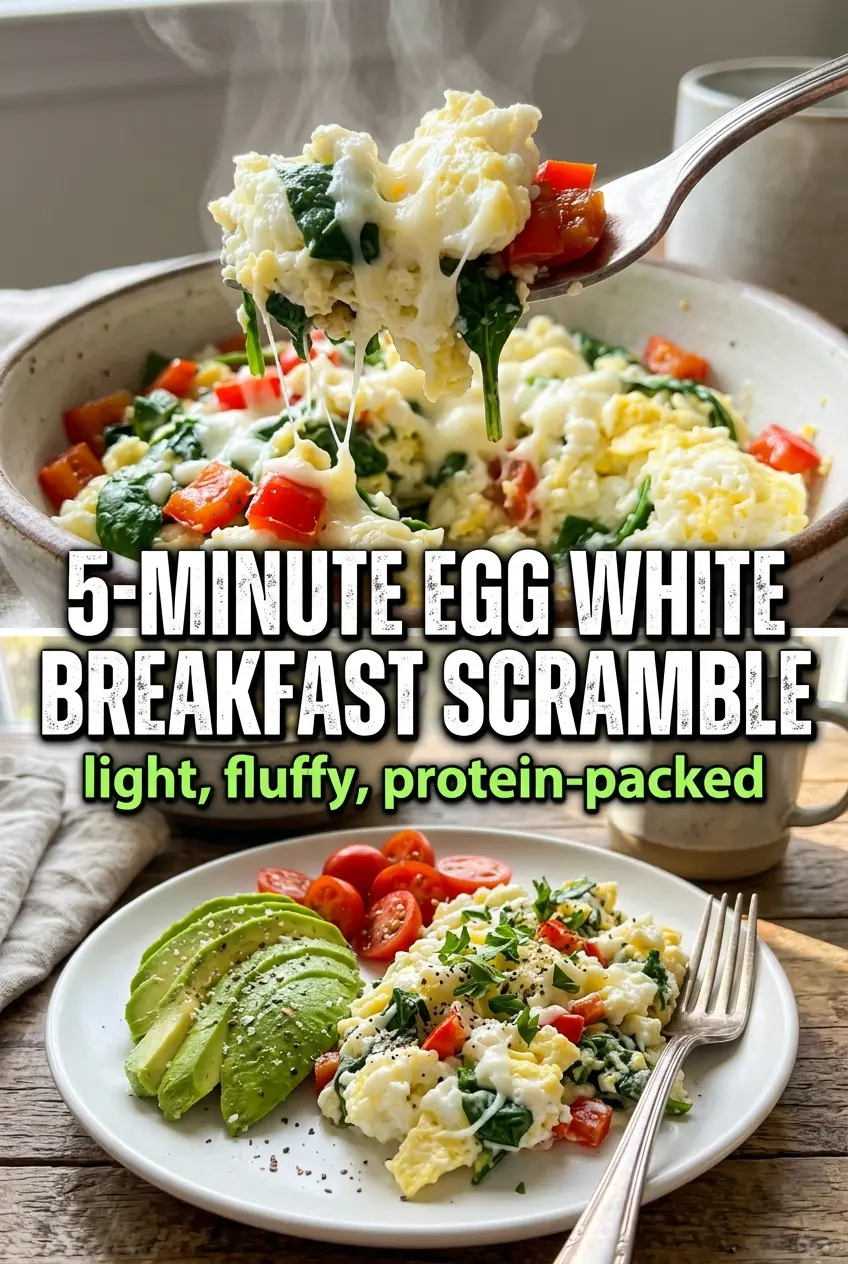
Egg White Breakfast Scramble
Ingredients
Equipment
Method
- Heat the olive oil in a nonstick skillet over medium heat until it shimmers, about 1 minute (visual cue: slight ripples across the pan).
- Add the bell pepper and onion, cooking for 3–4 minutes, until softened (visual cue: vegetables look translucent and fragrant).
- Stir in the spinach and cook for 1 minute, until wilted (visual cue: spinach turns bright green and collapses).
- Pour in the egg whites and season with salt and pepper (visual cue: liquid egg whites spread across the pan).
- Gently scramble the eggs, stirring occasionally, for 3–4 minutes, until just set—avoid overcooking, as egg whites can turn rubbery (visual cue: curds are soft and still slightly glossy, not dry).
- Sprinkle with cheddar cheese and fresh chives, and serve immediately (visual cue: cheese melts and the scramble looks creamy).