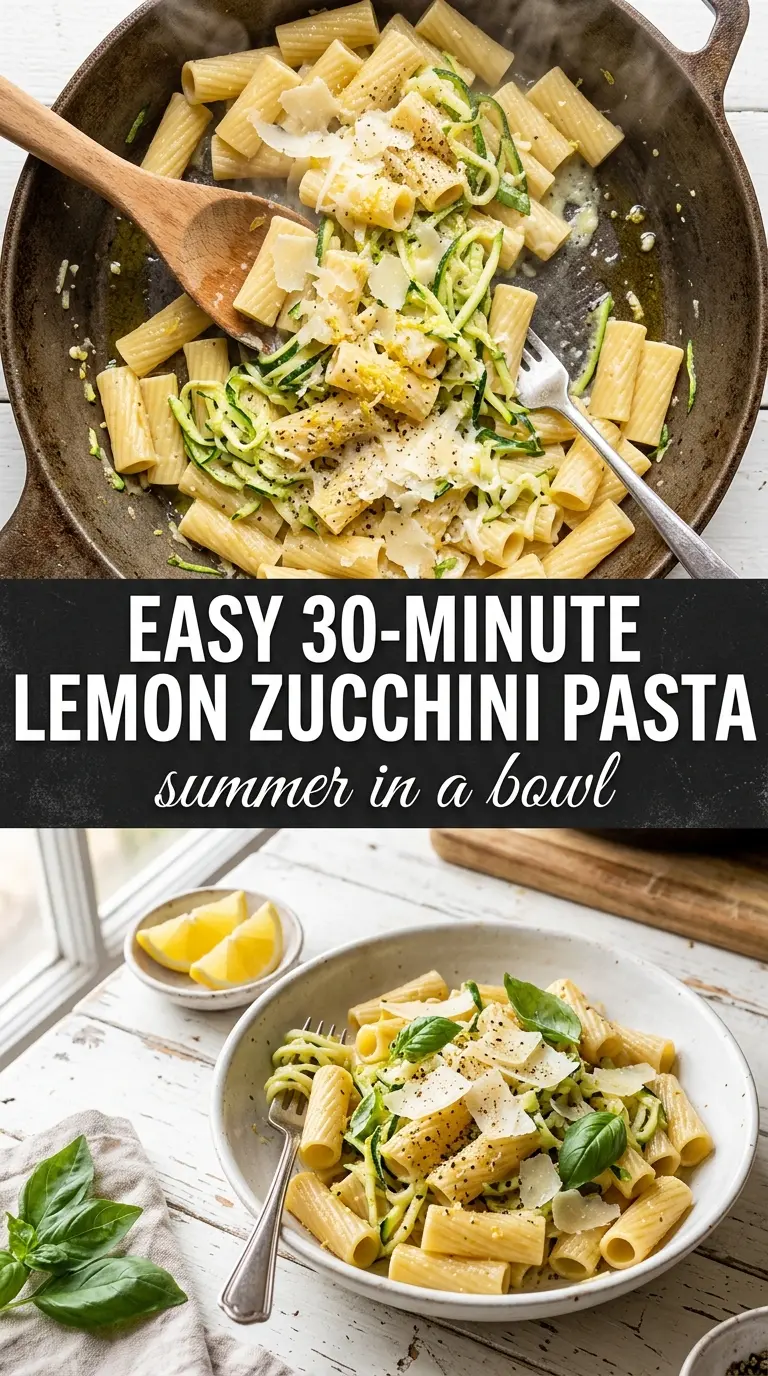
Lemon zucchini rigatoni lands in that sweet spot where dinner feels light but still finishes with enough body to satisfy. The zucchini softens into tender little half-moons, the lemon keeps the whole pan bright, and the parmesan melts into the pasta water just enough to coat every ridge of rigatoni without turning the dish heavy. It tastes clean, nutty, and a little glossy in the best way.
What makes this version work is timing. The zucchini needs enough heat to take on color before the garlic goes in, or it turns pale and watery. The lemon juice goes into the pan with the pasta and pasta water, not before, so it stays fresh instead of tasting sharp and thin. Then the parmesan comes off the heat at the end, which keeps it smooth instead of clumping.
If you’ve ever had vegetable pasta that felt like it was missing something, this one solves that problem with a simple pan sauce built from what the pasta already gives you. A good pinch of salt at the end and a handful of basil finish it off in a way that tastes fresh rather than fussy.
The zucchini stayed tender with just a little bite, and the lemon-parmesan sauce clung to the rigatoni instead of pooling at the bottom. I added a splash more pasta water at the end and it came together perfectly.
Save this lemon zucchini rigatoni for a fast pasta night with a bright lemon-parmesan finish.
The Reason the Zucchini Stays Tender, Not Watery
The biggest mistake with zucchini pasta is treating the zucchini like it can hang out in the pan forever. It can’t. Once it starts to go soft, it needs to come out of the “wet vegetable” phase and into the “lightly browned and ready” phase before the garlic joins in. That little bit of color adds flavor and keeps the whole dish from tasting flat.
The other trap is adding the lemon too early. Lemon juice is bright, but it can taste harsh if it cooks down too long. Here, the lemon hits the pasta after it’s in the skillet, then the reserved pasta water turns it into a loose sauce that clings instead of disappearing.
- Rigatoni — The tubes catch little bits of zucchini, parmesan, and lemon zest. If you swap shapes, choose something with ridges or curves, like penne or rotini, so the sauce has somewhere to land.
- Zucchini — Medium zucchini with firm skin gives you the best texture. Very large zucchini usually carry more water and softer seeds, which makes the pan wetter.
- Parmesan — Freshly grated parmesan melts cleaner and gives the sauce a nutty finish. Pre-shredded cheese often contains anti-caking agents that can make the sauce gritty.
- Lemon zest and juice — The zest brings the fragrant part of the lemon, while the juice wakes everything up at the end. Use both; the zest gives depth that juice alone can’t.
What Each Ingredient Is Actually Doing in the Pan
- Olive oil — It helps the zucchini brown instead of steam. A good everyday olive oil is enough here; save the fancy finishing oil for the table.
- Garlic — It only needs a short time in the pan. If it browns, it turns bitter fast, so it goes in after the zucchini has already picked up some color.
- Pasta water — This is what ties everything together. The starch helps the lemon juice and olive oil emulsify into a light sauce instead of sitting separately in the skillet.
- Fresh basil — It’s not just garnish. Basil adds a soft herbal note that keeps the lemon from tasting too sharp and gives the dish a fresh finish.
Building the Sauce Without Breaking It
Boil the Pasta Until It Still Has Some Bite
Cook the rigatoni in well-salted water until it’s just shy of fully tender. The pasta finishes in the skillet, so pulling it early keeps it from going soft while it absorbs the sauce. Reserve at least a cup of pasta water before draining; if you forget, the dish loses the one ingredient that turns the pan juices into sauce.
Brown the Zucchini Before the Garlic Goes In
Heat the olive oil in a wide skillet and give the zucchini room to spread out. If the pan is crowded, the slices steam and turn limp instead of taking on those golden edges that give the pasta its backbone. Once the zucchini is lightly browned and tender, add the garlic for just 30 seconds, long enough for it to smell fragrant but not long enough to burn.
Toss in the Pasta, Lemon, and Water Together
Add the drained rigatoni, lemon zest, and lemon juice to the skillet, then loosen everything with a splash of pasta water. Toss constantly as the starch and oil come together. If the pan looks dry, add water a tablespoon at a time; if it looks soupy, keep tossing over the heat for a minute and it will tighten up.
Finish Off the Heat
Pull the skillet off the burner before adding the parmesan. Cheese melts smoothly when the pan is hot, not boiling. Stir until the sauce turns glossy and coats the pasta, then season with salt and pepper and finish with basil.
How to Adapt This for a Different Pantry or Diet
Make It Gluten-Free
Use your favorite gluten-free rigatoni and cook it just to the lower end of the package time. Gluten-free pasta can go from firm to mushy quickly, so it needs to stay a little tighter before it hits the skillet.
Make It Dairy-Free
Skip the parmesan and finish with nutritional yeast or a dairy-free parmesan alternative. The result is lighter and less salty, so add an extra pinch of salt and a touch more lemon zest to keep the dish balanced.
Add Protein Without Losing the Brightness
Toss in cooked chicken, shrimp, or white beans at the very end. They all work, but beans keep the dish in the same light lane while shrimp and chicken make it more dinner-like and substantial.
Storage and Reheating
- Refrigerator: Store in an airtight container for up to 3 days. The pasta will absorb some of the sauce, so it gets a little tighter as it sits.
- Freezer: It doesn’t freeze well. Zucchini turns soft and watery after thawing, and the sauce loses its fresh texture.
- Reheating: Warm it gently in a skillet over low heat with a splash of water or broth. The common mistake is blasting it in the microwave until the parmesan turns greasy and the zucchini collapses.
Questions I Get Asked About This Recipe
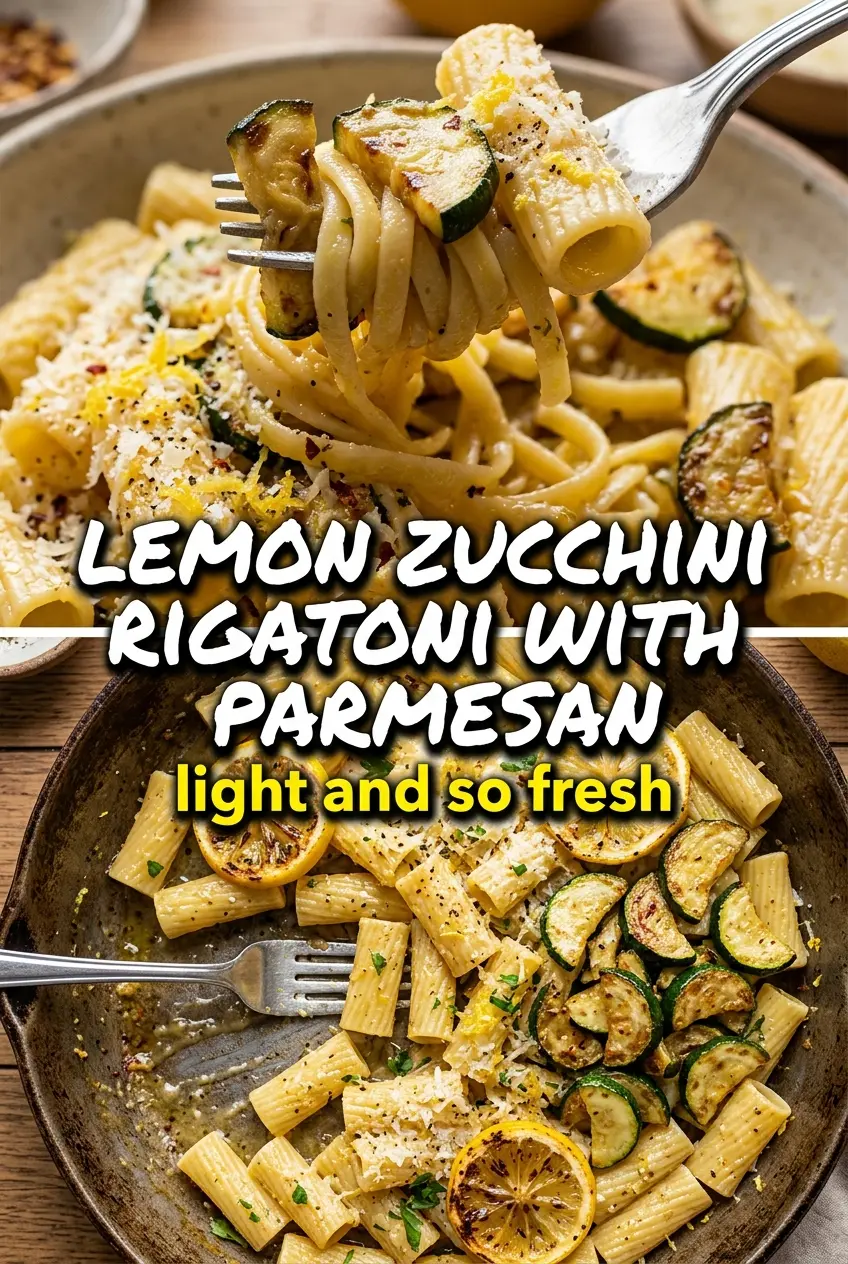
Lemon Zucchini Rigatoni With Parmesan
Ingredients
Equipment
Method
- Cook the rigatoni in salted boiling water according to package directions, reserving 1 cup of pasta water before draining. The pasta should be just tender so it can finish in the skillet.
- Heat the olive oil in a large skillet over medium-high heat and sauté the zucchini until golden and tender, about 5–6 minutes. Watch for browned edges and a soft bite.
- Add the garlic and cook for 30 seconds, until fragrant. You should smell it quickly without letting it brown.
- Add the cooked rigatoni to the skillet along with the lemon zest and lemon juice. Toss to coat so the lemon brightness spreads evenly.
- Add reserved pasta water a splash at a time, tossing until a light sauce forms. The mixture should look glossy and cling to the pasta.
- Remove from heat and stir in the parmesan cheese. The sauce should turn creamy and slightly thick when stirred.
- Season with salt and pepper, garnish with fresh basil, and serve warm. Finish with bright herb aroma on top.