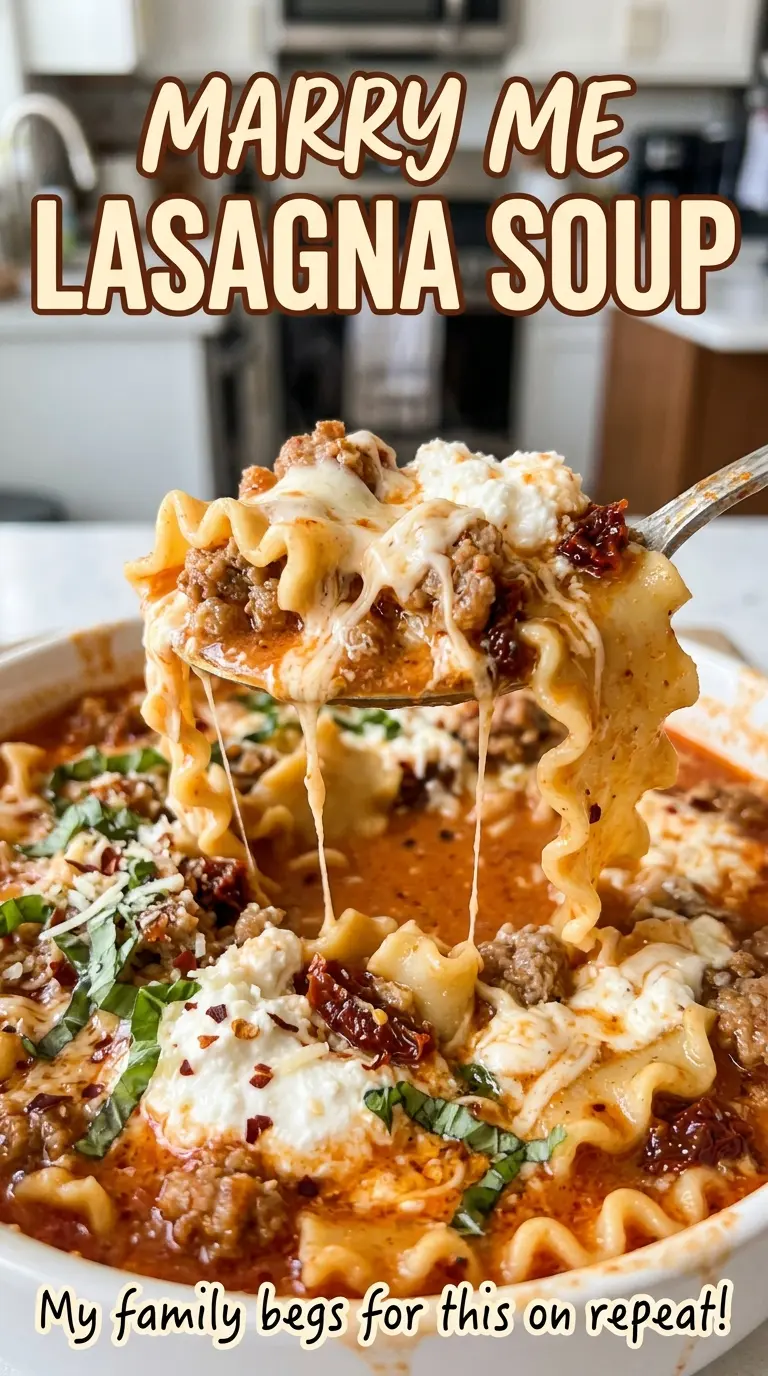
Marry Me Lasagna Soup gives you everything people love about lasagna without the layering, baking, or long wait. The broth turns luxuriously creamy and tomato-rich, the sausage brings enough savoriness to keep each spoonful satisfying, and the broken noodles soak up all of it without turning mushy if you time them right. The ricotta dollop on top is what makes the bowl feel finished instead of just rich.
What makes this version work is the balance of acid, fat, and texture. Sun-dried tomatoes bring a deeper, sweeter tomato note than crushed tomatoes alone, while the cream softens the edges without muting the sausage or the garlic. I also like adding the spinach at the end so it stays green and tender instead of disappearing into the broth. If you’ve made soup that tasted flat or greasy before, the layering here fixes both problems.
Below, I’ll walk you through the little timing details that keep the noodles from overcooking and the cream from splitting. There’s also a practical swap section for making it a little lighter or adapting it to what you have on hand.
The broth got thick and silky, and the lasagna noodles held up even after sitting for a few minutes. I added the ricotta topping at the table and it melted into the soup in the best way.
Love the creamy broth and ricotta swirl in this Marry Me Lasagna Soup? Save it to Pinterest for the nights when you want a rich, cozy bowl without layering a full lasagna.
The Step That Keeps This Soup Creamy Instead of Broken
The biggest mistake with a soup like this is rushing the dairy into a pan that’s still roaring hot. Heavy cream can handle heat, but it behaves better when it’s added after the tomatoes and broth have come together and the pot is at a gentle simmer, not a boil. That keeps the broth smooth instead of grainy or separated.
Another place people trip up is the noodles. Lasagna noodles keep cooking in the broth, so they need just enough time to turn tender without collapsing into starch-thickened mush. If the soup looks a little loose before you add the parmesan, that’s a good sign. The cheese and the pasta both tighten it up at the end.
What Each Ingredient Is Actually Doing in This Bowl
- Italian sausage — This is the backbone of the soup. It seasons the broth as it browns, and the rendered fat gives the tomatoes something rich to cling to. Mild or hot both work; hot sausage gives the bowl more lift if you like a little heat.
- Sun-dried tomatoes in oil — These bring a concentrated tomato depth that crushed tomatoes can’t give on their own. Chop them fine so they melt into the broth instead of floating around in chewy pieces. If yours are packed dry, rehydrate them in warm water first and use a little olive oil in the pot.
- Heavy cream — This rounds out the acidity and gives the broth its signature silky body. Half-and-half will work in a pinch, but the soup will be thinner and less luxurious. Add it after the tomatoes and broth are simmering, not at a hard boil.
- Lasagna noodles — Broken noodles give you the lasagna feel without the fuss. Use standard dried noodles and break them into uneven pieces so some stay long enough to twirl while others thicken the broth a little. No-boil noodles can turn gummy here.
- Ricotta, mozzarella, parmesan, and basil — The topping makes the soup taste like lasagna instead of just tomato soup with pasta. Ricotta gives the soft creamy finish, mozzarella adds stretch, parmesan sharpens the whole bowl, and basil keeps the top from tasting heavy.
The Order That Builds the Best Bowl
Brown the sausage First
Cook the sausage in a large pot until it has good browning on the bottom and no pink remains. That browning matters more than most people think; it gives the broth a savory base before any liquid goes in. Drain excess fat if the pot looks greasy, but leave enough behind to cook the onion. If the sausage is pale and soft instead of browned, the whole soup tastes flatter.
Cook down the tomato base
Add the onion and let it soften until it turns translucent and sweet, then stir in the garlic and sun-dried tomatoes just until fragrant. Tomato paste goes in next and needs a full minute in the heat so it darkens a shade and loses its raw edge. This short cooking step is where the soup starts tasting layered instead of one-note.
Simmer before the noodles go in
Pour in the crushed tomatoes, broth, cream, Italian seasoning, and red pepper flakes, then bring everything to a gentle simmer. You want small bubbles around the edges, not a rolling boil. At that point, the dairy stays smooth and the tomatoes mellow into the broth. If the heat is too high here, the cream can break and the sauce base gets rough.
Cook the pasta with a close eye
Add the broken lasagna noodles and cook until they’re just tender, usually 10 to 12 minutes depending on the brand. Stir often so the noodles don’t clump or stick to the bottom of the pot. They should still have a little structure when you pull the spoon through the soup, because they’ll keep softening in the hot broth after you turn off the heat.
Finish with greens, cheese, and the topping
Stir in the spinach and parmesan at the end so the greens wilt without disappearing and the cheese melts into the broth instead of clumping. Taste and season with salt and pepper after the parmesan goes in, because that cheese adds salt of its own. Mix the ricotta topping with a little sun-dried tomato and basil, then spoon it over each bowl right before serving. The contrast between the hot soup and cool, creamy topping is part of what makes this dish work.
Three Ways to Make This Soup Fit What You Need
Dairy-Free Version
Swap the heavy cream for full-fat coconut milk or an unsweetened dairy-free cream, and skip the ricotta-mozzarella topping in favor of a dollop of dairy-free ricotta or a sprinkle of nutritional yeast. The soup will still be creamy, but the flavor shifts slightly more savory and less classic lasagna-like. Keep the heat gentle so the coconut milk doesn’t separate.
Gluten-Free Version
Use your favorite gluten-free lasagna noodles, but watch them closely because they can soften faster than wheat pasta and sometimes break apart more easily. Add them near the end and stir gently so they don’t turn the broth cloudy or starchy. The rest of the soup stays the same.
Lighter but Still Creamy
Use half-and-half instead of heavy cream and lean Italian sausage, then add an extra splash of broth if the soup gets too thick. This version won’t be quite as lush, but it still tastes rich because the tomato paste, parmesan, and sausage are doing most of the flavor work. Don’t try to compensate by boiling it harder; that only makes the dairy more fragile.
Storage and Reheating
- Refrigerator: Store for up to 4 days. The noodles absorb broth as it sits, so the soup thickens in the fridge.
- Freezer: It freezes, but the dairy and pasta both change texture. For best results, freeze the soup without the noodles and add fresh pasta when reheating.
- Reheating: Warm it gently on the stove over low heat with a splash of broth or water. A hard boil can split the cream and make the noodles fall apart.
Answers to the Questions Worth Asking

Marry Me Lasagna Soup
Ingredients
Equipment
Method
- Brown Italian sausage in a large pot, then drain the fat.
- Sauté onion for 4 minutes, then add garlic and sun-dried tomatoes and cook 2 minutes.
- Stir in tomato paste and cook 1 minute.
- Add crushed tomatoes, chicken broth, heavy cream, Italian seasoning, and red pepper flakes, then bring to a simmer (about 5 minutes), stirring to combine.
- Add broken lasagna noodles and cook 10-12 minutes until tender, stirring occasionally to prevent sticking.
- Stir in spinach and parmesan and cook 2 minutes until wilted.
- Season with salt and pepper to taste.
- Mix ricotta dollop with a sun-dried tomato or two until well combined.
- Serve soup in bowls with a generous dollop of ricotta mixture, and garnish with fresh basil.