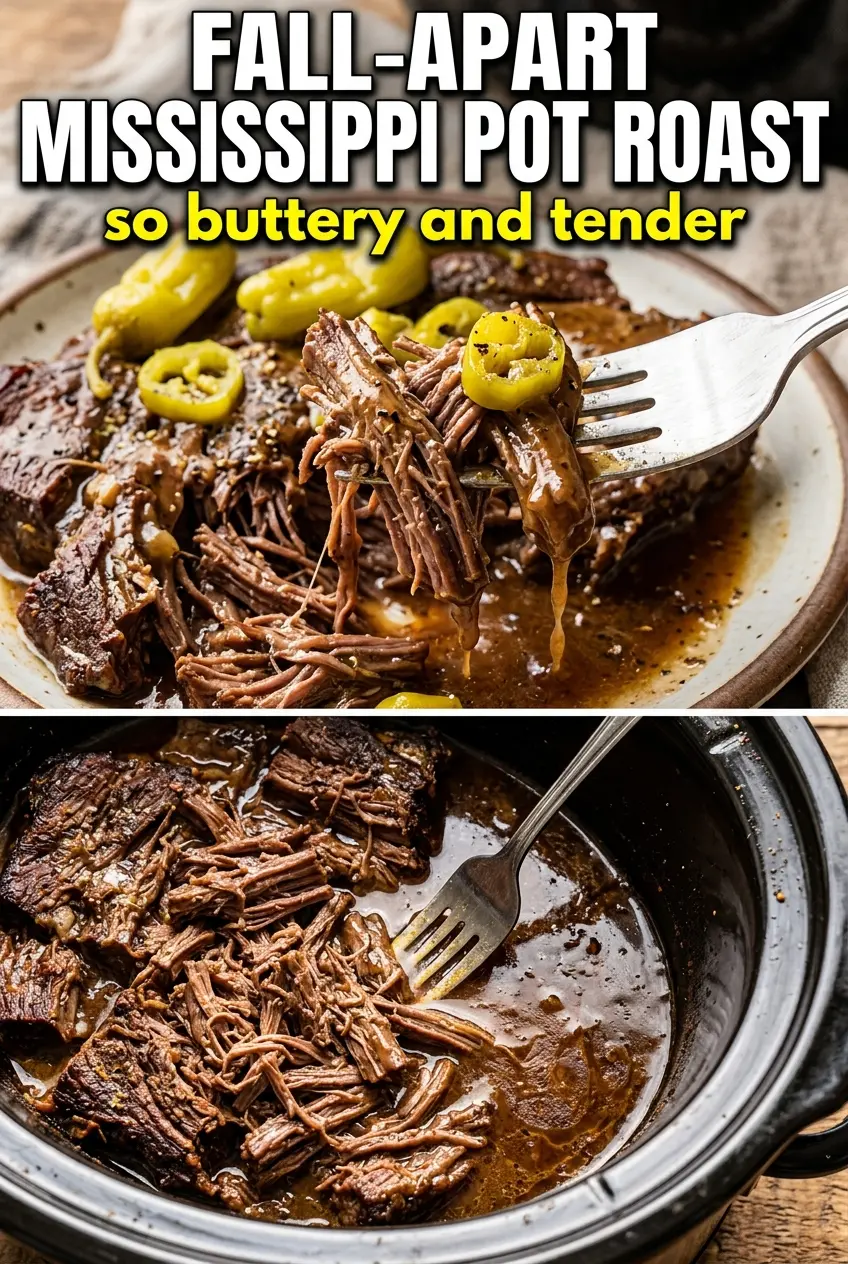
Mississippi Pot Roast turns a plain chuck roast into something you can pull apart with a fork and spoon over mashed potatoes without needing to babysit a thing. The beef gets deeply savory from the ranch and au jus mix, then the pepperoncini and their brine cut through the richness so the gravy tastes bold instead of heavy. What comes out of the slow cooker is tender, juicy, and just a little tangy in the best possible way.
The trick is in the balance. Chuck roast has enough marbling to hold up to long, slow cooking, and the butter helps carry the seasoning into the juices as everything melts together. The pepperoncini don’t make this spicy-hot; they give the dish that signature bright bite that keeps each mouthful interesting. Searing the roast first adds a deeper beef flavor, but the real magic happens when the meat sits low and slow until it practically falls apart on its own.
Below, I’ll walk through the part that matters most: how to keep the roast from tasting greasy, how to get the gravy to taste rounded instead of salty, and what to do if you want to stretch this into leftovers that reheat well.
The gravy had that perfect tang from the pepperoncini, and the roast shredded so easily after 8 hours on low. I served it over mashed potatoes and there wasn’t a drop left.
Save this Mississippi Pot Roast for a hands-off dinner with tender beef and tangy pepperoncini gravy.
The One Step That Keeps Mississippi Pot Roast from Tasting Flat
Most of the flavor in Mississippi Pot Roast comes from convenience ingredients, which is exactly why the method matters. If the roast goes into the slow cooker without a quick sear, the finished beef can taste a little one-note, especially after hours of cooking. Browning the outside first gives you a deeper beef flavor and a richer base for the gravy.
The other place people go wrong is salt. Both the ranch packet and the au jus mix bring a lot of seasoning on their own, so the roast only needs a light hand with kosher salt at the start. The pepperoncini brine then sharpens everything just enough to keep the butter and beef from feeling heavy.
- Chuck roast — This cut is the right choice because it has enough connective tissue and marbling to turn tender during a long cook. A leaner roast dries out before it gets that shreddable texture.
- Pepperoncini peppers and brine — These do more than add heat; they bring the bright, tangy note that makes this dish stand out. If your jar is especially salty, use the lower end of the brine amount and add more only after tasting the finished juices.
- Butter — The butter enriches the cooking liquid and rounds out the seasoning. You can use salted butter in a pinch, but keep the initial seasoning light or the gravy can edge toward too salty.
- Ranch seasoning and au jus mix — These packets do the heavy lifting for savory flavor and body in the sauce. Homemade substitutes won’t taste quite the same, but if you need to swap, use a low-sodium beef broth base and adjust the seasoning at the end.
Building the Roast So the Sauce Stays Rich, Not Greasy

Searing the Chuck Roast
Season the roast, then sear it in hot olive oil until the surface is browned on all sides. You’re looking for a deep brown crust, not a gray exterior with a few pale spots; that crust is where the flavor starts. If the skillet is crowded or the heat is too low, the meat will steam instead of brown, so let the pan get properly hot before the roast goes in. The roast doesn’t need to cook through here, just pick up color.
Layering the Slow Cooker
Transfer the seared beef to the crockpot and sprinkle the seasoning packets evenly over the top so they don’t clump in one salty patch. Put the butter on the roast, then scatter the pepperoncini around it and pour in the brine. Don’t stir at this point; the butter needs time to melt down into the juices and carry the seasoning through the whole pot. If you stir too early, the top can turn muddy before the roast has had a chance to braise.
Letting Time Do the Work
Cook on low until the beef shreds easily with a fork, which usually takes about 8 hours for a 3-pound roast. If it still resists, it isn’t ready yet; keep cooking until the connective tissue has broken down and the meat pulls apart with almost no pressure. High heat works in a pinch, but low heat gives you that softer texture and a sauce that tastes rounded instead of sharp. Shred the beef right in the crockpot so it soaks back up some of the cooking liquid.
How to Adapt Mississippi Pot Roast Without Losing What Makes It Good
Serve It Over Cauliflower Mash for a Lower-Carb Meal
The roast itself is naturally low in carbs, so the main change is the base underneath it. Cauliflower mash catches the gravy without soaking up as much of it as potatoes do, and it keeps the meal lighter while still feeling comforting. The sauce stays the star.
Use Dairy-Free Butter for a Dairy-Free Version
A plant-based butter substitute works here because it’s mainly adding richness and helping the juices feel velvety. Pick one with a neutral flavor, since strongly flavored margarine can fight with the ranch and pepperoncini. The roast will still shred the same way.
Skip the Searing Step When You Need True Dump-and-Go
You can put everything straight into the slow cooker and still get a good result, just with a slightly softer beef flavor and less browned depth in the gravy. This is the version to use on a packed day when the skillet step is going to keep you from making dinner at all. The texture stays tender either way.
Storage and Reheating
- Refrigerator: Store in an airtight container for up to 4 days. The gravy will thicken as it chills, which is normal.
- Freezer: Freezes well for up to 3 months. Cool completely, portion with some of the gravy, and freeze in sealed containers or bags.
- Reheating: Warm gently on the stove or in the microwave with a splash of broth or water. The biggest mistake is blasting it too hard, which can dry out the beef and make the sauce look split.
Answers to the Questions Worth Asking
Mississippi Pot Roast
Ingredients
Equipment
Method
- Season the chuck roast with kosher salt and black pepper. Heat olive oil in a cast iron skillet over medium-high heat and sear the roast for 3–4 minutes per side, until browned, with visible caramelized edges.
- Transfer the browned roast to a crockpot. Sprinkle the ranch seasoning and au jus gravy mix evenly over the top so the surface looks dusted.
- Place the unsalted butter on top of the roast, then scatter the whole pepperoncini peppers around it. Pour the pepperoncini brine into the crockpot so liquid pools near the meat and peppers are partially submerged.
- Cover and cook on low for 8 hours, until the meat shreds easily with a fork. During cooking, look for slow simmering and juices that have turned into a glossy gravy.
- Shred the beef directly in the crockpot, mixing it with the flavorful cooking liquid. Stir until the beef is evenly coated and the sauce looks thick, tangy, and pepperoncini-speckled.
- Serve the mississippi pot roast over mashed potatoes or egg noodles. Spoon extra sauce on top so each bite gets both shredded beef and pepperoncini gravy.