Deep, peppery, and built on a sauce that cooks down until the oil rises back to the top, Nigerian chicken stew earns its place at the table with bold flavor and tender chicken that holds its own against a rich tomato base. The best versions don’t taste rushed. They taste layered, a little smoky from the long fry-down, and full of the kind of heat that lingers without taking over.
What makes this stew work is patience in the pot. The blended tomatoes, red peppers, onion, and scotch bonnet need time to lose their raw edge and concentrate into something thick, glossy, and deeply savory. Browning the chicken first matters too, because it gives the meat a little structure and keeps it from turning soft and bland in the sauce.
Below, I’ve laid out the part that matters most: how to cook the pepper base until it changes color and texture, not just until it simmers. That’s the difference between a stew that tastes bright and one that tastes finished.
The sauce thickened up beautifully and the chicken stayed juicy even after simmering. I cooked the pepper base until the oil floated on top, and that deepened the flavor in a way I didn’t expect.
Save this Nigerian Chicken Stew for the nights when you want a deeply cooked pepper sauce with golden chicken and steamed rice.
The Pepper Sauce Has to Cook Past “Just Blended”
The biggest mistake with Nigerian chicken stew is stopping too early. A fresh blended pepper mix smells sharp and tastes watery, and if you add the chicken before the base has cooked down, the whole pot stays thin and tinny. The sauce needs enough time for the raw tomato edge to disappear and for the oil to separate and sit on top in little pools.
That long fry-down also changes the color. The sauce goes from bright red-orange to a deeper brick red, and that shift tells you the flavor has concentrated. If the pot starts sputtering hard, lower the heat a little and keep stirring so the bottom doesn’t catch before the top has had time to darken.
What Each Ingredient Is Actually Doing in This Dish
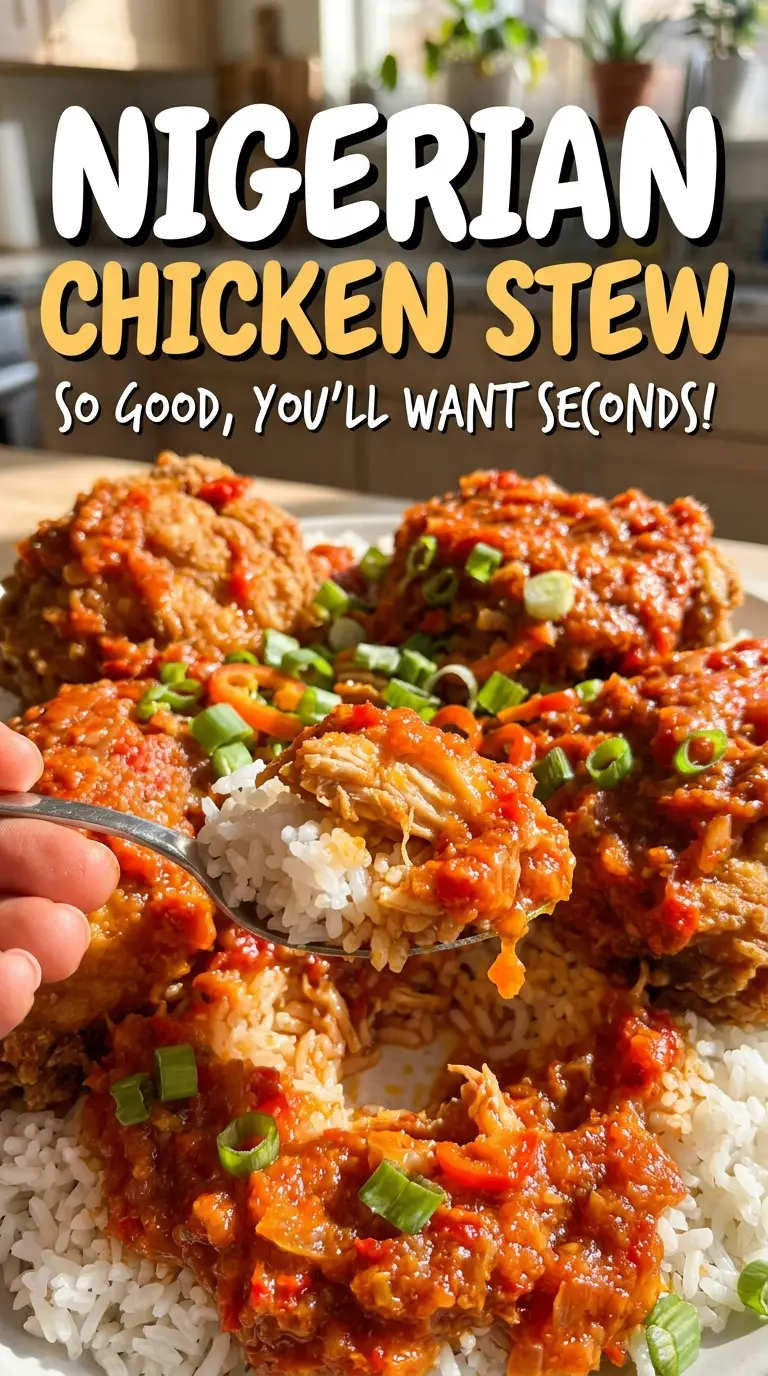
- Chicken pieces — Bone-in pieces give the stew more body and better flavor than boneless chicken. Thighs, drumsticks, or a mix hold up best during the simmer and stay juicy after the sauce cooks down.
- Plum tomatoes and red bell peppers — This is the base of the stew, and the blend needs both for balance. Tomatoes bring acidity and body, while red bell peppers add sweetness and that classic deep red color.
- Scotch bonnet or habanero — This is where the heat comes from. Use less if you want a gentler stew, but don’t skip it entirely if you want the dish to taste like it should.
- Onion — Half goes into the chicken marinade and the rest goes into the blender, so the onion flavor shows up in both the meat and the sauce. That layered use gives the stew a fuller, rounder taste.
- Vegetable oil — The oil is not just for cooking; it helps fry out the sauce and gives the finished stew its glossy finish. If you use too little, the pepper base won’t fry properly and you’ll miss the signature look and texture.
- Bouillon, thyme, and curry powder — These are the backbone seasonings. Bouillon adds savory depth, thyme gives the stew a herbal note, and curry powder adds warmth without turning the dish into curry.
Building the Stew in the Right Order
Seasoning the Chicken First
Grate or finely blend the onion into the chicken with the thyme, curry powder, bouillon, salt, and pepper, then let it sit long enough for the seasoning to sink in. Thirty minutes is enough to take the edge off, and that brief marination keeps the meat flavorful even after it simmers in the sauce. If the chicken goes into the pot completely plain, the stew relies too heavily on the sauce alone.
Getting a Little Color on the Chicken
Fry or oven-bake the chicken until it is golden and mostly cooked through. You’re not trying to finish it completely here; you’re building flavor and helping the pieces hold together in the stew. If the chicken is pale going in, it can taste flat even after it’s sauced, and if it’s cooked too far at this stage, it can dry out later.
Cooking the Pepper Base Until It Changes
Blend the tomatoes, red bell peppers, scotch bonnet, and remaining onion until smooth, then fry that mixture in hot oil over medium-high heat. Stir often and let it cook for 30 to 40 minutes, until the sauce thickens, darkens, and the oil begins to rise to the top. If you stop when it still looks like puree, the finished stew will taste raw and loose.
Finishing the Stew Around the Chicken
Add the fried chicken to the cooked pepper sauce and simmer until the meat is coated and fully tender. This final simmer lets the chicken absorb the seasoning from the stew without falling apart. If the sauce looks too thick at this point, loosen it with a small splash of water; if it looks thin, keep the pot uncovered for a few more minutes until it clings to the chicken.
How to Adapt This for Heat, Dietary Needs, or a Bigger Batch
Make It Milder Without Losing the Stew Character
Use one scotch bonnet instead of two, and remove the seeds if you want a gentler burn. The stew will still have that sharp pepper backbone, but the heat will sit lower and won’t overwhelm the tomato base. If you skip the pepper entirely, the dish loses the edge that makes it taste like Nigerian chicken stew.
Use Chicken Thighs Only for Extra Juiciness
Thighs are the most forgiving cut if you want softer meat that stays tender after simmering. They also give the stew a richer mouthfeel because they release more flavor into the sauce. Bone-in drumsticks work the same way if that’s what you have.
Make It Dairy-Free and Naturally Gluten-Free
This recipe already fits both needs as written, as long as your bouillon or stock powder is gluten-free. Serve it with rice, plantain, or boiled yams, and you won’t lose anything in the swap. The texture and flavor stay exactly where they should be.
Doubling the Recipe for Guests
You can scale this stew up for a crowd, but use a wider pot so the pepper sauce still fries instead of steaming. If the pot is too crowded, the sauce takes longer to darken and can taste flatter. Keep the frying step patient, then add the chicken in batches if needed so every piece gets coated cleanly.
Storage and Reheating
- Refrigerator: Store in an airtight container for up to 4 days. The sauce thickens a little as it chills, and the flavor gets even deeper by the next day.
- Freezer: This freezes well for up to 3 months. Cool it completely first, then portion it into freezer-safe containers; thaw overnight in the fridge before reheating.
- Reheating: Warm gently on the stove over low to medium heat until the chicken is hot and the sauce loosens again. High heat can dry out the meat and make the sauce spit, so give it a little time and stir occasionally.
Answers to the Questions Worth Asking
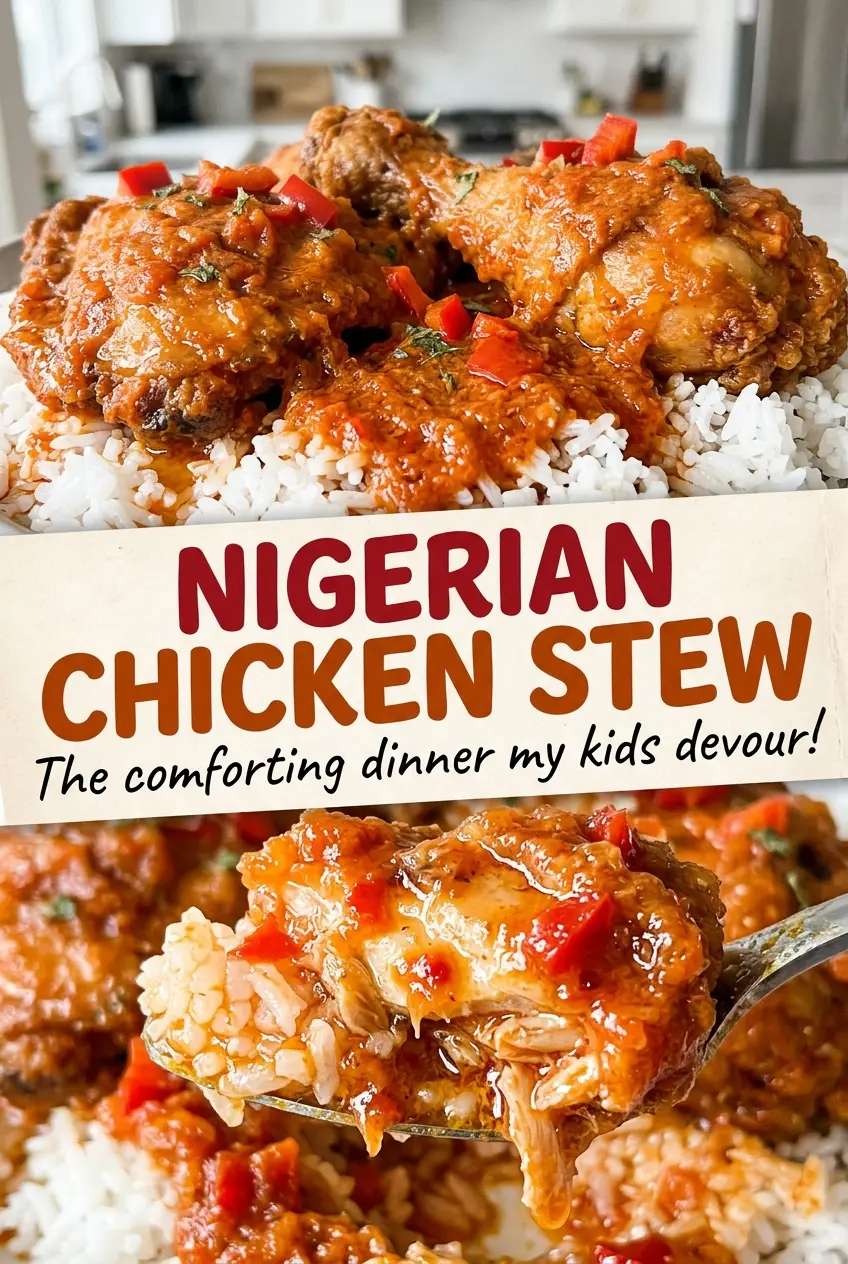
Nigerian Chicken Stew
Ingredients
Equipment
Method
- Season the chicken with half the onion (grated), thyme, curry powder, bouillon, salt, and pepper, then rub to coat evenly. Marinate for 30 minutes so the seasoning clings to the chicken.
- Fry or oven-bake the seasoned chicken until golden and mostly cooked through, then set aside. Let it rest briefly while you make the sauce.
- Blend the plum tomatoes, red bell peppers, scotch bonnet, and remaining onion until smooth. Stop when fully blended with no visible chunks.
- Heat 1/2 cup vegetable oil in a large Dutch oven over medium-high heat. Carefully fry the blended pepper sauce for 30-40 minutes, stirring frequently, until oil floats on top and the sauce is deeply cooked and darkened.
- Add the fried chicken to the sauce and coat well, then simmer for 15-20 minutes to finish cooking. Stir occasionally until the chicken is tender and covered in the thick sauce.
- Taste and adjust seasoning with salt and pepper as needed, then serve the chicken stew over steamed rice with fresh parsley. Plate with extra sauce so the rice stays saucy.