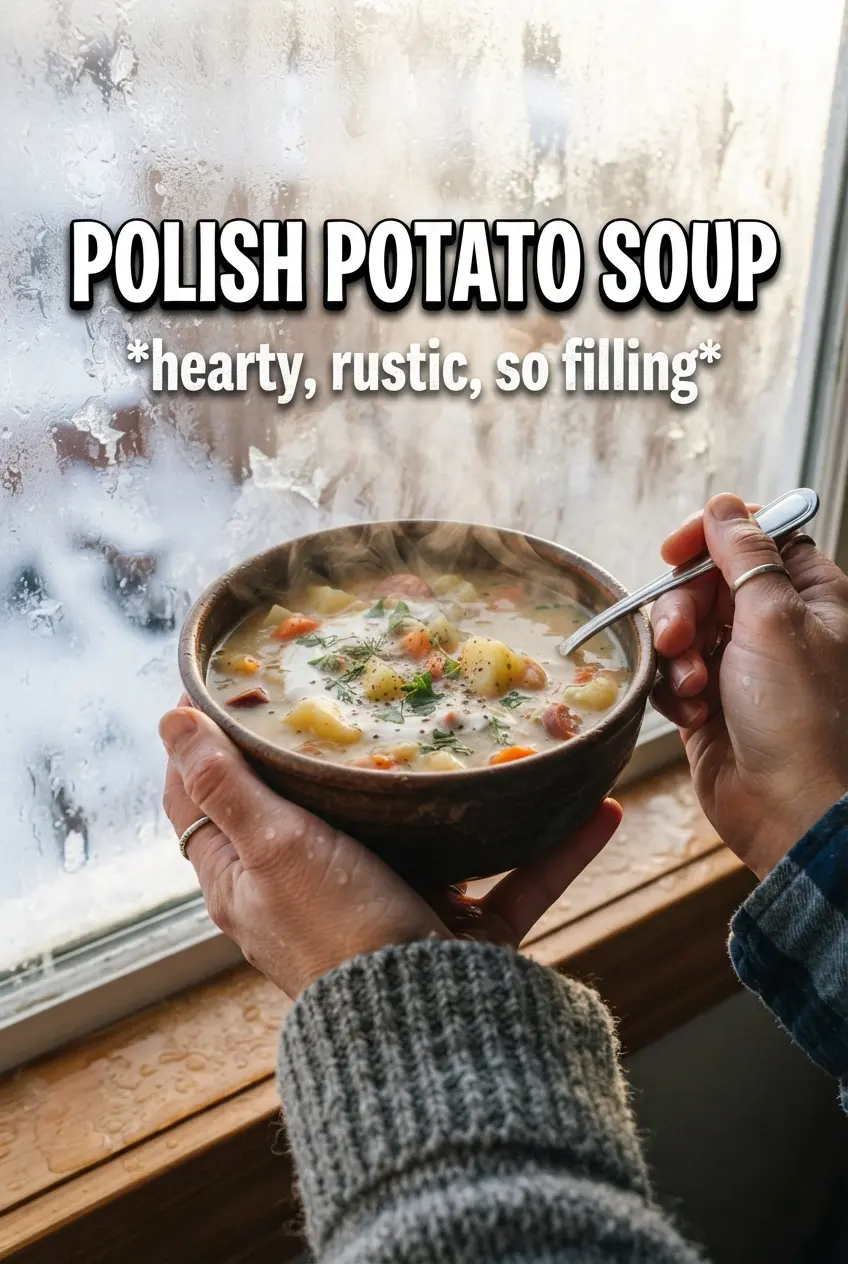
Polish potato soup lands in that perfect middle ground between rustic and comforting: creamy without being heavy, filling without feeling fussy, and built around the kind of flavors that get better as they sit together. The potatoes break down just enough to thicken the broth, the kielbasa brings smoky saltiness, and the dill at the end keeps the whole pot tasting fresh instead of flat.
What makes this version work is the layering. Browning the kielbasa first gives you fat and flavor right away, and that same pan base seasons the onions, carrots, and celery before the broth ever goes in. The potatoes are simmered until tender, then only some of them are mashed so the soup stays hearty with actual chunks instead of turning into glue.
Below, I’ll walk through the part that matters most: how to get a creamy finish without curdling the sour cream or overcooking the potatoes. There’s also a swap guide if you want to adjust the richness or make the soup a little lighter.
The potatoes softened just enough to thicken the soup without falling apart, and the sour cream stayed smooth when I stirred it in at the end. My husband said the kielbasa and dill taste like something from his grandmother’s kitchen.
Save this Polish potato soup for the nights when you want a creamy bowl with tender potatoes, smoky kielbasa, and plenty of dill.
The Trick to Keeping This Soup Creamy, Not Gluey
The texture here depends on controlling the potatoes, not just cooking them until soft. Russets are the right choice because they break down enough to thicken the broth, but if you overmash the whole pot, the soup can turn pasty instead of velvety. The sweet spot is mashing about a third of the potatoes after they’re fully tender, leaving the rest in cubes for body.
The other place people go wrong is the dairy. If you stir sour cream or heavy cream into a hard boil, the soup can split or taste dull. Pull the pot back to a gentle simmer before adding it, and stir until the broth looks unified and glossy again. That little bit of patience is what gives you a soup that tastes round and finished.
- Russet potatoes — These are the backbone of the soup because they soften and release starch. Waxy potatoes hold their shape too well and won’t give you the same natural thickness.
- Kielbasa — The smoked sausage seasons the whole pot with salt and fat. If you use another smoked sausage, choose one with a firm texture so it browns instead of steaming.
- Heavy cream or sour cream — Heavy cream gives a smoother, richer finish, while sour cream adds a faint tang that fits the Polish-style broth beautifully. If using sour cream, temper it with a ladle of hot soup before stirring it in.
- Fresh dill — Add it at the end so it stays bright. Dried dill won’t give the same fresh, grassy finish, though it can work in a pinch if you use less.
- Marjoram — This is the quiet ingredient that makes the soup taste right. It adds a warm herbal note that pairs with potatoes and sausage better than oregano does.
What Each Ingredient Is Actually Doing in This Recipe

- Primary ingredient (the star) — Quality matters most. Choose the best you can find.
- Cooking medium (oil, butter, or broth) — This carries flavors and prevents dryness.
- Seasonings (salt, pepper, spices, herbs) — Layer flavors so nothing overpowers. Build depth gradually.
- Aromatics (garlic, onion, herbs) — Cook with fat to bloom flavors. Become the foundation.
- Supporting ingredients — Complement the main ingredient without overpowering it.
- Sauce or liquid (if applicable) — Brings flavors together. Balance richness with acid.
- Acid (lemon, vinegar, wine, or other) — Brightens and prevents flat-tasting results.
- Final finish (garnish, glaze, or sauce) — Prevents one-dimensional taste and adds visual appeal.
Building the Potatoes and Broth in the Right Order
Browning the Kielbasa First
Start with the butter and diced kielbasa in a large pot. Let the sausage take on color before you pull it out; those browned edges add depth that you can’t get from broth alone. If the pan looks dry, the kielbasa fat should be enough to carry the vegetables, but if your sausage is lean, the butter already in the pot will do the rest.
Softening the Vegetables
Add the onion, carrots, and celery to the same pot and cook them until the onion turns translucent and the carrots start to soften around the edges. This is where the soup gains sweetness and structure. Garlic goes in only for the last minute, because if it browns too long it turns sharp and bitter under the dairy.
Simmering Until the Potatoes Give Way
Once the broth, potatoes, marjoram, and bay leaf are in, let the soup simmer gently until the potatoes are completely tender. You should be able to slide a spoon through them without resistance. If the boil is too hard, the outside of the potatoes can fall apart before the center is soft, which makes the texture uneven.
Finishing With Cream and Dill
Remove the bay leaf, mash about a third of the potatoes, then stir the kielbasa back in before adding the cream or sour cream. Keep the heat low so the dairy blends in smoothly. Finish with dill and black pepper at the end, because both taste brighter when they don’t spend too long in the pot.
What to Change When You Want a Different Bowl
Use sour cream for a tangier finish
Sour cream gives the soup a sharper, more traditional bite, while heavy cream makes it richer and smoother. If you use sour cream, whisk in a spoonful of hot broth first so it loosens up and blends without curdling.
Make it gluten-free without changing the texture
This soup is naturally gluten-free if your broth and kielbasa are certified gluten-free. The potatoes provide all the thickness you need, so you don’t have to add flour or any other starch.
Skip the sausage for a vegetarian bowl
Use vegetable broth and add a little extra butter or olive oil to build the base, then boost the flavor with smoked paprika and a pinch more marjoram. You’ll lose the smoky kielbasa flavor, but the soup still eats like a full meal if you finish it with plenty of dill and black pepper.
Thin it out for a lighter broth
Add an extra cup of broth if you want a soupier texture. The flavor will still be full, but you’ll get more spoonable broth and fewer thick potato pieces.
Storage and Reheating
- Refrigerator: Keeps for 4 days. It thickens as it chills, so expect the broth to look more set the next day.
- Freezer: Freezes, but the dairy can separate a little after thawing. For the best texture, freeze the soup before adding the cream, then stir the cream in after reheating.
- Reheating: Warm it slowly over low heat and add a splash of broth if it looks too thick. High heat is the mistake here — it can break the dairy and make the potatoes grainy.
Answers to the Questions Worth Asking
Polish Potato Soup (Kartoflanki)
Ingredients
Equipment
Method
- Melt the butter in a large pot over medium heat, then add the diced kielbasa and cook until browned, about 4 minutes, stirring so the pieces color evenly. Remove the kielbasa to a plate and keep the rendered fat in the pot.
- Sauté the diced onion, carrots, and celery in the butter and rendered fat until softened, about 5 minutes, stirring occasionally so they don’t brown. Keep the heat at medium for gentle cooking.
- Add the minced garlic and cook for 1 minute, stirring constantly until fragrant. Then add the broth, cubed russet potatoes, marjoram, and the bay leaf.
- Simmer the soup for 20-25 minutes over medium-low to medium heat until the potatoes and vegetables are very tender, with visible bubbling throughout. Stir once or twice to keep the bottom from sticking.
- Remove the bay leaf, then mash about a third of the potatoes in the pot to thicken the soup while leaving the rest chunky. Continue stirring until the texture looks creamy and cohesive.
- Return the browned kielbasa to the pot and stir to distribute evenly. Pour in the heavy cream or sour cream and mix until the broth turns a uniform creamy gold.
- Simmer for 5 more minutes, then season with salt and black pepper to taste. Stir in the fresh dill and serve hot with rye bread.