Smoky paprika and parmesan turn plain chicken breasts into a dinner that actually gets people excited to sit down and eat. The coating bakes into a salty, savory crust with little crispy edges, while the chicken underneath stays juicy if you pull it at the right moment. It tastes like you spent more time on it than you did.
The trick here is using just enough oil to help the cheese-and-spice mixture cling without turning soggy. Smoked paprika brings depth, not heat, and parmesan does double duty by seasoning the chicken while also browning into that golden crust. A hot oven and a lightly greased baking dish help the bottom set up instead of steaming.
Below, you’ll find the small timing details that keep the coating intact, plus a few smart swaps if you need to work with what you have on hand. The method is simple, but a couple of little choices make the difference between a dry chicken breast and one that slices cleanly with a crisp, flavorful top.
The crust came out golden and stayed on the chicken instead of falling off the second I sliced it. I used thinner breasts and it was done right around 23 minutes with the juices running clear.
Craving that smoky parmesan crust? Save Baked Paprika Parmesan Chicken to Pinterest for a fast one-dish dinner with crisp edges and juicy centers.
The Part That Keeps the Parmesan Crust From Sliding Off
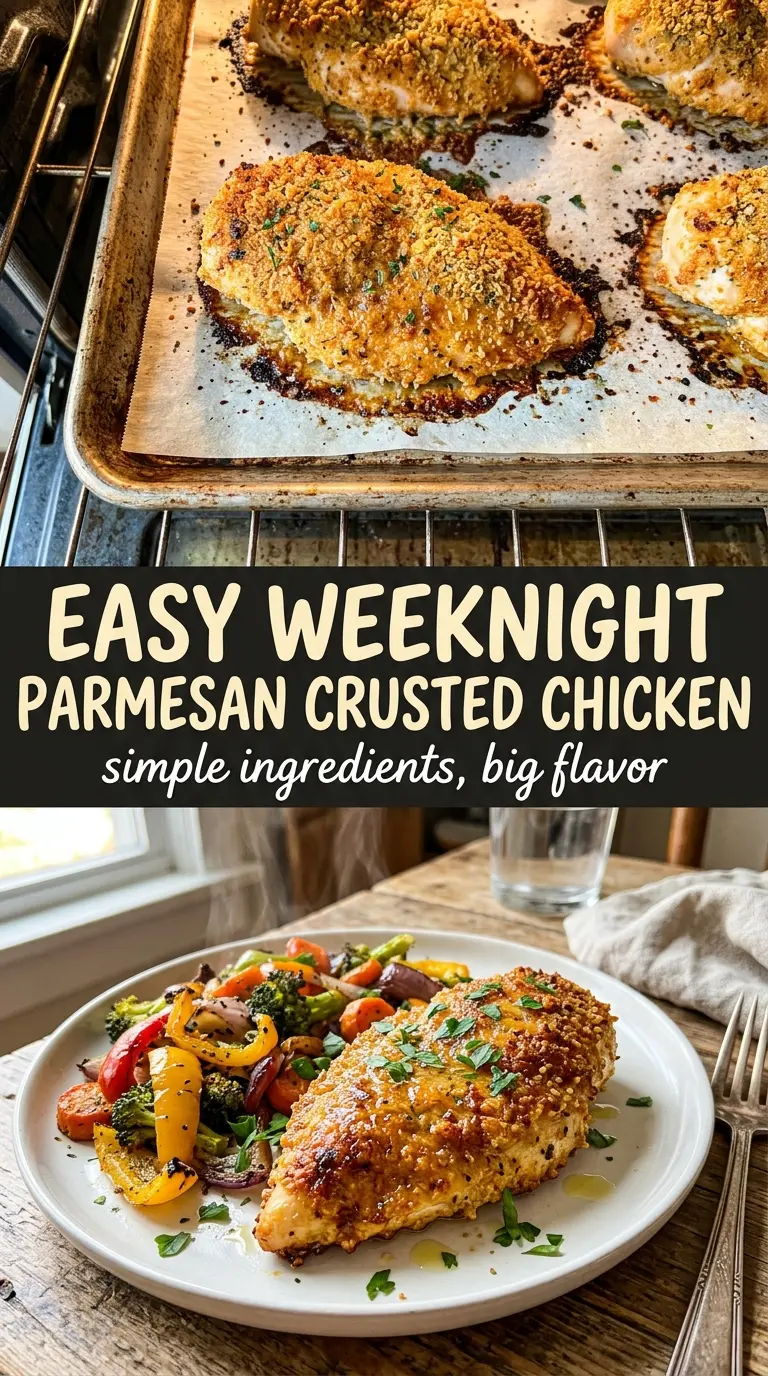
Chicken breasts are slippery, and parmesan coatings can turn patchy fast if the surface is wet or the coating is too thick. Brushing on oil first solves both problems at once. It gives the seasoning a tacky surface to grab, and it helps the crust brown instead of drying out into a dusty layer.
Another common failure is overcooking while waiting for the crust to look dark enough. Parmesan browns faster than plain breadcrumbs, so the top can look done before the chicken itself is ready. Use the oven time as a guide, but trust temperature more than color. Once the thickest part hits 165°F, pull it and let it rest so the juices settle back into the meat.
- Chicken breasts — Boneless, skinless breasts work well here because the coating has a large surface to cling to. If yours are thick, pound them to an even thickness so the thinner ends don’t dry out while the center finishes.
- Parmesan cheese — Grated parmesan melts and browns in a way shredded cheese won’t. The finer texture helps the coating adhere and form a crisp crust; the pre-grated shelf-stable kind works in a pinch, but freshly grated has better flavor and color.
- Smoked paprika — This is the ingredient that gives the chicken its deeper, almost woodsy note. Regular paprika will work, but you’ll lose the smoky edge that makes the dish taste fuller with such a short ingredient list.
- Olive oil — The oil is what helps the coating press on evenly and bake into a unified crust. A neutral oil can stand in, but olive oil adds a little richness that plays nicely with the parmesan.
Pressing, Baking, and Resting the Chicken at the Right Moments
Building the Coating
Stir the parmesan, smoked paprika, garlic powder, salt, and pepper in a shallow bowl so the seasoning distributes evenly. Brush each chicken breast with olive oil, then press it firmly into the coating on both sides. Press, don’t just dip and lift, or you’ll end up with bald spots and a thinner crust than you expected.
Laying the Chicken in the Dish
Set the coated breasts in a lightly greased baking dish with a little space between them. If they touch, steam gets trapped between the pieces and softens the crust where you want it to stay crisp. Keep any leftover coating from the bowl and scatter it over the tops if some areas look sparse.
Watching for the Finish
Bake at 400°F for 22 to 25 minutes, checking the thickest part with an instant-read thermometer. The top should be golden, the cheese should look set, and the chicken should feel firm but not hard when pressed. If the crust darkens too quickly before the center is done, loosely lay a piece of foil over the top and keep baking until the chicken reaches 165°F.
Letting the Juices Settle
Rest the chicken for 5 minutes before slicing or serving. That short pause keeps the juices from running out the second the knife goes in, which matters even more with lean breasts. Finish with parsley for a fresh, clean note that cuts through the parmesan.
How to Adapt This for Different Pans, Diets, and Leftovers
For Thicker Chicken Breasts
Pound thick breasts to an even 3/4-inch thickness or split them horizontally if they’re very large. Even thickness is what keeps the coating from overbrowning before the center cooks through, and it makes the whole dish finish in the same window.
For a Gluten-Free Dinner
This recipe is naturally gluten-free as written, which is one reason it works so well for a fast weeknight meal. Just check that your parmesan and paprika are from brands without anti-caking additives you don’t want, then proceed the same way.
For a Dairy-Free Version
Use a finely ground dairy-free parmesan-style topping that browns well, or replace part of it with crushed pork-free crisp crumbs if you’re after texture more than cheese flavor. The result won’t taste exactly the same, but the coating still bakes up savory and crisp instead of bare and dry.
Storage and Reheating
- Refrigerator: Store in an airtight container for up to 3 days. The coating softens a bit as it sits, but the flavor stays strong.
- Freezer: It freezes best after baking. Wrap each piece tightly, freeze up to 2 months, and thaw in the fridge before reheating.
- Reheating: Warm in a 350°F oven until heated through, about 12 to 15 minutes. The microwave will make the crust rubbery, which is the main thing people notice if they rush it.
Answers to the Questions Worth Asking
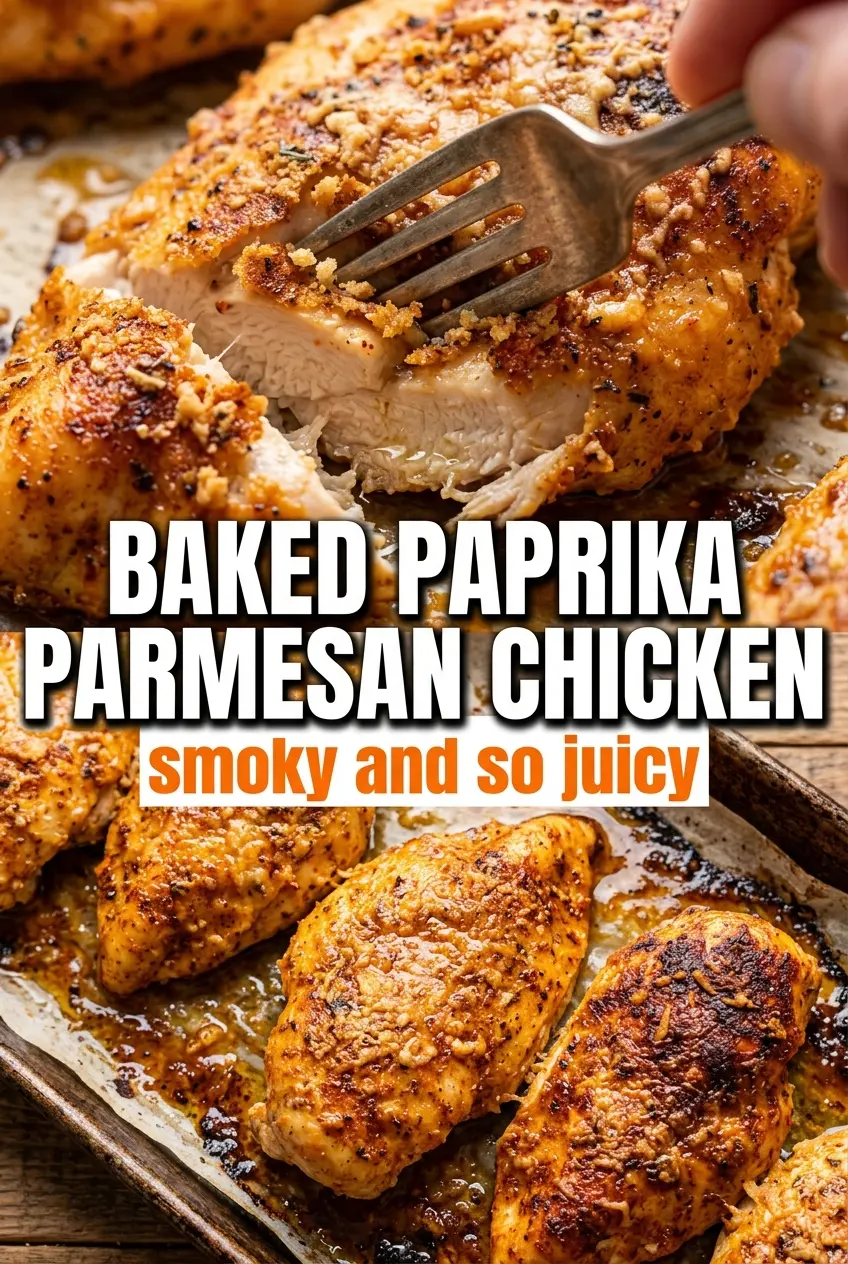
Baked Paprika Parmesan Chicken
Ingredients
Equipment
Method
- Preheat the oven to 400°F and lightly grease a baking dish.
- Combine the parmesan cheese, smoked paprika, garlic powder, salt, and pepper in a shallow bowl.
- Brush each chicken breast with olive oil, then press into the parmesan mixture to coat evenly on both sides.
- Place the coated chicken breasts in the prepared baking dish.
- Bake for 22–25 minutes at 400°F, until the chicken reaches an internal temperature of 165°F and the crust is golden.
- Let the chicken rest for 5 minutes to keep juices in the meat.
- Garnish with fresh parsley and serve warm.