Layers of seasoned sushi rice and creamy spicy salmon hit all the same notes as a good sushi roll, but without the rolling, slicing, or fussy assembly. The rice bakes up just firm enough to scoop, the salmon stays rich and tender, and the broiled top gives you those little browned edges that make every bite taste finished. It’s the kind of dish that disappears fast because everyone keeps going back for one more spoonful.
The trick is starting with warm rice so the vinegar, sugar, and salt actually cling to every grain. Press it into the pan while it’s still a little sticky, then spread the salmon mixture in an even layer so the bake heats through at the same pace. A short broil at the end is what gives you that lightly blistered top without drying out the salmon underneath.
Below, I’ll walk through the one detail that keeps the rice from turning bland, how to season the salmon so it tastes balanced instead of overly spicy, and a few smart swaps if you want to adjust the heat or make this work with what you already have.
The rice turned out perfectly seasoned and the salmon stayed creamy under the broiler. I served it with extra sriracha and everyone kept going back for seconds.
Save this creamy salmon sushi bake for the nights when you want sushi roll flavor without the rolling and slicing.
The Reason Sushi Bakes Need Seasoned Rice, Not Plain Rice
Plain rice turns a sushi bake into a casserole with the wrong texture and almost no lift. The vinegar mixture does two jobs here: it seasons every grain and gives the rice that slightly glossy, cohesive finish that helps it hold together when you scoop through the layers.
Warm rice matters more than people think. If it’s cold, the vinegar won’t distribute as evenly and the sugar can sit in little pockets instead of melting through. Press the rice firmly into the pan, but don’t pack it so hard that it turns dense; you want a base that holds its shape without becoming gummy.
What Each Ingredient Is Actually Doing in This Dish
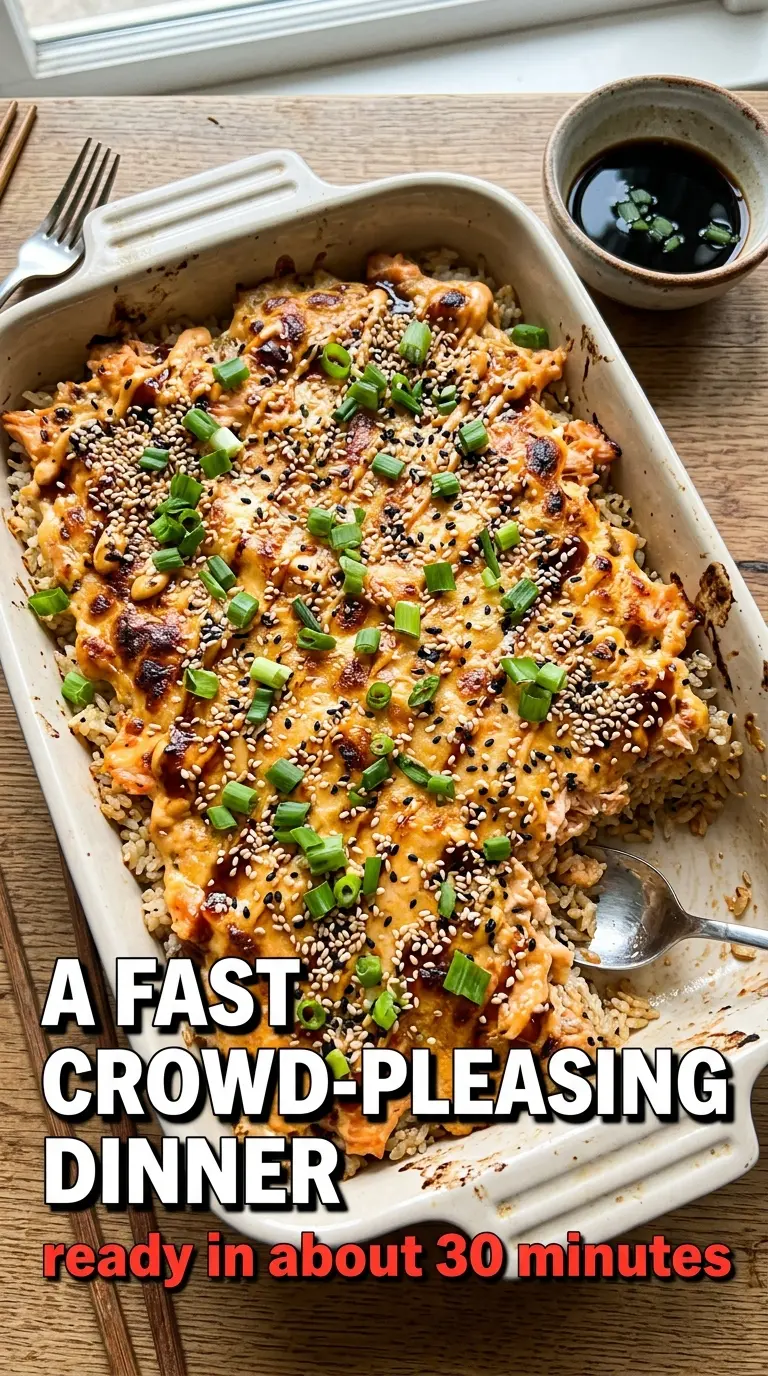
- Sushi rice — This is the backbone of the dish because it gets sticky enough to slice through with a spoon and still stay fluffy. Short-grain rice is the right choice; long-grain rice won’t give you the same cohesive base.
- Rice vinegar, sugar, and salt — This is the seasoning that makes the rice taste like sushi rice instead of plain steamed rice. Stir it in while the rice is warm so the sugar dissolves and the seasoning coats evenly.
- Cooked salmon — Flaked salmon gives the bake its rich, savory layer and keeps the whole dish from tasting one-note. Leftover baked or roasted salmon works well here, and even canned salmon can stand in if you drain it well and remove any skin or bones.
- Mayonnaise — This keeps the salmon creamy and helps it brown lightly under the broiler. Use a full-fat mayo for the best texture; lighter versions can turn loose and oily when heated.
- Sriracha — This brings heat and a little acidity. If you want the flavor without as much burn, cut it back and add a touch more mayo so the topping stays balanced.
- Soy sauce — A small amount deepens the salmon mixture and keeps the spice from tasting flat. Use low-sodium soy sauce if that’s what you keep on hand, since the rice already has salt in it.
- Green onions and sesame seeds — These finish the dish with freshness and a little crunch. Don’t skip them if you want the bake to taste like more than just rice and fish.
How to Build the Layers So the Bake Stays Creamy, Not Watery
Seasoning the Rice First
Toss the rice with the vinegar, sugar, and salt while it’s still warm enough to absorb the mixture. You’re looking for rice that looks evenly glossy and smells lightly tangy, not wet. If the rice is too cold, the seasoning sits on top and the bottom layer tastes flat.
Pressing the Base
Spread the rice into the greased baking dish and press it into an even layer with the back of a spoon or damp hands. The goal is a compact surface that won’t fall apart when you scoop into it, but not so tight that it turns dense. If you leave gaps, the salmon layer can sink into the rice and the bake loses its clean layers.
Mixing the Salmon Topping
Stir the flaked salmon with mayo, sriracha, and soy sauce until the mixture looks creamy and evenly coated. The salmon should hold together in soft chunks, not disappear into a paste. If it looks loose, add a little more mayo; if it seems heavy or dry, a small spoonful of mayo smooths it out fast.
Broiling to Finish
Spread the salmon over the rice, then broil just until the top starts to bubble and take on light golden spots. Watch it closely because the line between browned and dry is short under a broiler. Pull it the moment the edges look active and the center is hot.
Three Smart Ways to Adapt This Salmon Sushi Bake
Make it milder for kids or spice-shy eaters
Cut the sriracha in half and add a little more mayonnaise so the topping stays creamy and mellow. You’ll lose some heat, but the salmon still tastes rich and savory, and you can always serve extra sriracha at the table for the people who want more kick.
Use canned salmon when you need a shortcut
Drained canned salmon works if you’re short on time, and it gives the dish a slightly saltier, more pantry-friendly flavor. Pick through it for skin and bones first so the topping stays smooth, then season carefully because canned salmon can bring extra saltiness of its own.
Make it gluten-free
Use a gluten-free soy sauce or tamari and check your sriracha label, since some brands include wheat. The texture and flavor stay the same, so this is one of the easiest swaps in the whole recipe.
Turn it into a full meal with add-ins
Add a thin layer of cucumber, avocado, or shredded nori on top after baking for extra sushi-roll character. Keep the raw vegetables out of the oven so they stay crisp and fresh instead of softening into the bake.
Storage and Reheating
- Refrigerator: Store leftovers covered for up to 3 days. The rice firms up a bit, but the flavor stays good.
- Freezer: Freezing isn’t ideal because the rice can turn dry and the creamy salmon topping can separate after thawing.
- Reheating: Reheat covered in a 325°F oven until warmed through, or use short microwave bursts. The biggest mistake is blasting it on high heat, which dries out the salmon before the center gets hot.
Answers to the Questions Worth Asking
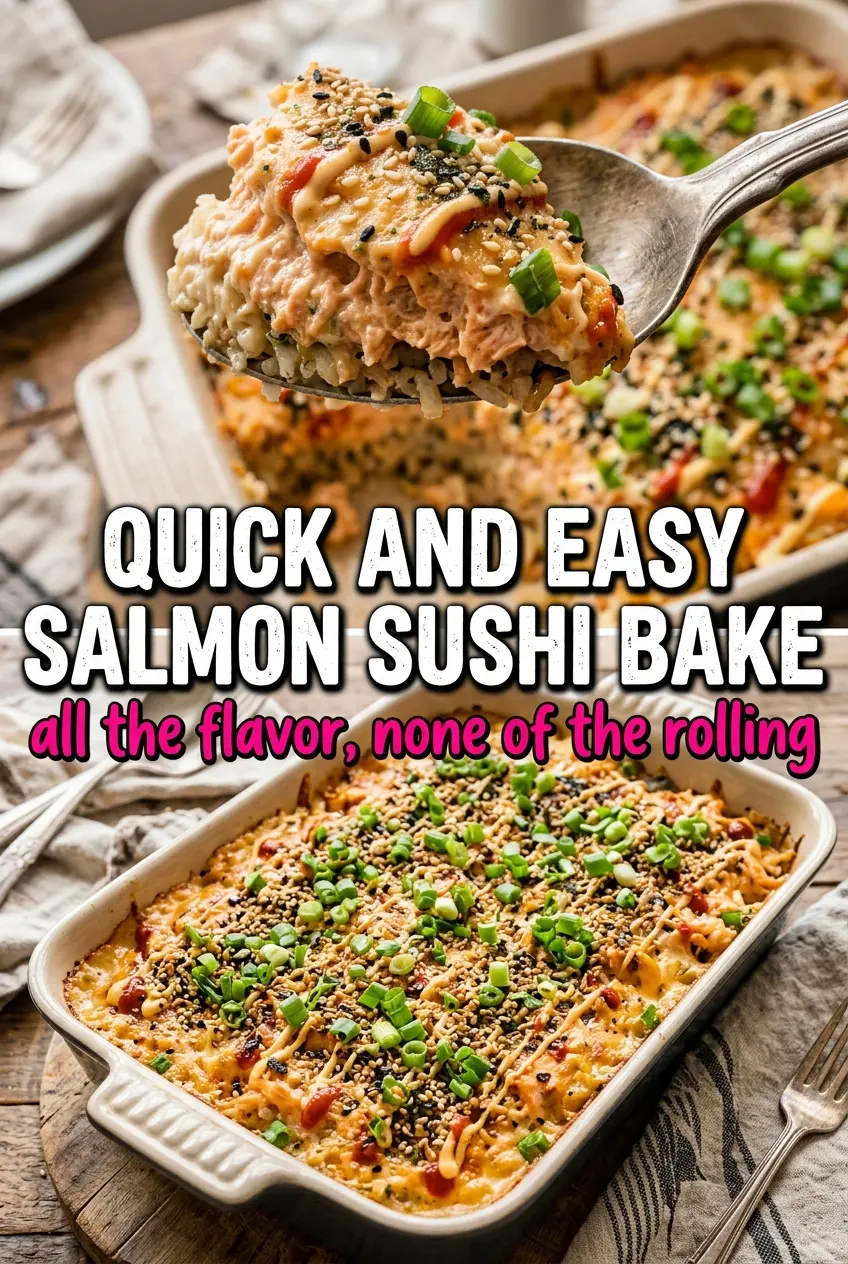
Quick and Easy Salmon Sushi Bake
Ingredients
Equipment
Method
- Preheat the oven to 400°F and grease a 9x13-inch baking dish.
- Toss the warm rice with the rice vinegar, sugar, and salt, then press evenly into the bottom of the baking dish.
- Combine the flaked salmon, mayonnaise, sriracha, and soy sauce in a bowl.
- Spread the salmon mixture evenly over the rice layer.
- Broil for 4–5 minutes, until the top is lightly golden and bubbling.
- Top with green onions and sesame seeds, and serve with extra soy sauce and sriracha.